Showing posts with label Predatory Plants. Show all posts

Saturday, September 17, 2016

Plants I've looked at in the last six weeks: an incomplete catalogue

Hahahah okay let's just admit that I'm probably not going to make 17 posts in a month again (like I did back in April '14) any time soon. Okay well, that established let's see what photos have been languishing on my phone not being posted anywhere.

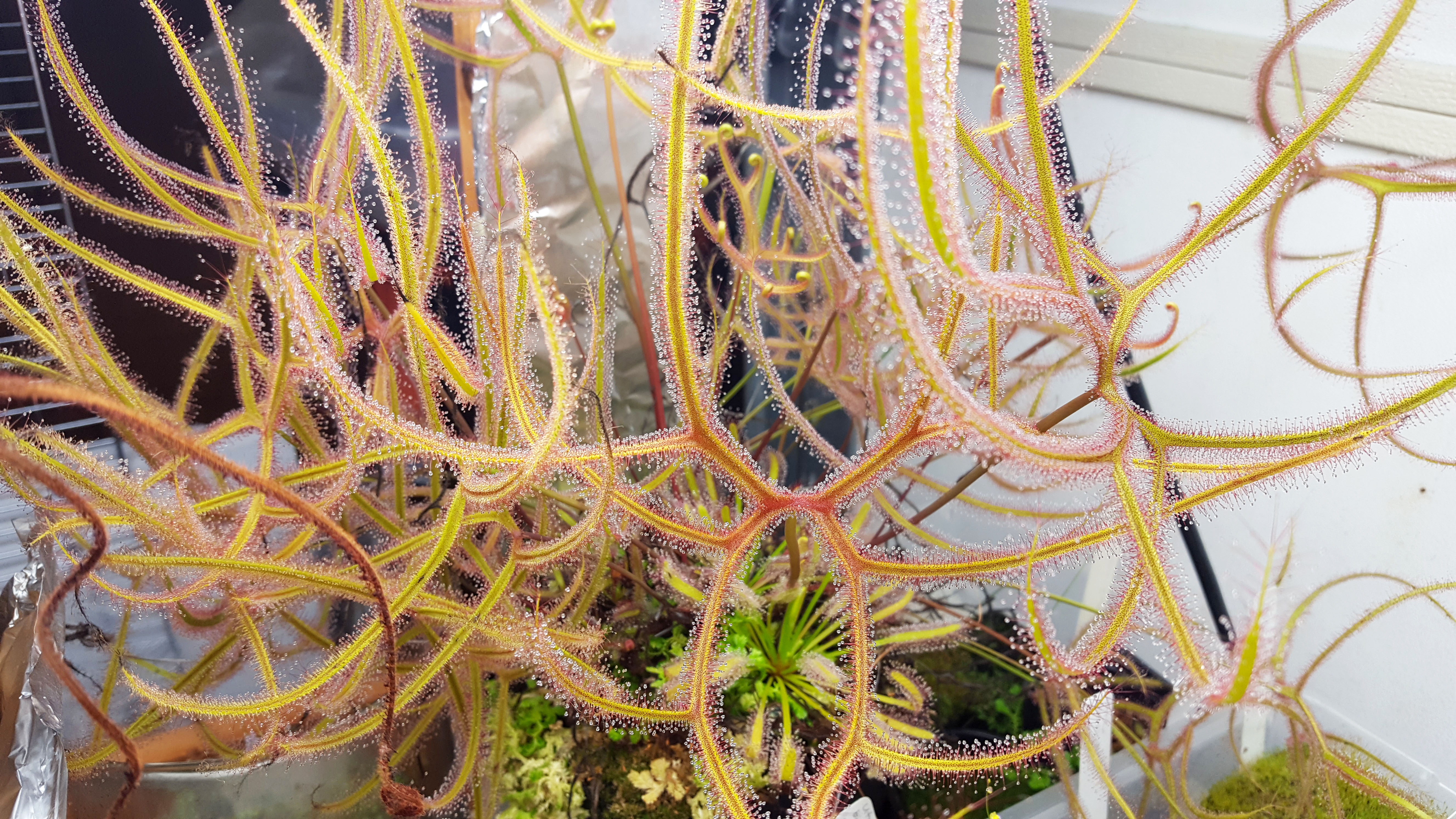
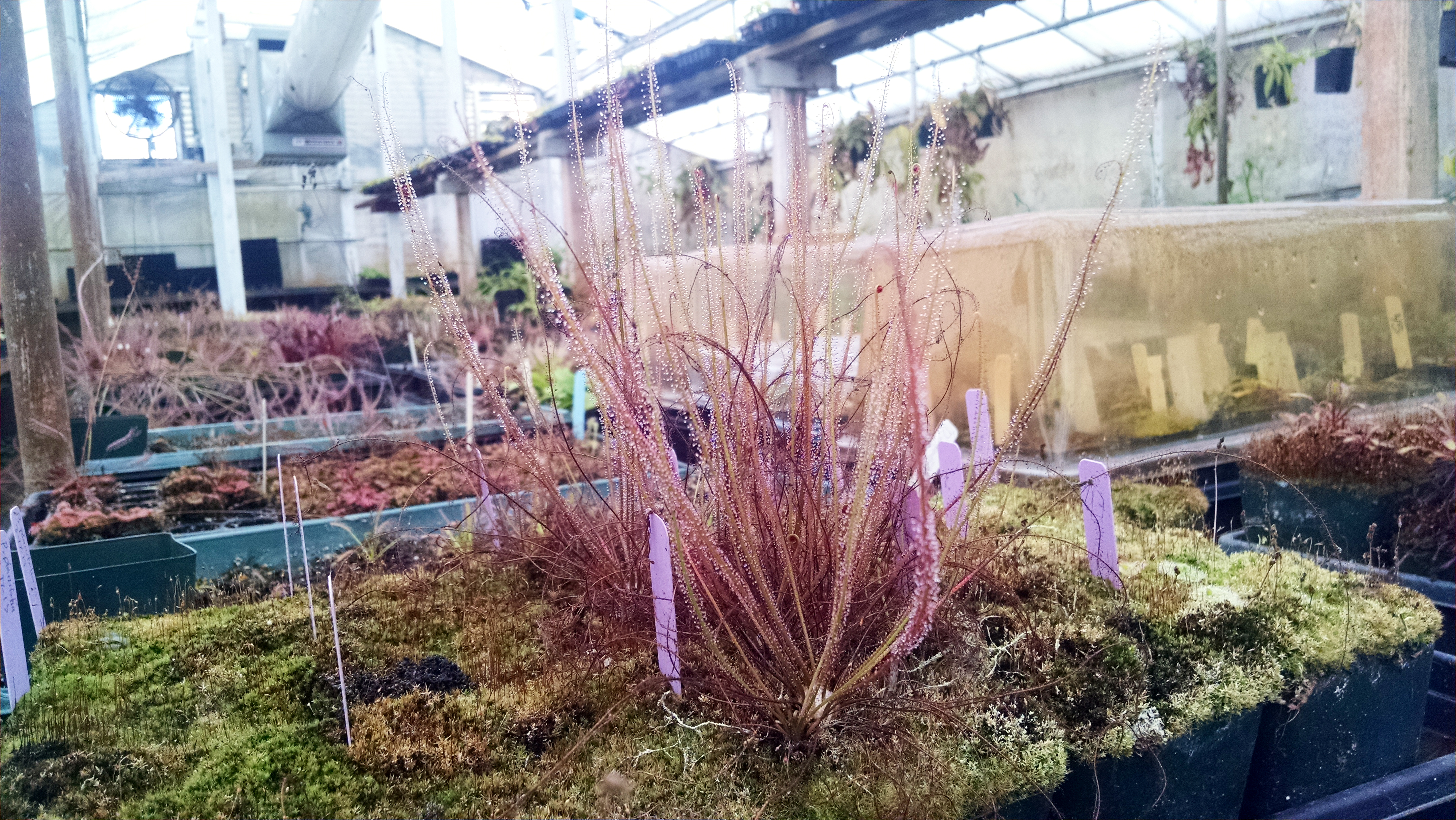
Drosera binata 'Marston Dragon' looked pretty nuts back on July 31st.

Drosera binata 'Marston Dragon'.
I wonder what the total volume of that dew is. Probably an ounce or two.
I still have no idea what I'm supposed to do with this plant. At least it looks rad as heck.

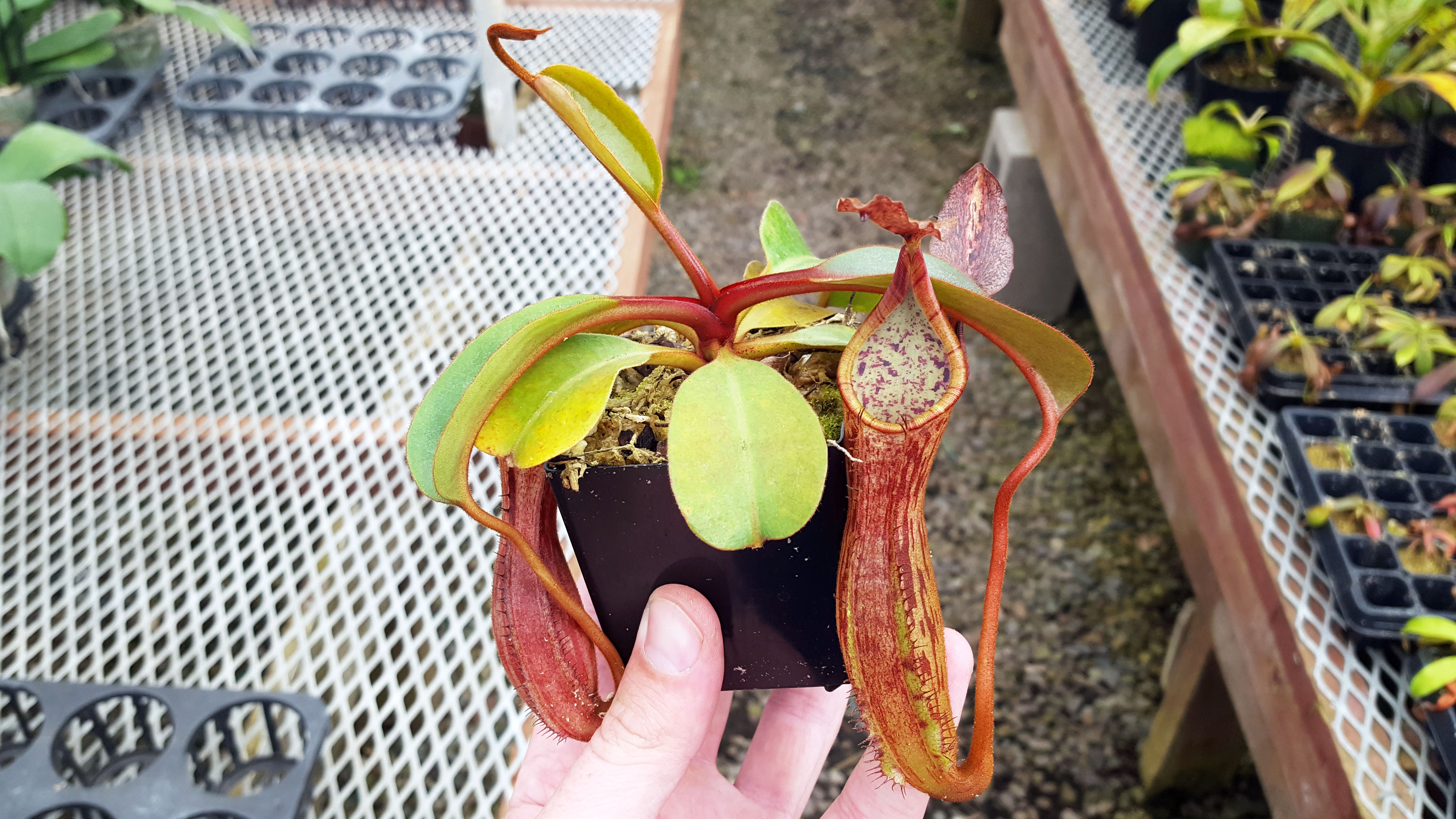
Fair warning, since I'm gonna be using pictures I've taken at work a fair amount, there are gonna be more neps than there have been on the blog in the past. Considering this Nepenthes eymae × jacquelineae though, can you blame me?

Nepenthes eyemae × jacquelineae.
I really like the glaucous character of the pitcher body.
This is a freshly-opened pitcher on what is probably my 4th favorite nep in the greenhouse (please don't ask me what the top 3 are, I have no idea). Wowzer!

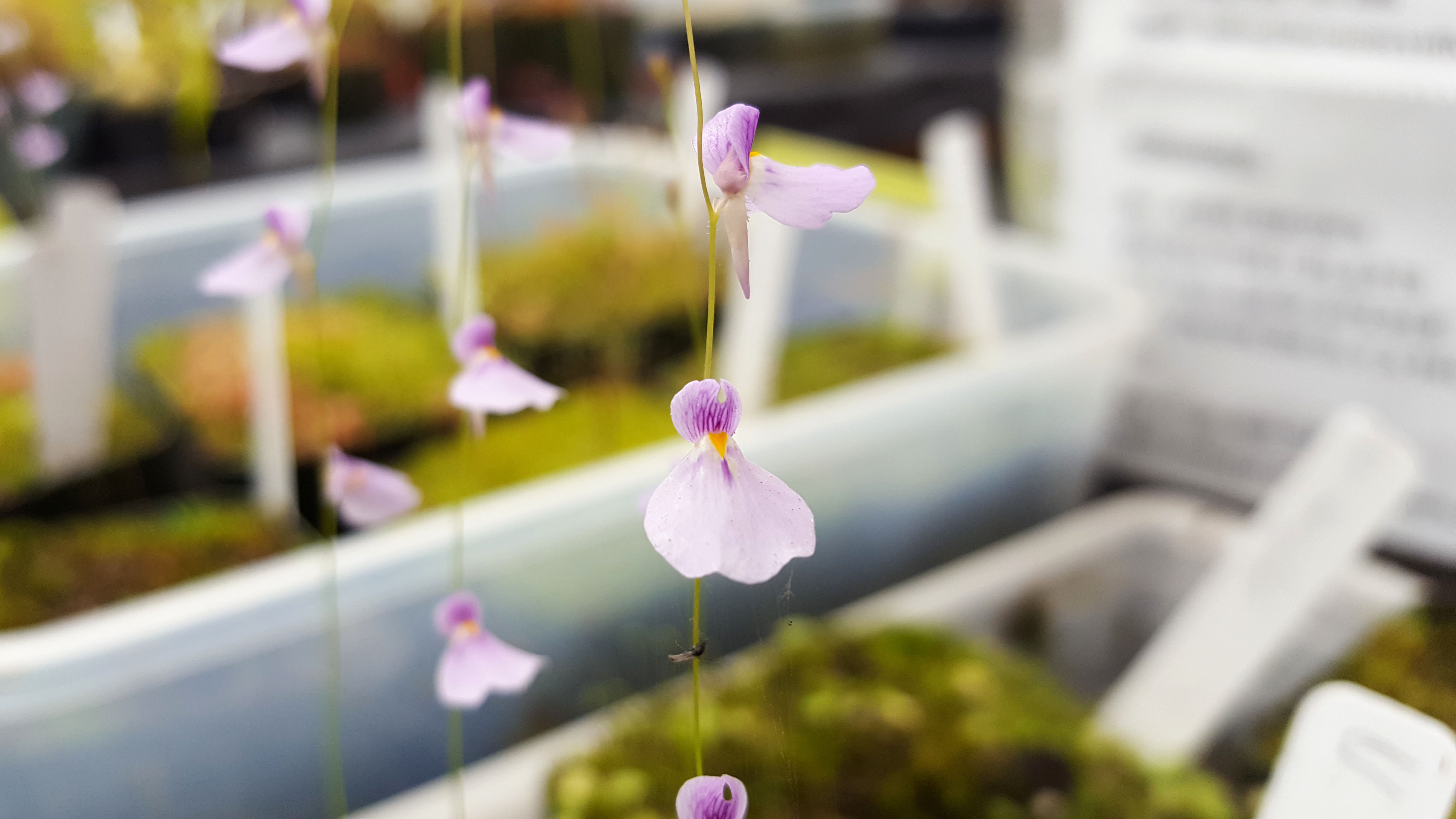
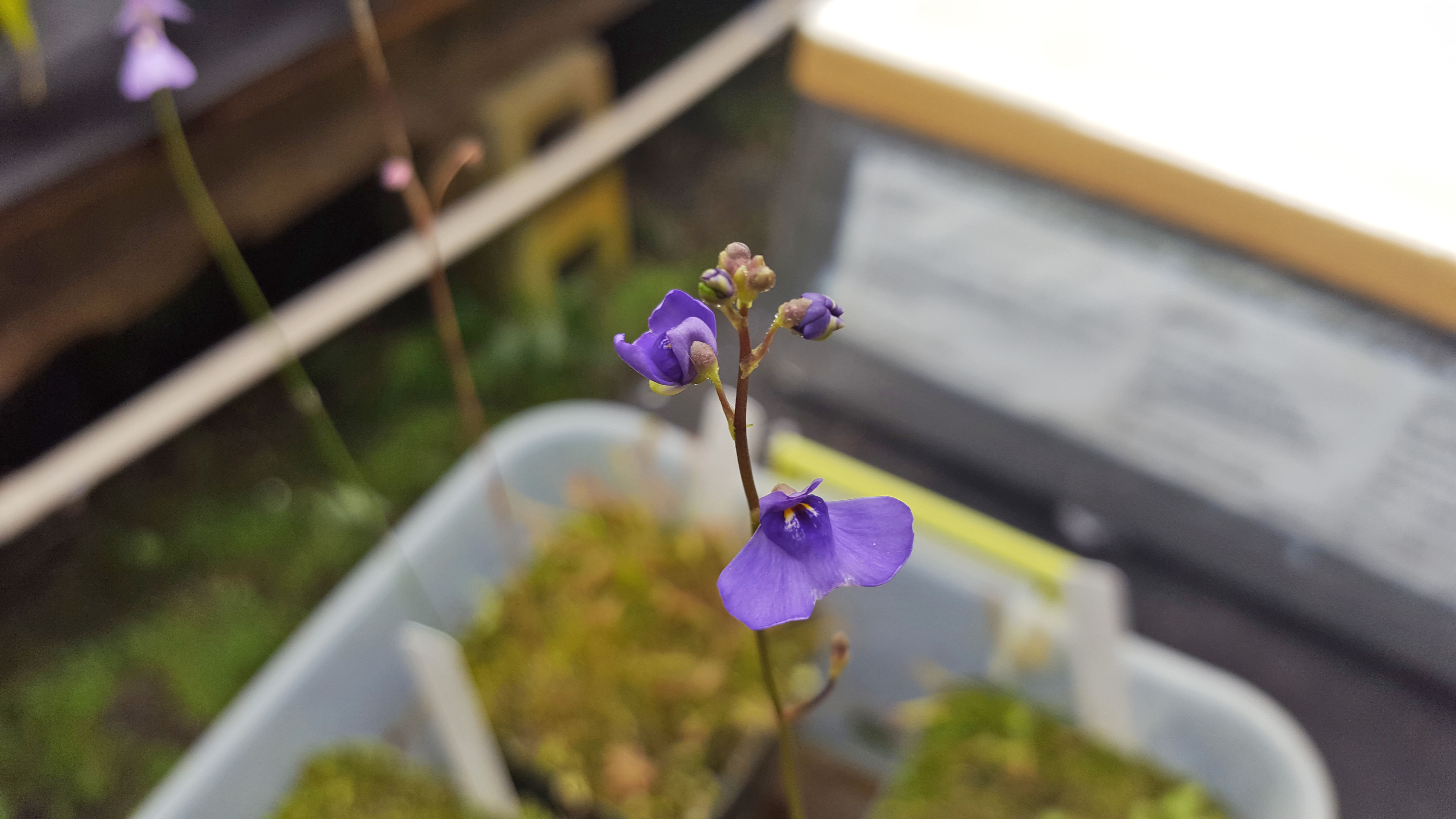
Don't worry though, there are also utrics at the greenhouse, such at this Utricularia blanchetii.

Utricularia blanchetii flower.
So small and fancy.
This is probably the most floriferous of the new little terrestrials I've been messing with lately. It's also completely adorable!

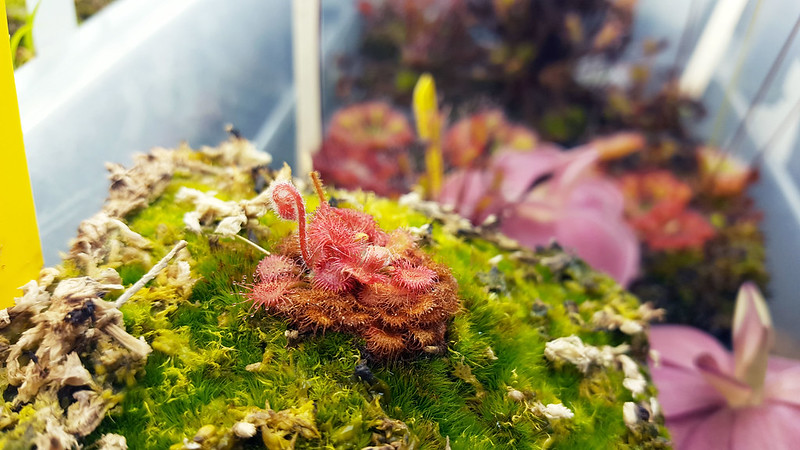
And at home, I still have sundews, even if I'm barely able to rouse myself to water them properly. Here's my Drosera kaieteurensis starting a new flower stalk.

Drosera kaieteurensis with flower stalk.
Note that I didn't refer to it as Drosera felix. That because when I showed photos of it to Fernando Rivadavia he was unequivocal that the fuzzy flower stalk indicated D. kaieteurensis. He had no strong opinions about the purported synonymy of the two taxa, but insisted that if the flower stalk was fuzzy it couldn't be D. felix. So there.

Another South American sundew with a difficult-to-spell toponym for its specific epithet is Drosera graomogolensis. It's also a total beast in spite of all my neglect.

Drosera graomogolensis.
This is an extravagant plant.
Root cuttings are an awesome way to get big plants fast, especially if it's one of the species with big fat roots. Great stuff!

Another utric that I'm super stoked about is Utricularia biloba, which opened its first flowers for me a week or so ago.

Utricularia biloba flower.
These also have a neat chubby spur that's bright green.
As others have said of this species, photos don't do justice to the color, which is a deep violet with a hazy blue depth to it. Weirdly, the blue comes out more for me if I blink rapidly while looking at the flowers. Super interesting plant! Thanks Howard!

Finally, I've been selling select plants on Facebook – one-off neps, as well as new items like utrics and sundews that aren't in huge production yet. This Nepenthes fusca sold almost immediately this morning. I can't imagine why.

Nepenthes fusca.
I wish we had way more of this species than we currently do. It's wonderful!
Anyway, those are some plants. They're pretty cool.

Thursday, October 8, 2015

Field Trip: Funny stuff at Predatory Plants

Yesterday I decided to go hang out in San Francisco with my friend Josh, owner of Predatory Plants. I thought I'd head home early to beat the commute traffic, but unfortunately the commute traffic got started around 1 pm, so I ended up sitting around his greenhouse checking out all the weird stuff he's got around (and also catching up on all the carnivorous plant gossip).

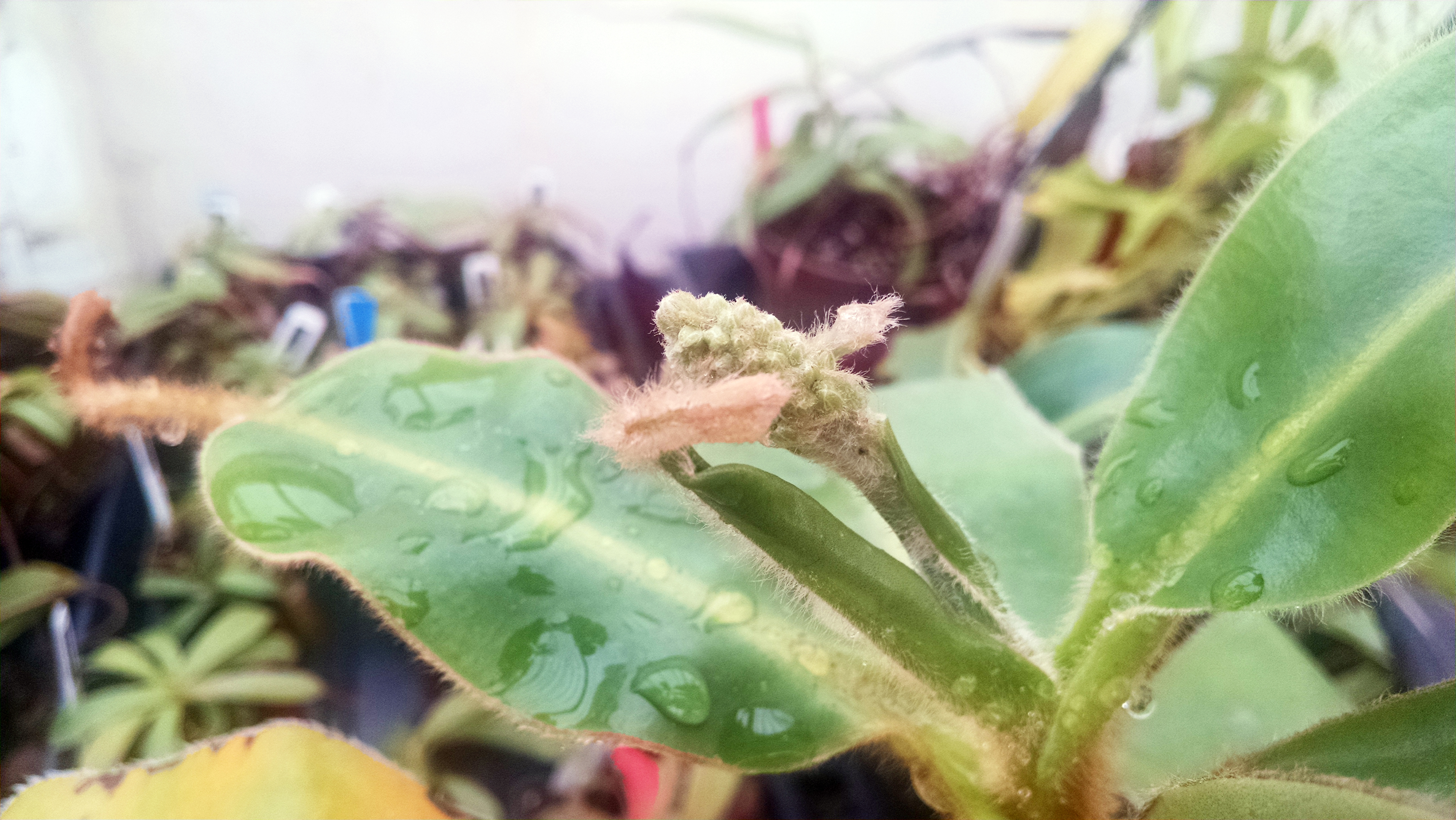
This Nepenthes glandulifera flower stalk looks like a certain other prized inflorescence.

Nepenthes glandulifera inflorescence.
Like a teddy bear.
This plant is so fuzzy it's ridiculous.

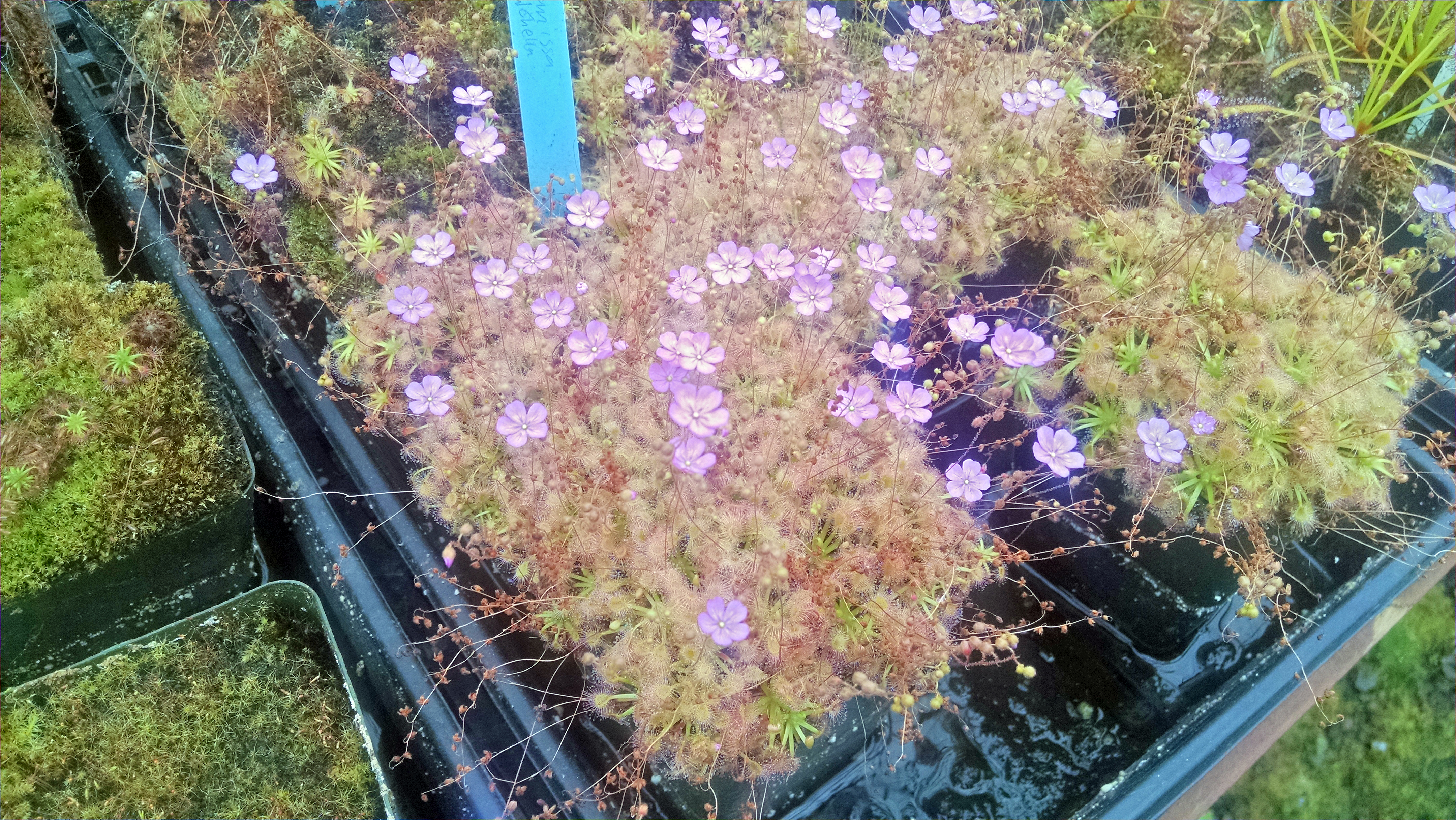
The clump of Drosera omissa × pulchella is just about to attain sentience.

Drosera omissa × pulchella.
Be careful of pygmy hybrids.
Meanwhile the Drosera scorpioides are looking quite Dr. Seuss-like.

Drosera scorpioides.
They look so fragile.
I correctly guessed that these plants are three years old. It's fun having extremely niche expertise.

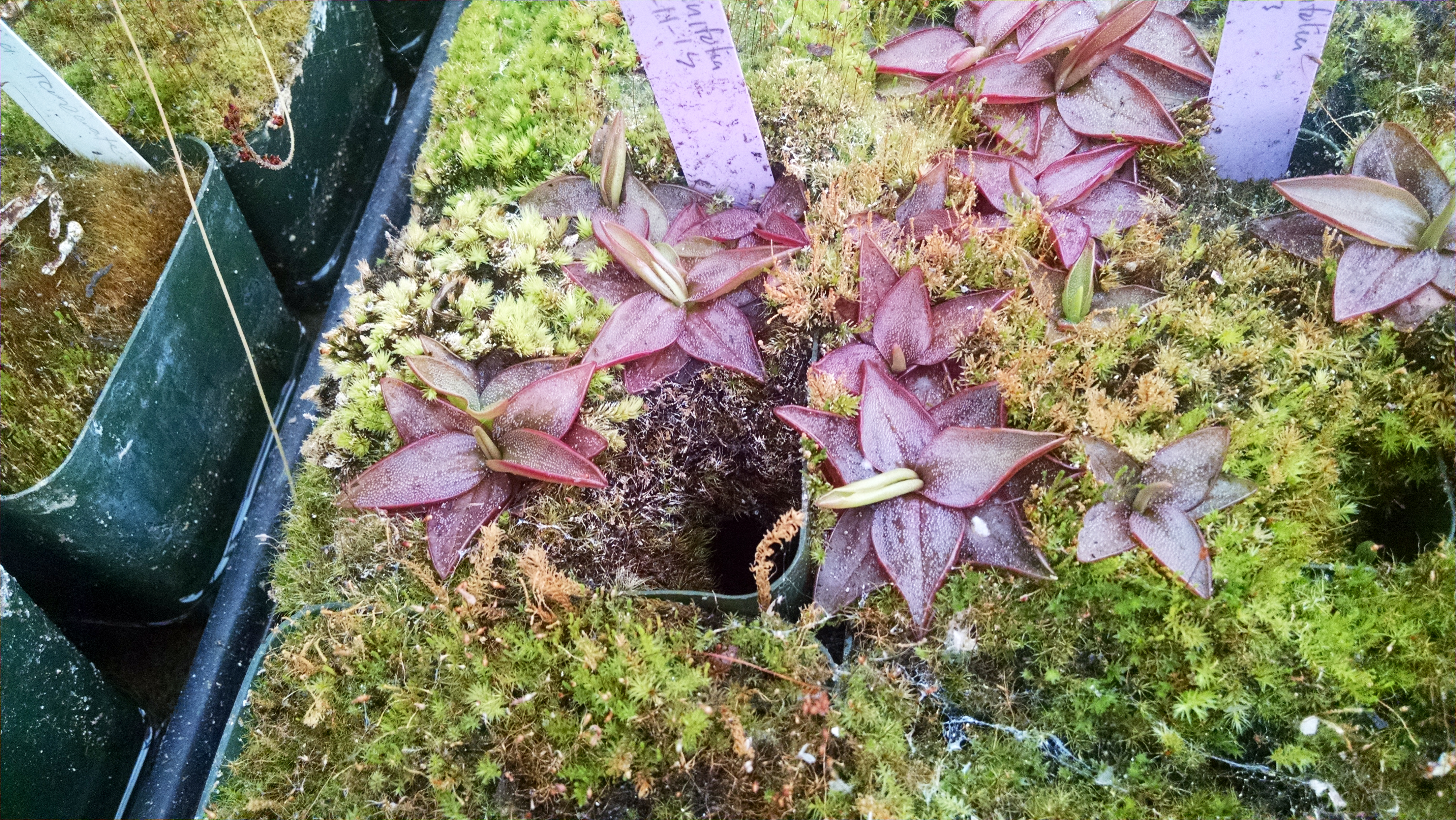
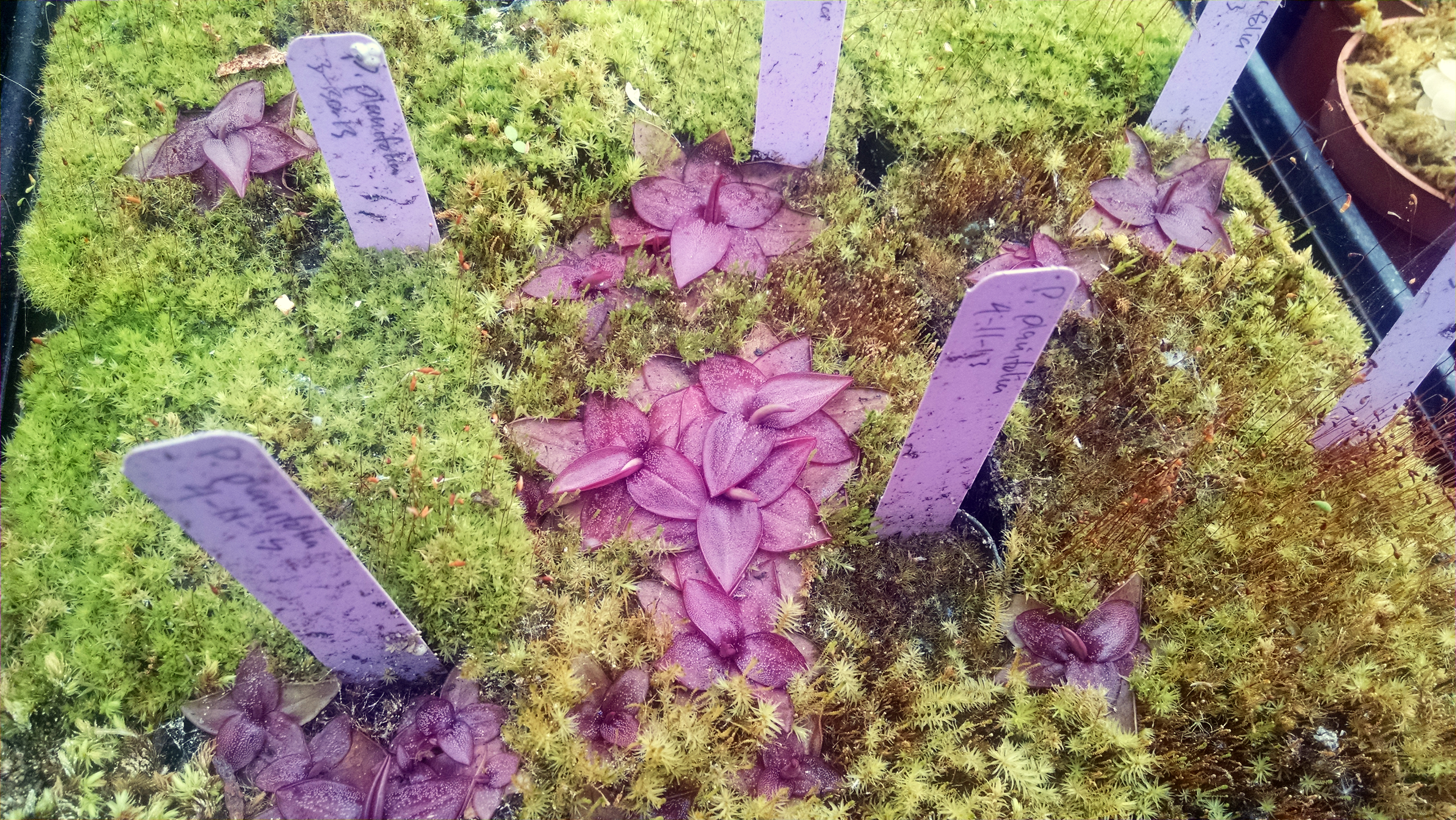
Josh discovered something funny about his pots of Pinguicula planifolia.

Pinguicula planifolia.
They're attractive plants, just baffling.
See that hole in the pot? It's hollow underneath. I guess in the two-plus years these have been growing here the bottom layer of soil has gradually been washed away, while the top is held together by the moss. Josh says he's afraid to mess with it now, since the plants seem to be fine.

I had to stop to admire this fine patch of Drosera filiformis Florida red.

Drosera filiformis Florida red.
I love this plant. Great color.
These are around two years old. Really lovely plants! I wish mine would get a move on and start filling out.

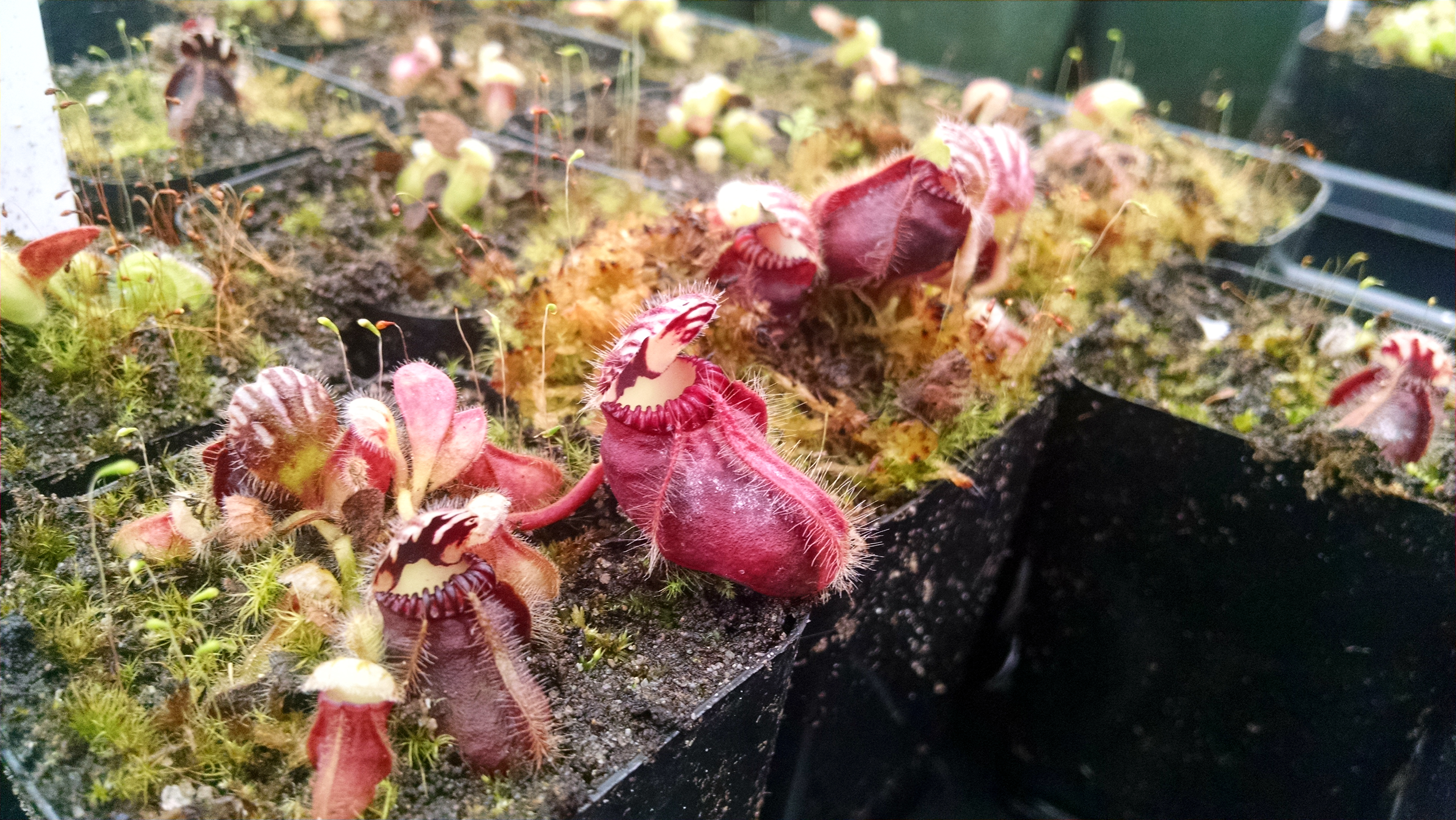
Also, Josh recently got into growing Cephalotus, and the results are looking pretty good!

Cephalotus follicularis.
So squat and hairy!
Everybody loves Cephs. If there was more of a consensus on how to grow them (and an easier way to produce them) I'm sure they'd become one of the most popular plants in cultivation.

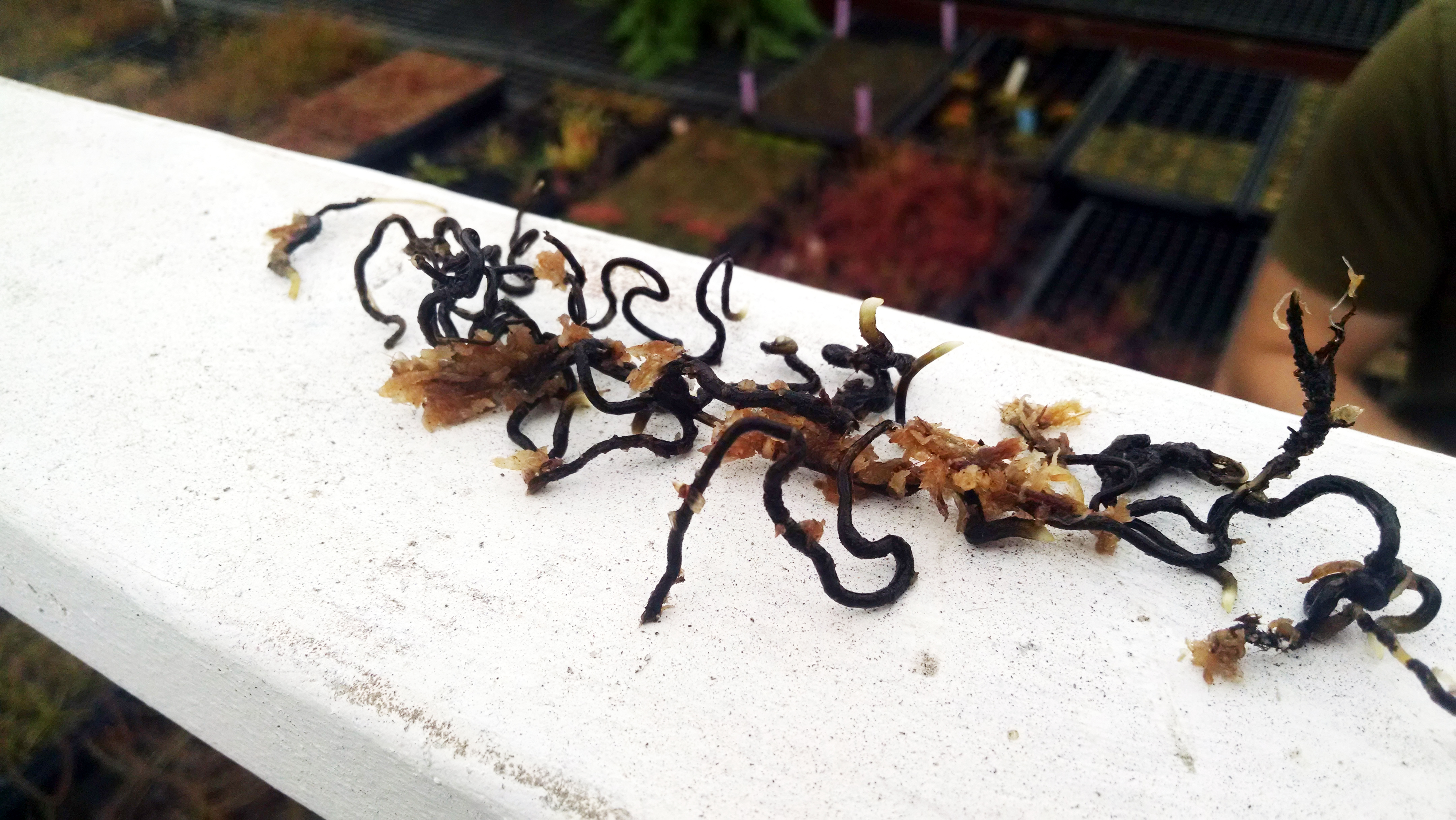
Towards the end of the day Josh was planting up some Drosera hamiltonii to a larger tray. For every plant he repotted he got a root cutting to start a new one. It's a very efficient system.

Drosera hamiltonii root cuttings.
Those are some good-looking roots.
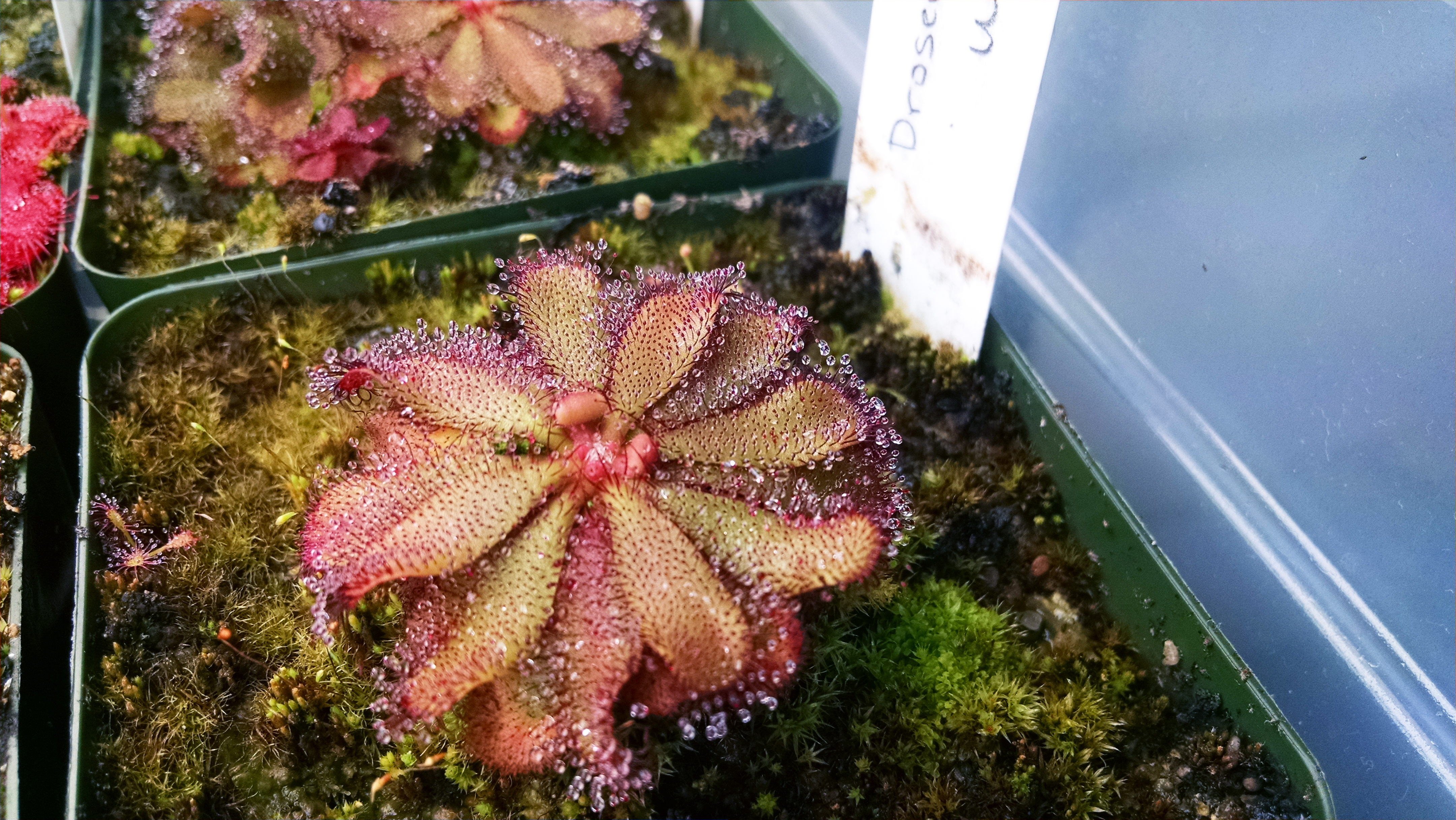
Seeing all those D. hamiltonii made me want to check in on my own when I got home. They're looking great!

Drosera hamiltonii.
Dew like crazy.
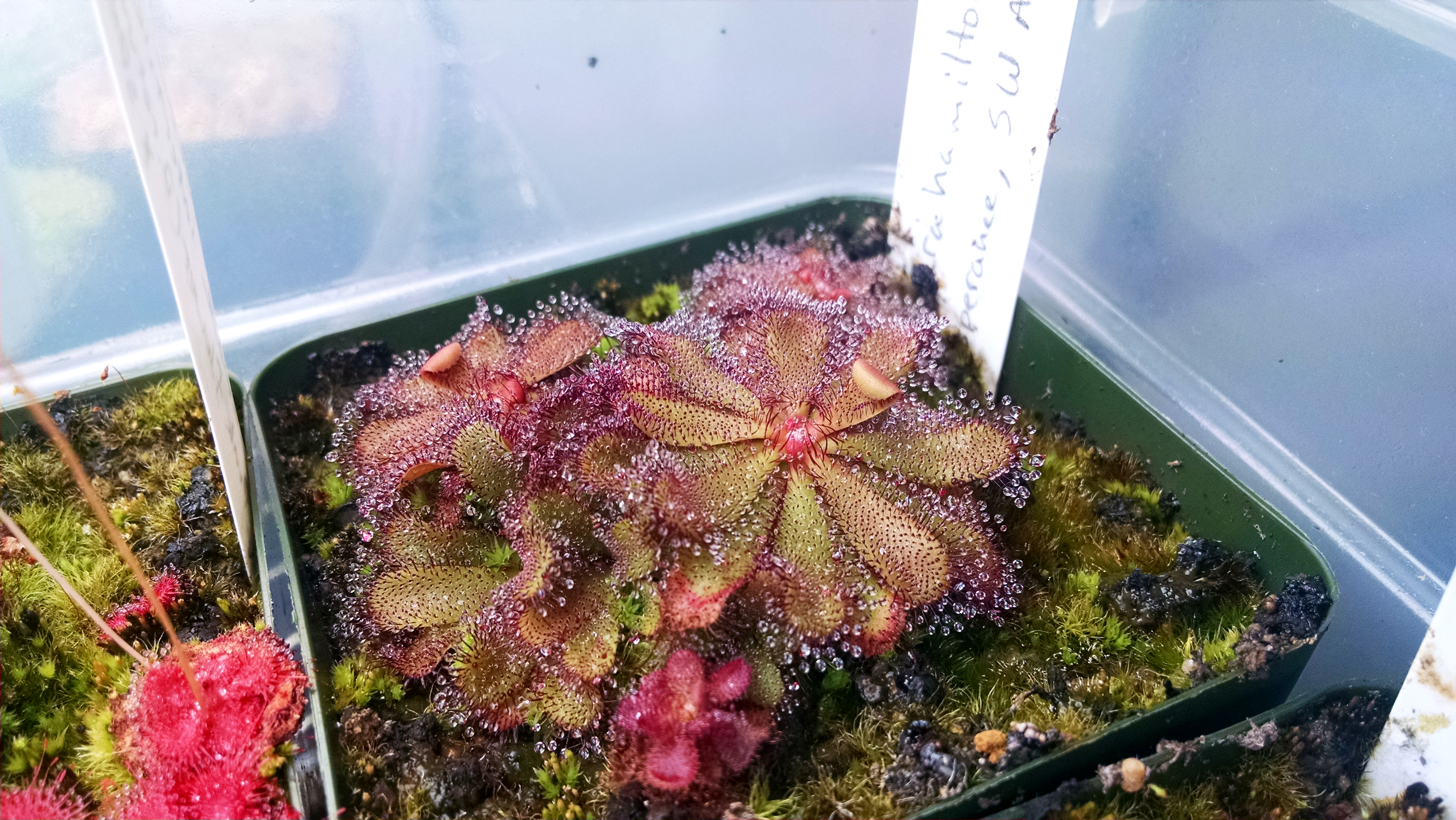
Drosera hamiltonii.
I love seeing the new leaves unfurling.
This is definitely one of those species where the less you mess with them the better they look. I think I spotted a root or two creeping into the tray though. I should get some propagation going. Look at those plants!

Sunday, June 7, 2015

Some great-looking sundews

The BACPS Annual Show and Sale was yesterday, and it was lots of fun. I'm gonna make a big post about the juried show, but that's going to take a lot of work editing pictures and whatnot. In the meantime here's a few plants that you might appreciate.

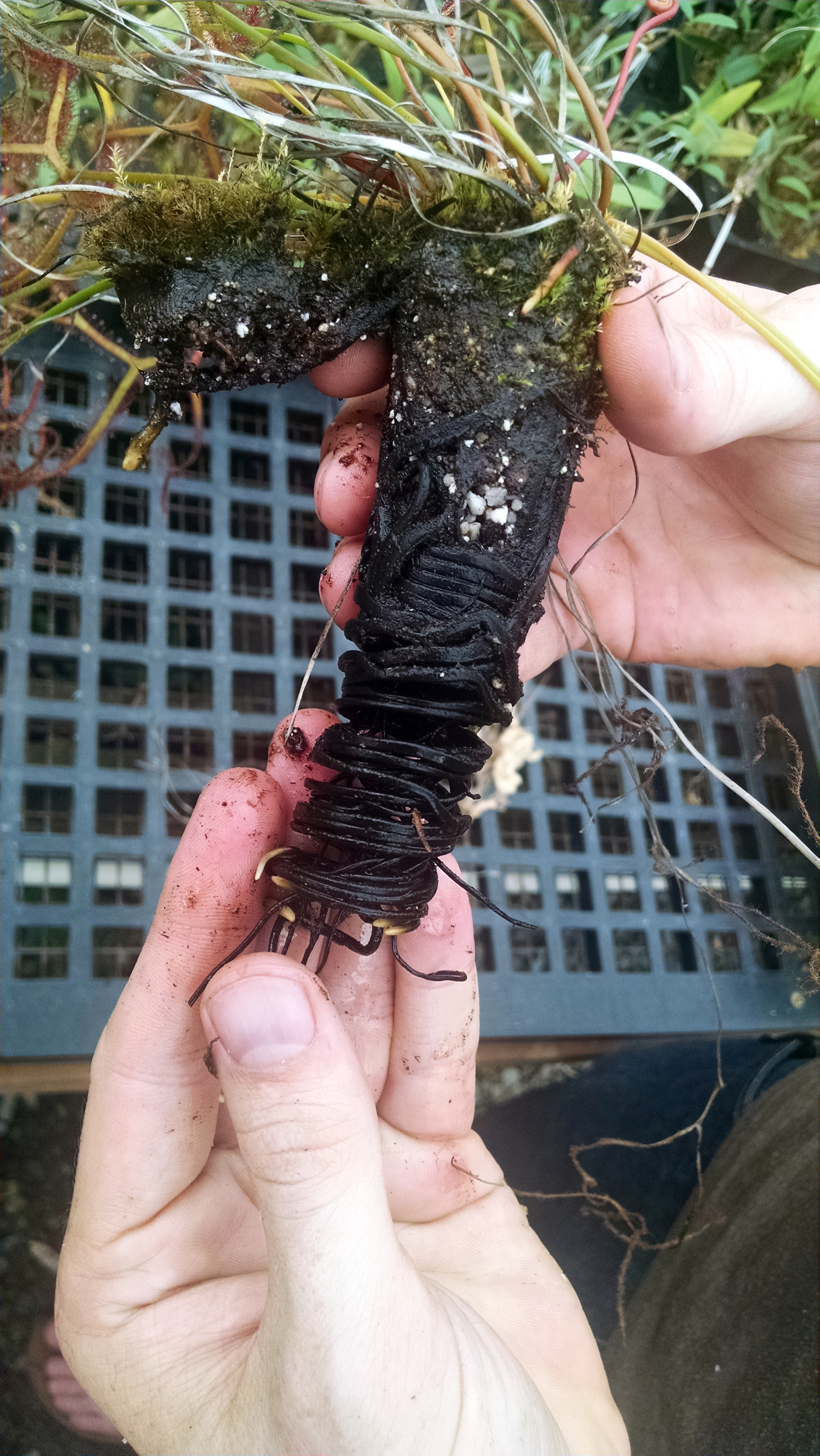
This Drosera binata was discovered while I was helping repot some plants over at Predatory Plants in advance of the show.

Drosera binata with dense roots.
Sproing!
That spring-looking thing at the bottom is the root ball. The plant had actually pushed itself out of its 1-inch plug, which is how Josh noticed it. Apparently this is descended from a D. binata he received for free at the first BACPS meeting he attended after coming back to the Bay after college. That plant apparently grew a huge root ball over the next couple years and then when he went into business selling plants he unpotted it and made a whole bunch of cuttings. That one little freebie has spawned thousands of D. binata plants for him to sell. What a great clone!

Speaking of spawning new plants, my Drosera capillaris "Albino" is flowering for the first time in a long time.

Drosera capillaris with flower stalk.
I've been waiting for another flower on this guy.
You'll noticed I used the descriptor "Albino" instead of the location "Alabama." There's a story there, but I'm not quite ready to tell it yet. Still doing more research. Definitely looking forward to getting some more seed from this guy though.

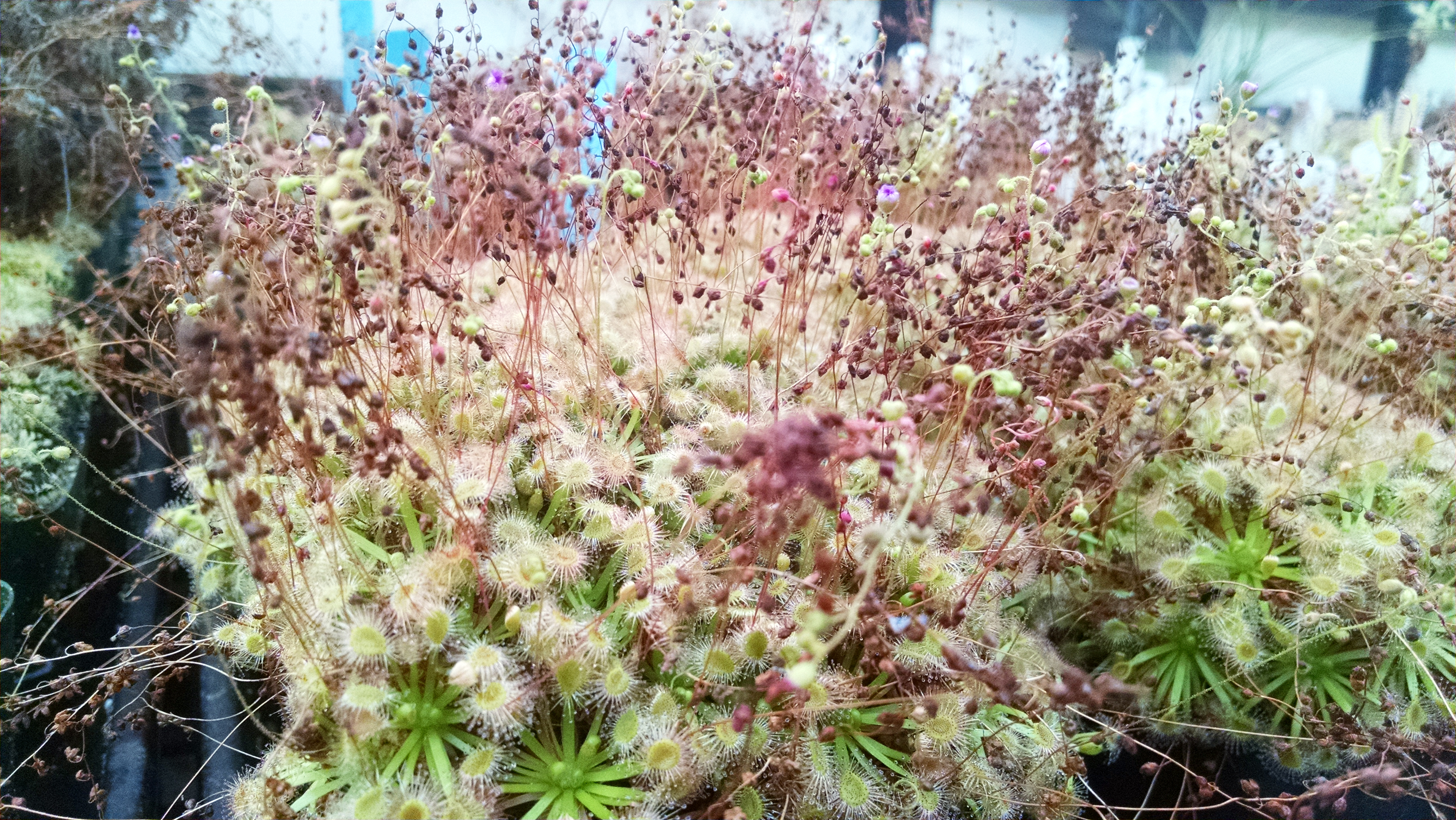
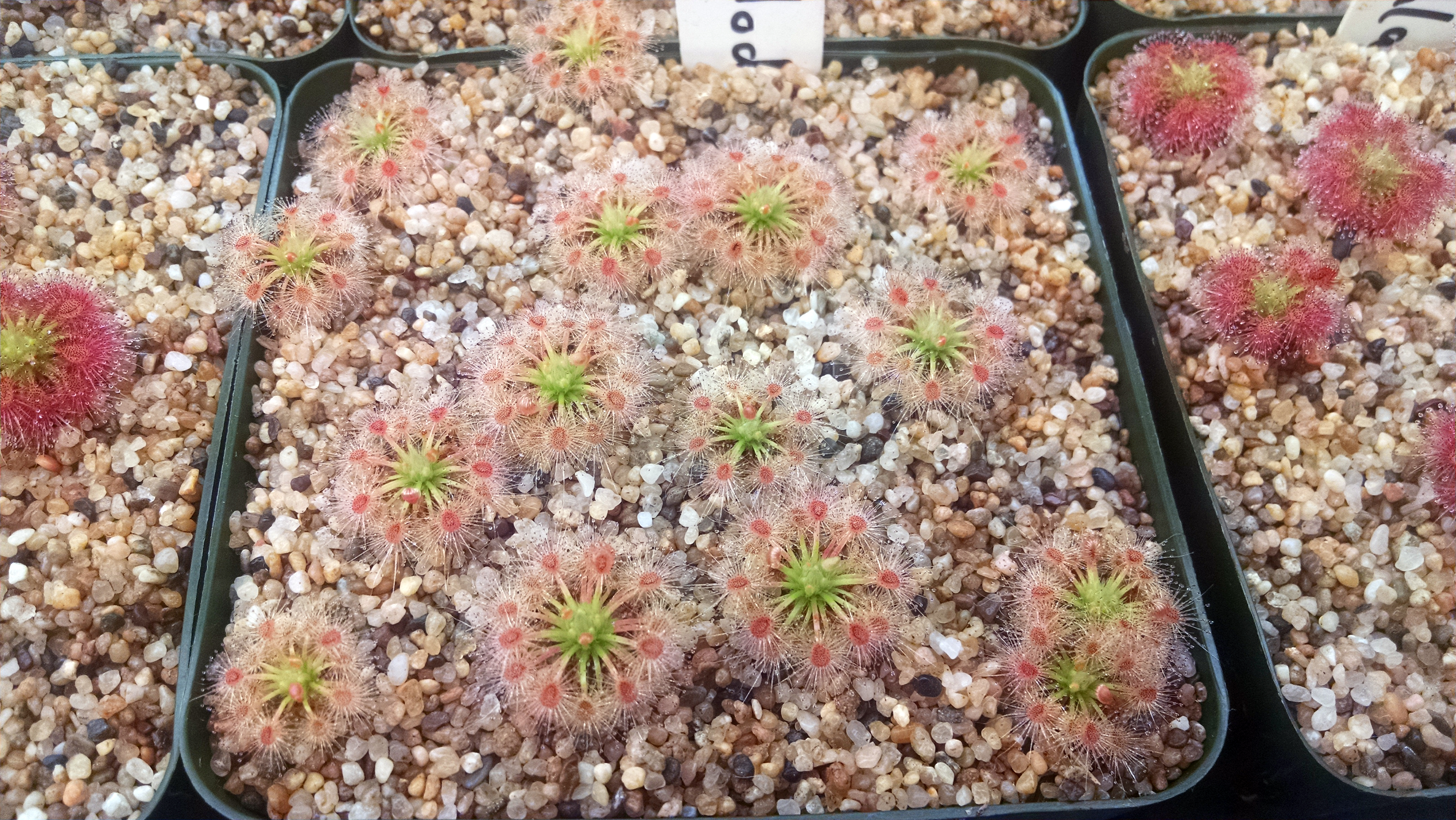
My Drosera prolifera is doing as well as I've ever seen it doing lately.

Drosera prolifera.
Lots of plants!
It's going through another bout of flowering, so there are lots of new plantlets. I'll have to either pot this up into a larger size or divide the pot pretty soon – I'm running out of spots to stick the plantlets into the moss.

On the pygmy front, this new pot of Drosera helodes is looking fantastic.

Drosera helodes.
Perfect little sundews.
The thing I really like about this species is the contrast between the white tentacles and the red laminae, which turn into neat little circles. Great distribution in the pot too.

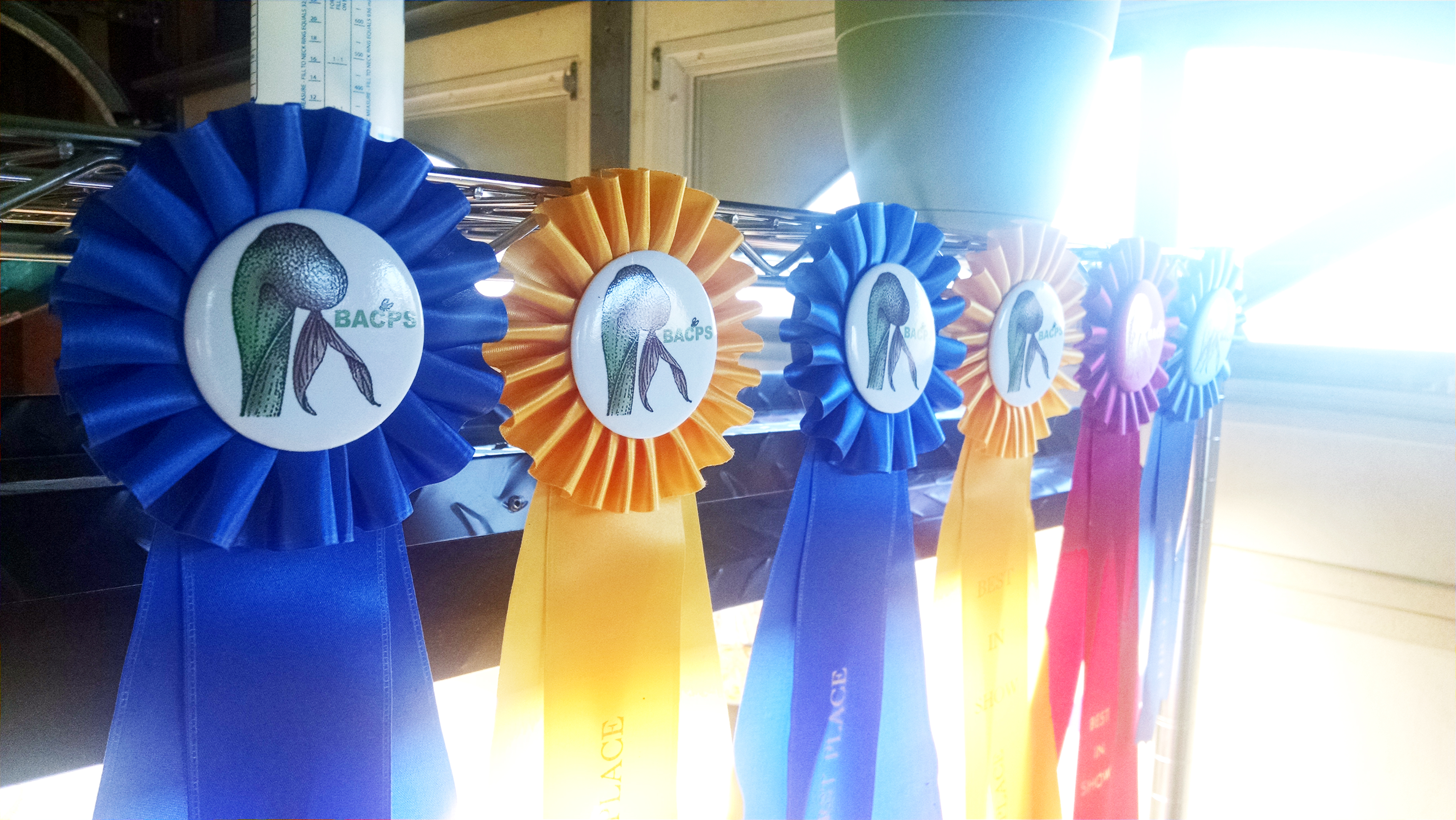
Finally, just to whet the appetite for the upcoming show post.

Ribbons from the BACPS show.
It was lots of fun, but I was tired by the end.
It was a good day!

Friday, May 29, 2015

Field Trip Part 2: Dews and Pings at Predatory Plants

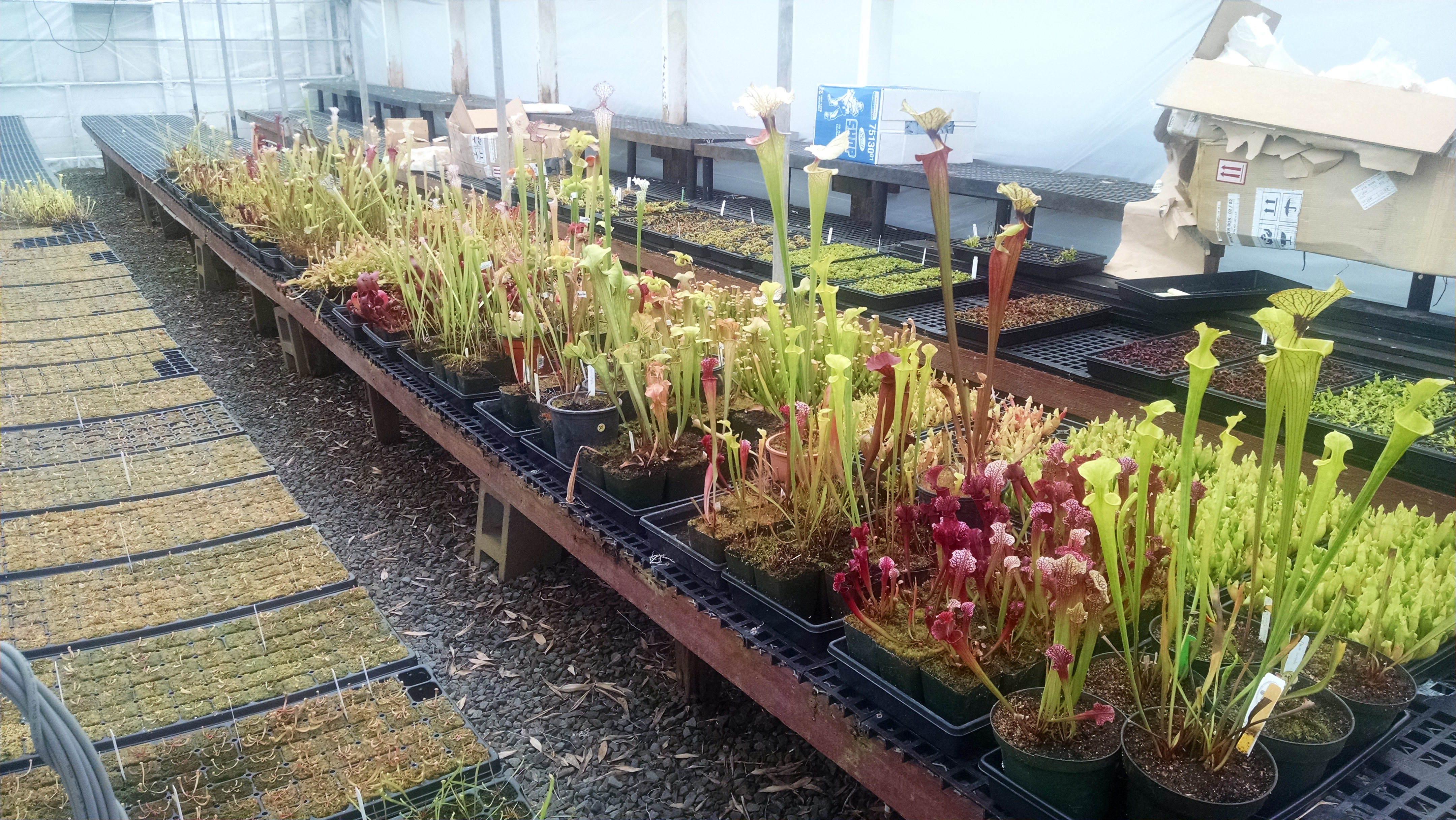
A couple days ago we checked out the Nepenthes at the San Francisco greenhouse of Josh Brown, owner of Predatory Plants. Today we're gonna look some of his other plants, particularly Drosera and Pinguicula. The first thing I noticed when I walked into the work area of the greenhouse, though, were these Sarracenia benches. I laughed when I saw them, because Josh is vocal in his dislike of Sarracenia (he claims he can't grow them well).
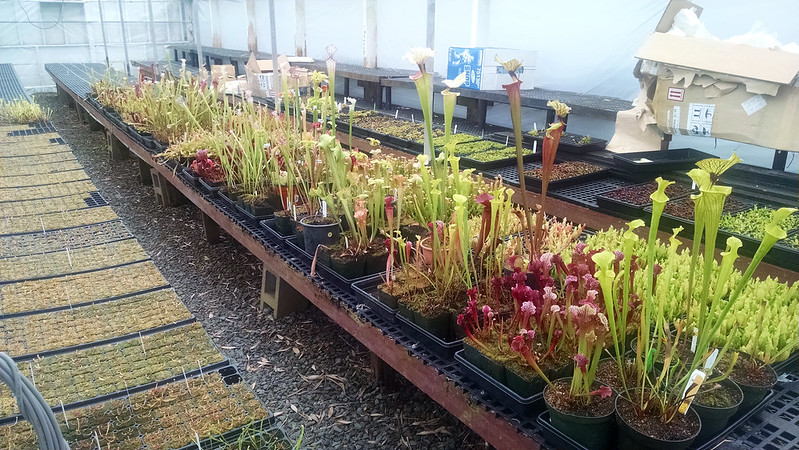
Sarracenia at Predatory Plants.
Babies on the left, monsters on the right!
Those look pretty decent to me! Josh does a lot of sarrs from seed (which you can see on the left), including some in-house crosses. On the right there are specimen-sized plants that he grows for flowers, or for large divisions which can be sold on eBay or what have you.

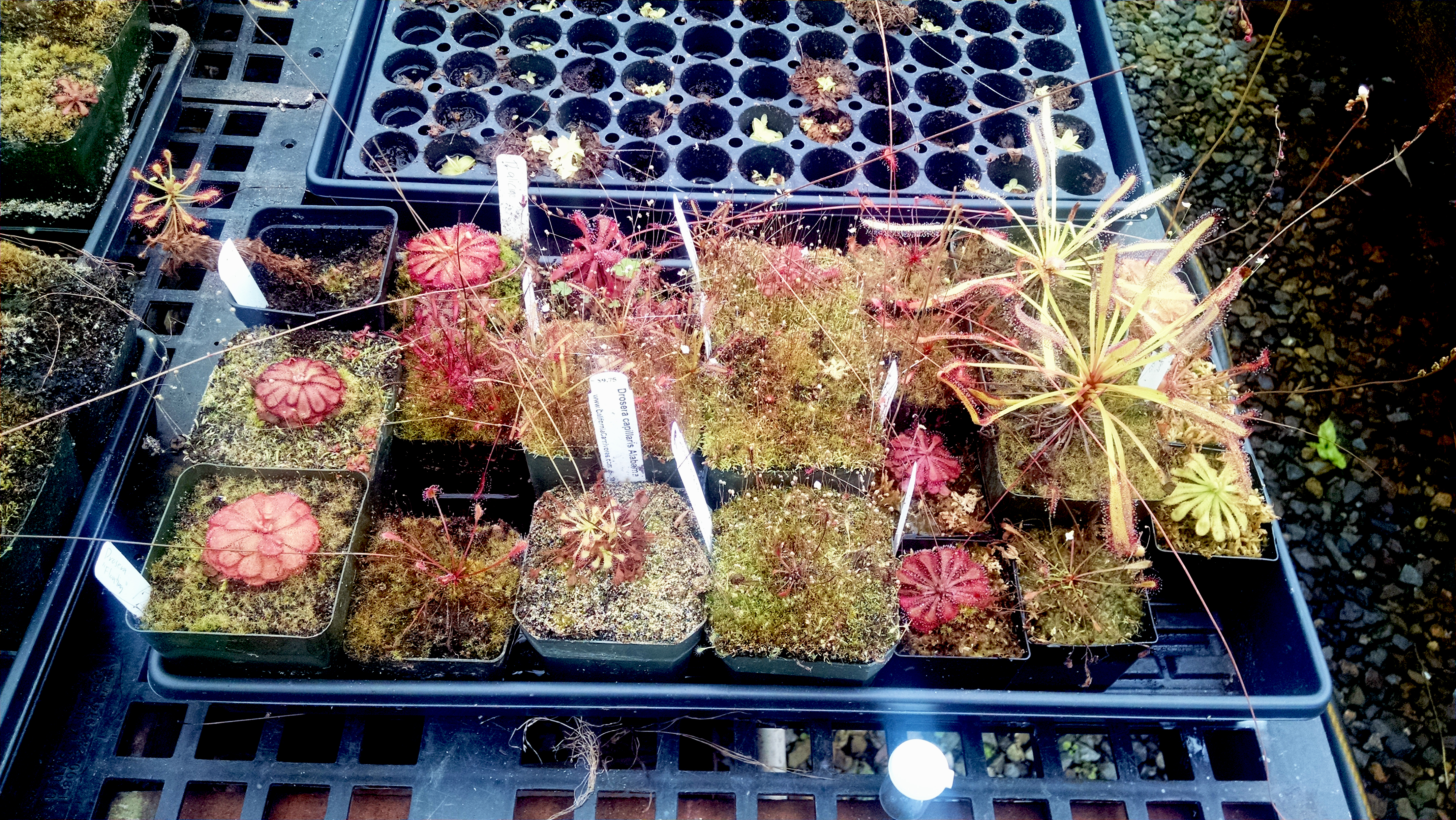
In his heart though, Josh is a Nepenthes and Drosera man. This is his "sundew ark" – the parent stock of (almost) all of the sundews he has in production, and what is pretty much his personal collection.
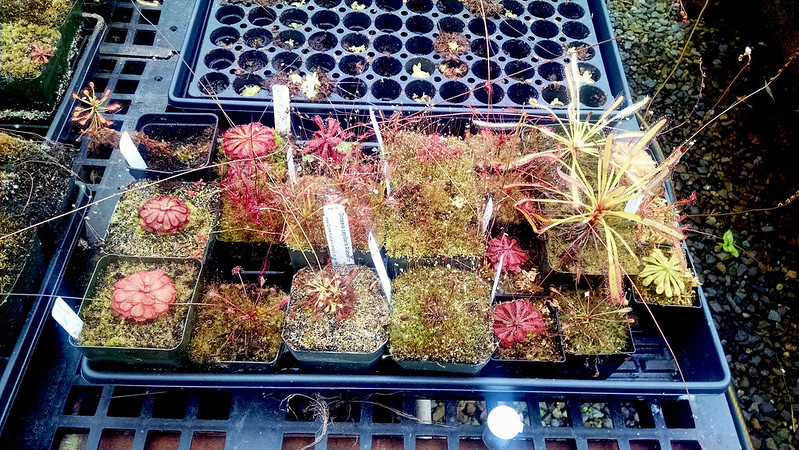
Various sundews at Predatory Plants.
It was cute seeing these parent plants all hanging out together.
He apologized that these plants weren't all looking great, since a number of them had flowered and shrunk back a bit. Still, some of them look great, especially (to my mind) the Drosera sp. Floating (which is a form of Drosera admirabilis) on the bottom left.

Next up is the production area, where he grows out all the dews he sells online and in-person.
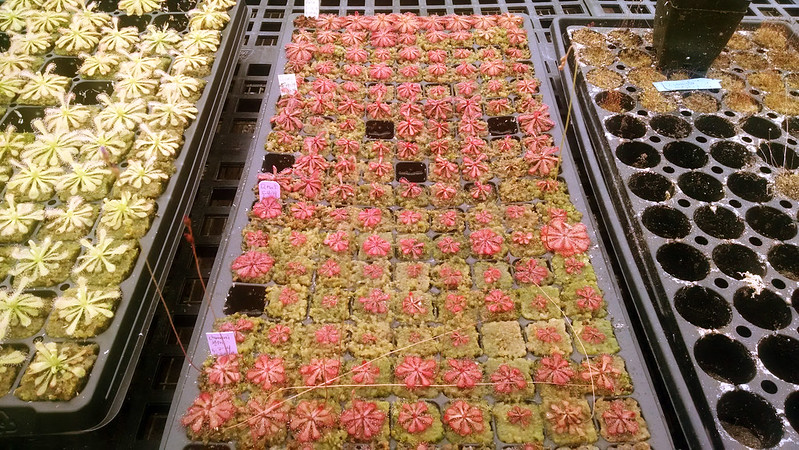
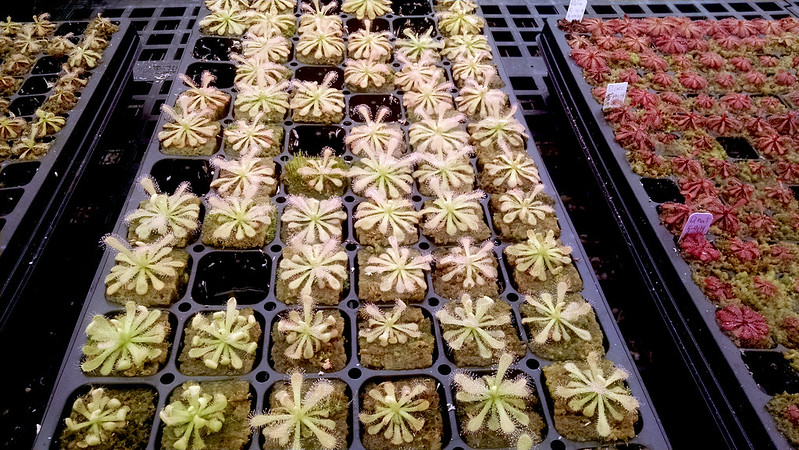
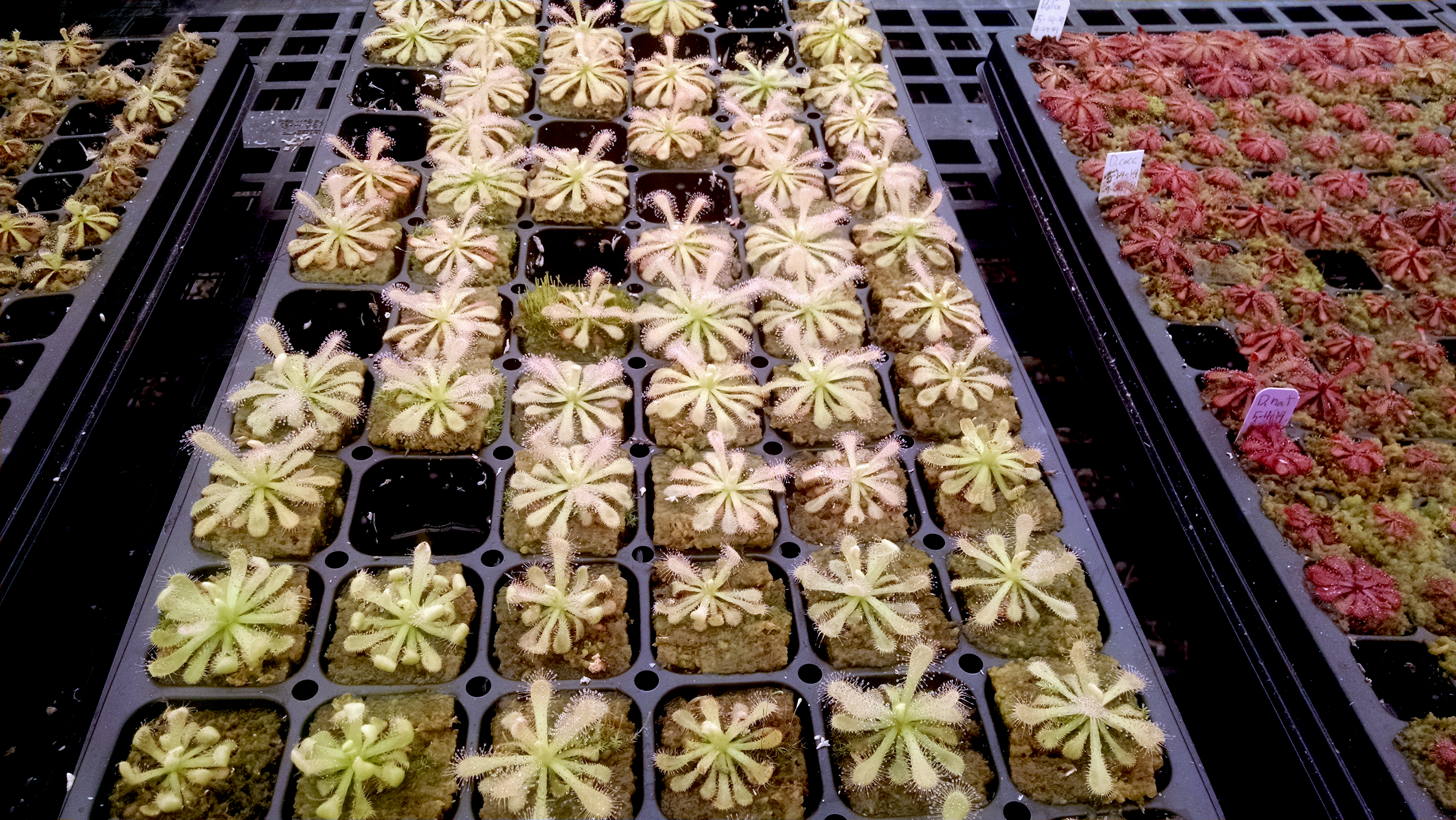
Drosera aliciae, Drosera natalensis, Drosera coccicaulis (i.e. Drosera venusta), and Drosera "Chimanimani Mountains" at Predatory Plants.
In this tray, from top: Drosera aliciae, Drosera coccicaulis (now usually considered synonymous with Drosera venusta), Drosera natalensis, Drosera "Chimanimani Mountains",

Albino Drosera venusta at Predatory Plants.
Albino-colored Drosera venusta. Super cool!
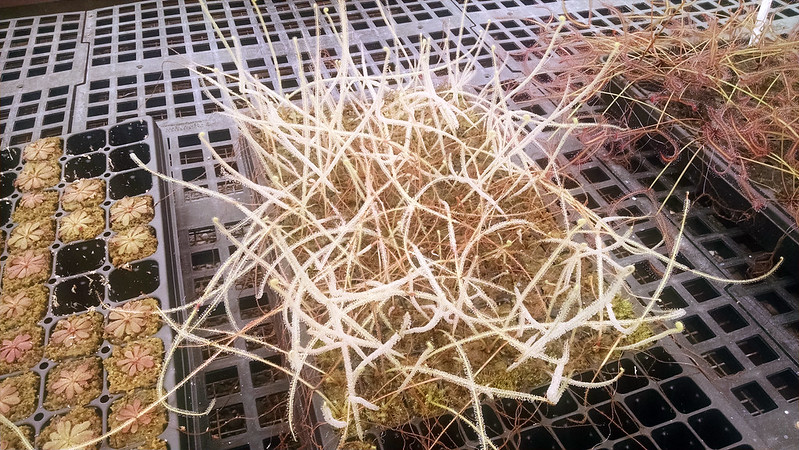
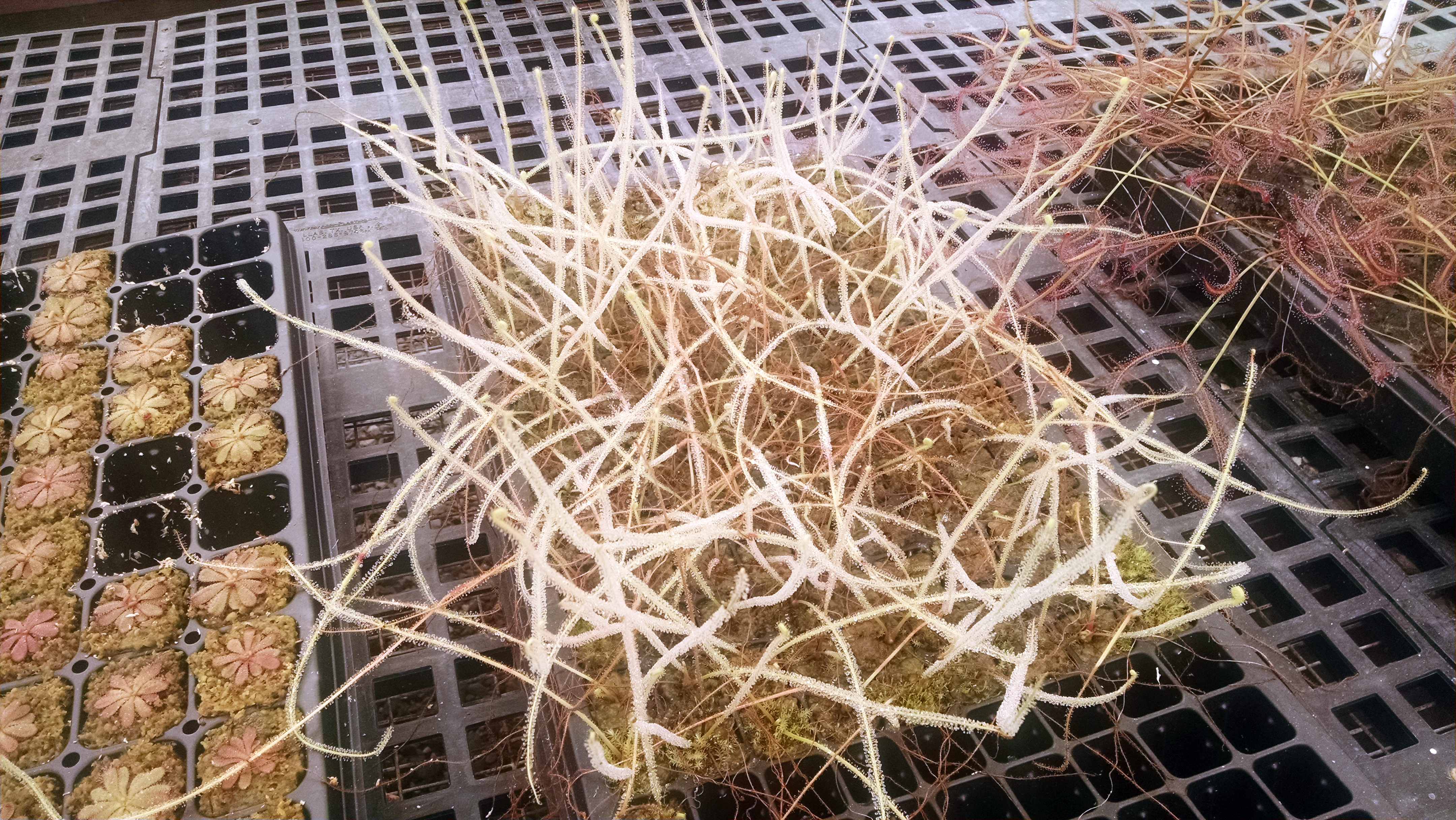
Drosera tracyi at Predatory plants.
Big old tangle of Drosera tracyi.
Josh has an interesting shipping method. He calls it "bare root," but it's significantly less disruptive than typical barerooting. He pops the plant – including the plug of media – out of its tray, wraps the plug up to keep it in place, and then ships it along with an appropriately-sized pot. The purchaser can then just pop it in the pot and Bob's your uncle. Pretty cool!

I thought this tray of Pinguicula lusitanica was cool, and Josh was pretty casually like, "Yeah, I don't know why I have those really, I never sell any."
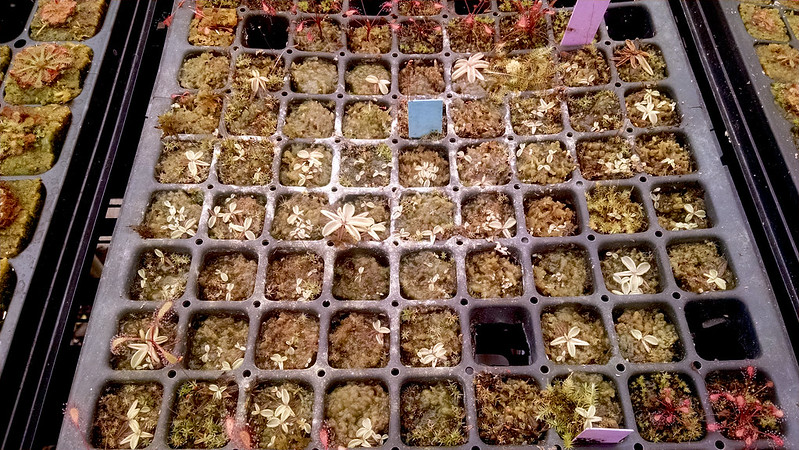
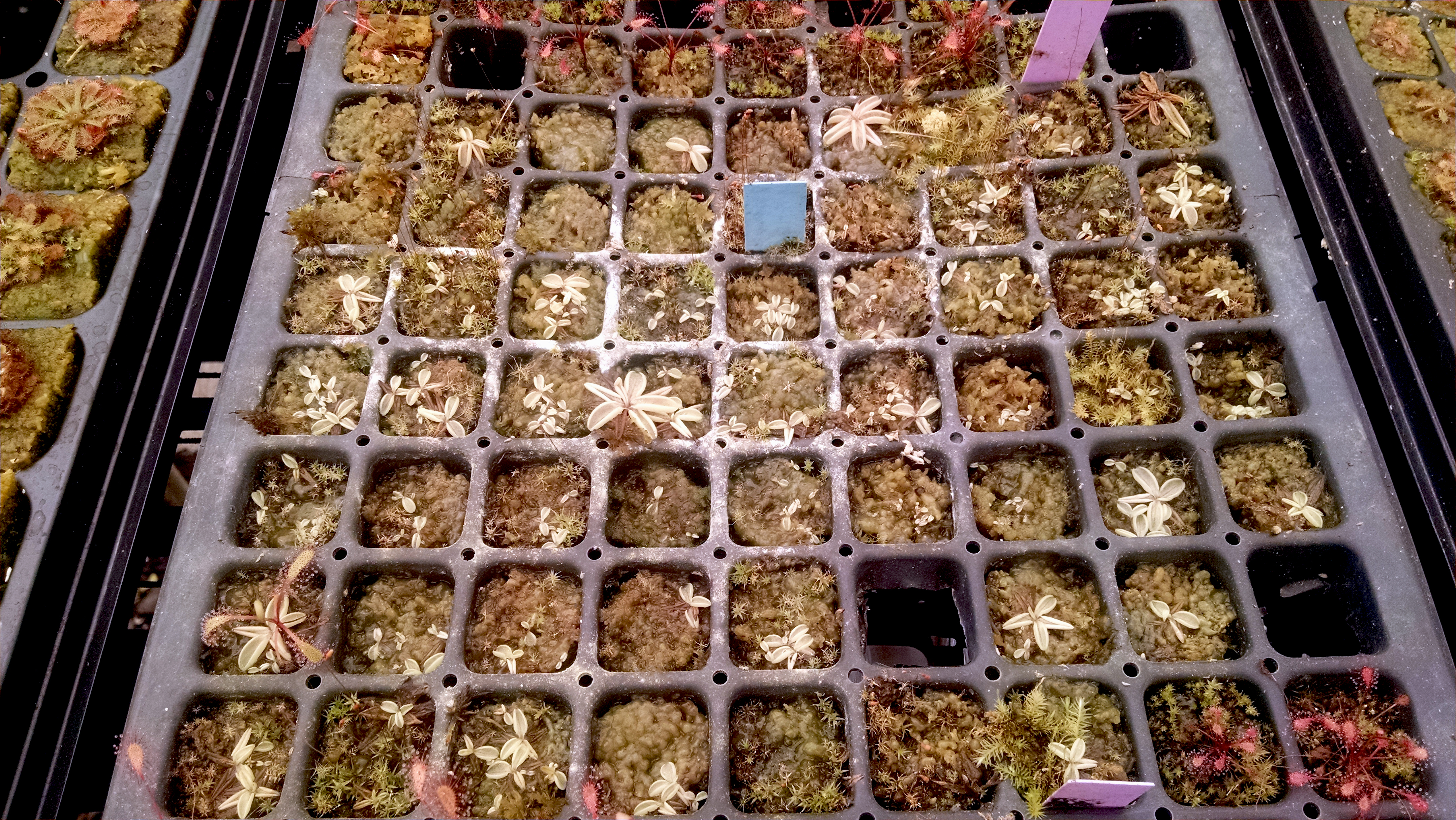
Pinguicula lusitanica at Predatory plants.
Look at all those plugs so neat and full of pings.
I fully intend to lighten him of some of these plants. He meant to give me a pot, but I forgot. My own plants bloomed, failed to set seed, and died.

One of the interesting things about the plant trade is which plants get maintained in production, and which do not. These next two are a perfect example. First up is the absolutely unstoppable pygmy sundew hybrid, Drosera omissa × pulchella.

Drosera omissa × pulchella at Predatory Plants.
What a hilarious mound of plants.
Josh actually lost a bunch of his pygmies this year because he never got around to harvesting and re-sowing gemmae, so when the eventual round of die-offs happened there were no contingencies. I didn't get a picture of it, but he had several trays of pygmy skeletons. It was sad. Except for these guys, which will probably never die. Look at those crazy clumps. Hybrids often have extra vigor, and D. omissa × pulchella is crazy. There's a reason that any place that sells pygmies always has loads of this hybrid.

The counter to this fecundity is the rather lovely Pinguicula planifolia.

Pinguicula planifolia at Predatory Plants.
It's a shape these are so hard to propagate, I think they look awesome.
Most of the more familiar pings propagate very easily though leaf pulls (all the Mexican species, like Pinguicula gigantea or Pinguicula moranensis) or by buds at the leaf tips (Pinguicula primuliflora) or in rare cases, by self-pollination (P. lusitanica). This species – according to Josh – can only be propagated by crossing two different clones and sowing seed. He got this one batch of ~100 plants by crossing two plants a couple years ago, which eventually died. He's been growing these out ever since, and they've never bloomed. So while they're really lovely, don't expect to see many for sale any time soon. Alas.

It was great fun checking out the greenhouse. Always cool to see how someone else solves the problems of growing our favorite weirdo plants!

P.S. Maria let me know in the comments of Wednesday's post that there is in fact a Predatory Plants Instagram. Good to know.
Wednesday, May 27, 2015

Field Trip Part 1: Nepenthes at Predatory Plants

Today I had the pleasure (along with my friend Anne from the Cactus Jungle) of visiting the San Francisco greenhouse of Josh Brown, BACPS President and owner of Predatory Plants. Josh is one of the rare growers that is able to turn an interest in carnivorous plants into a livelihood. He specializes in Nepenthes and Drosera, but he has a decent selection of Sarracenia as well, and is slowly building up his stock of Pinguicula.

Josh and I routinely have good-natured arguments about whether or not Nepenthes suck and are stupid. While I'm not about to rush out and build a highland greenhouse, this visit was a big step in convincing me that maybe they're not as lame as I've always felt (sorry Nep lovers). First though, he wanted to show off some ant plants.

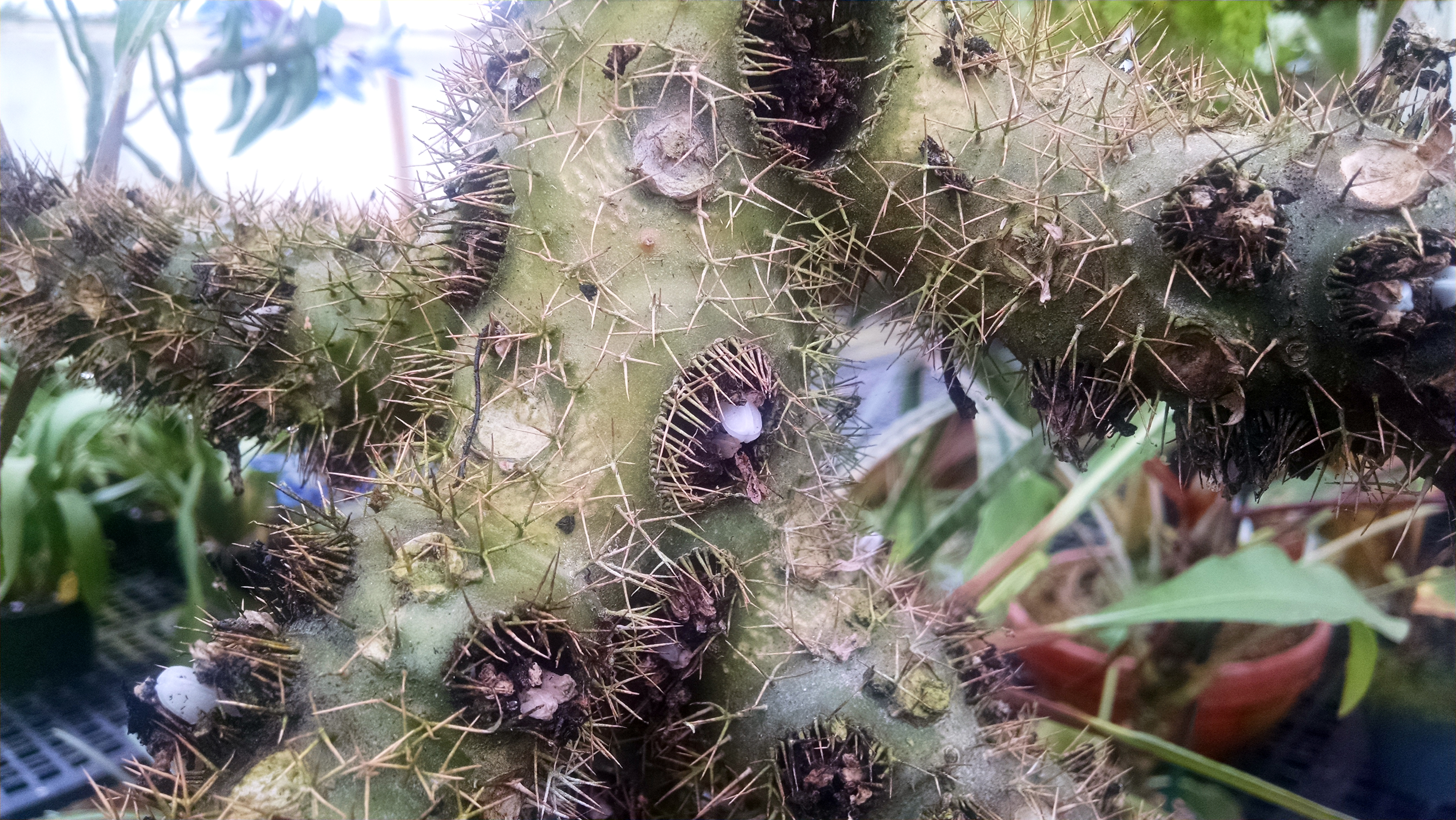
Myrmecodia ant plant species.
Myrmecodia sp., looking rad as hell.
Myrmecodia ant plant flowers.
Those weird white bumps are flowers. Funky.
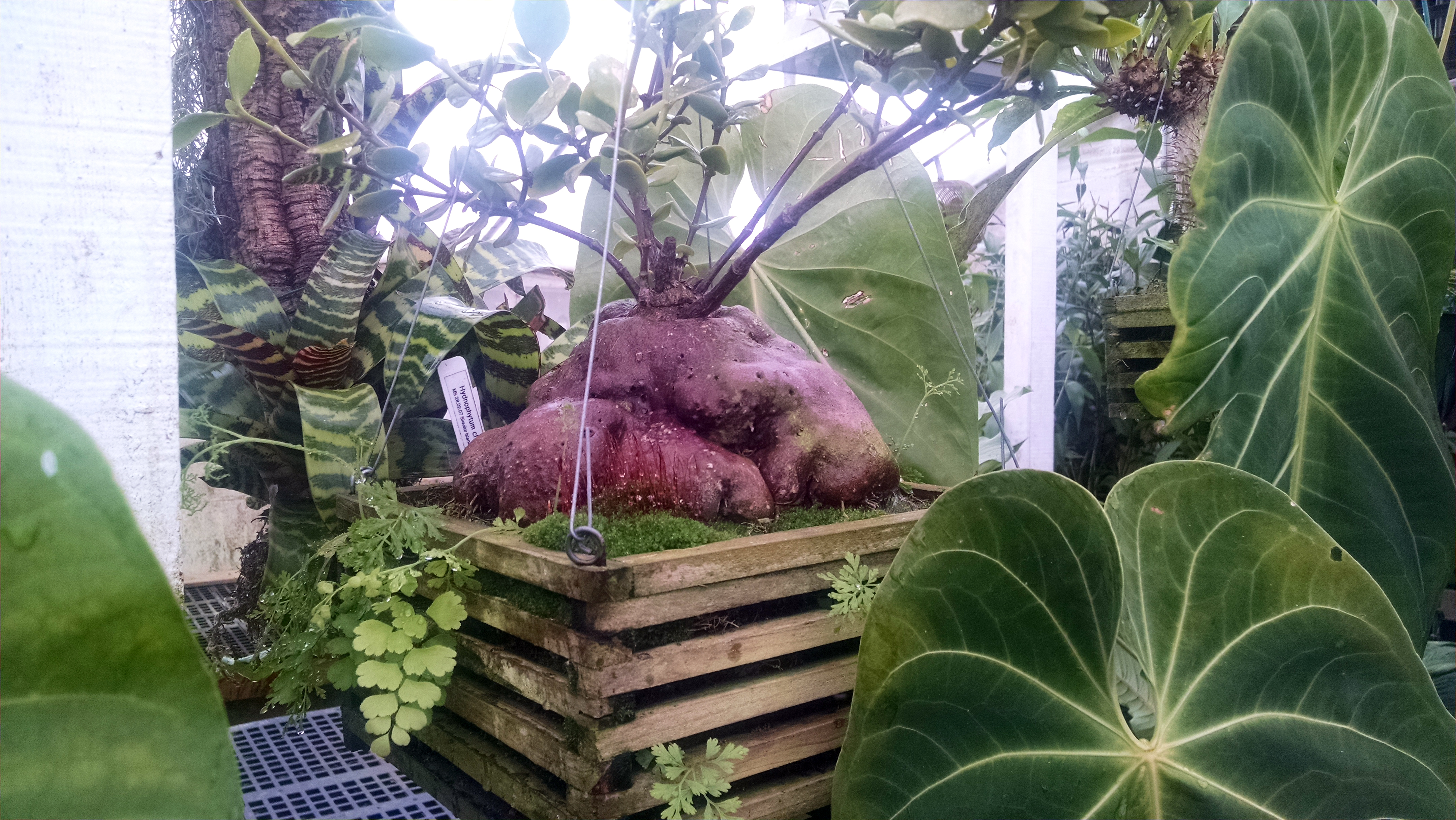
Hydnophytum ant plant species.
Hydnophytum sp. Josh likes the bulbous ones.
These funny-looking epiphytes grow internal chambers in those big swollen stems, which are then colonized by mutualistic ants. These are pretty uncommon in cultivation in the US, but are apparently pretty quick-growing and often self-fertile. Josh is working with one of his greenhouse-mates to figure out good ways to cultivate/sell these. Pretty exciting for anyone with a decent greenhouse!

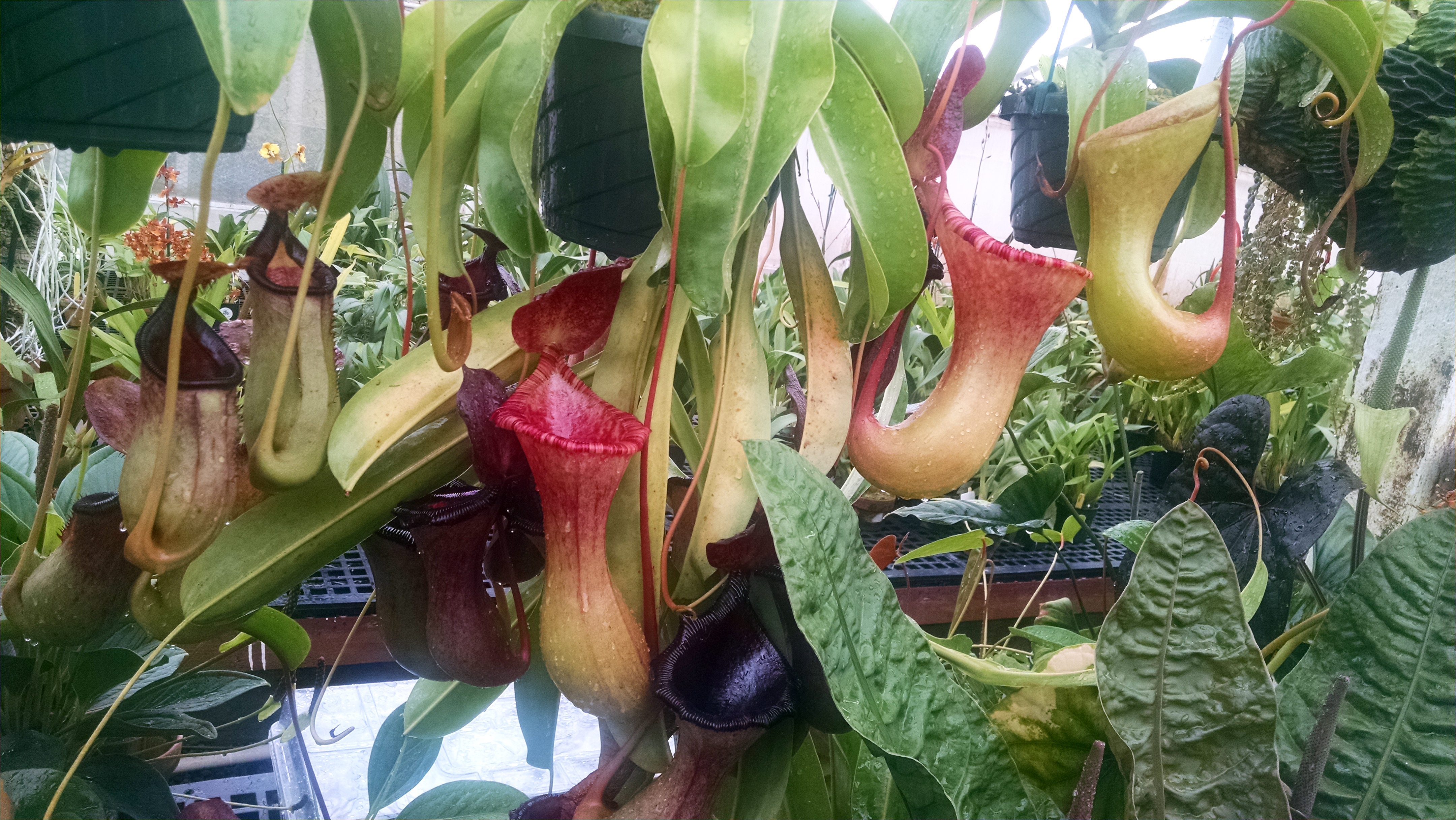
Nearby were the first of the day's neps: Nepenthes ×briggsiana (which is lowii × ventricosa), and a variegated Nepenthes alata.

Nepenthes ×briggsiana.
Dig that color gradient!
Variegated Nepenthes alata.
I think I like this plant, even though Josh doesn't.
The N. alata was very striking, but apparently Josh sort of hates it – like most variegated plants it's finicky and not particularly vigorous. Still, people always clamor for variegated neps – which are pretty uncommon – so he keeps on propagating them. He loved the hybrid though, which I can totally understand.

Down at the other side of the greenhouse space was his work area – announced by this profusion of Nepenthes "Lady Luck" (i.e. ampullaria × ventricosa).

Nepenthes "Lady Luck".
That's a lot of plants!
Josh is growing these guys to use with Borneo Exotics' new Bio-Dome system. The thing looks gimmicky at first, but based on what I've heard from several different growers I actually think I'm going to buy one once they're in circulation. Good-looking plants too!

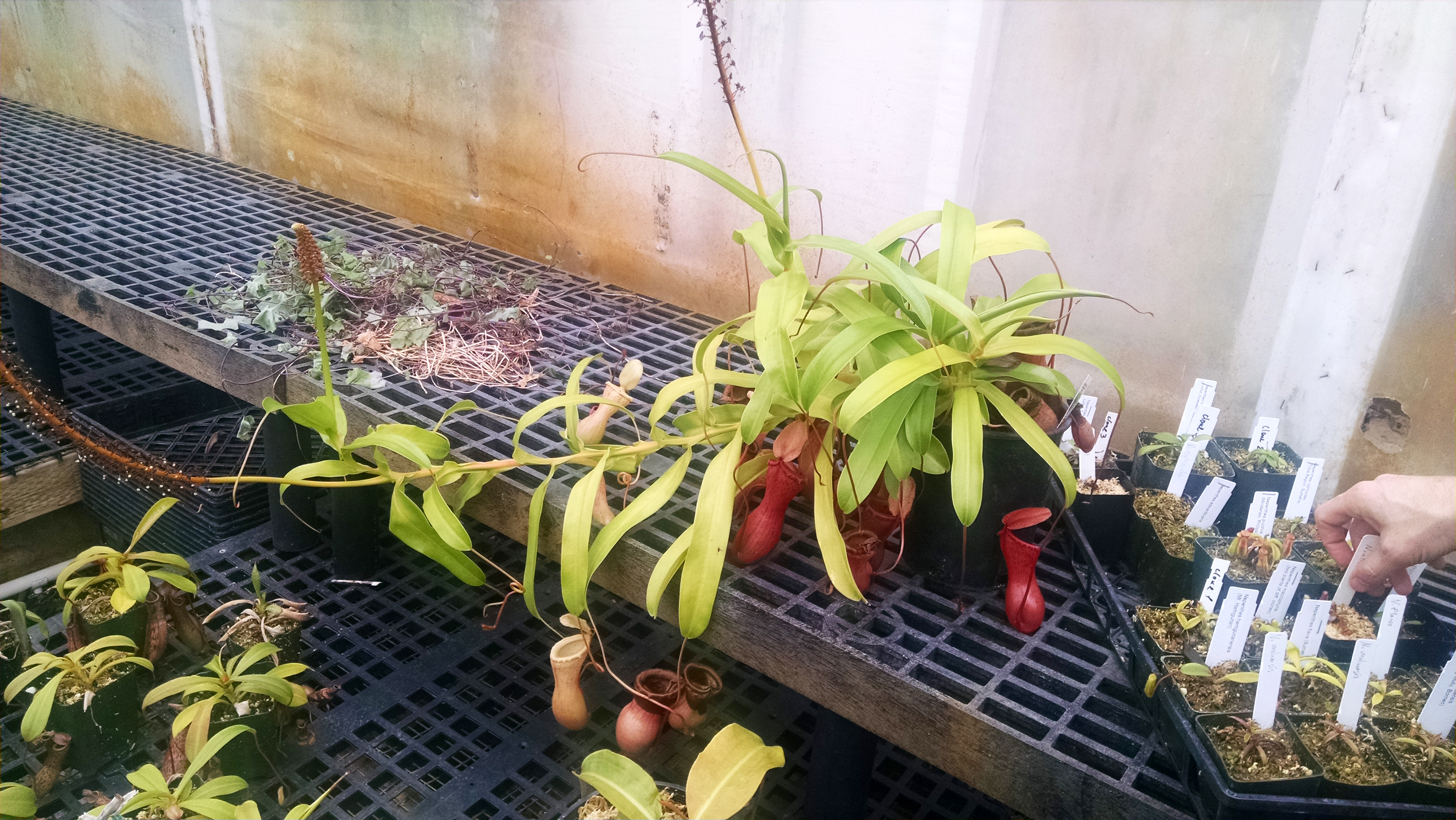
Next up are three big flowering-size plants: a Nepenthes truncata with a 4-foot flower stalk, "Papa ventricosa," and "Mama maxima."

Nepenthes truncata with flower.
The light made getting this shot really hard.
Nepenthes ventricosa.
Great color on this N. ventricosa.
Nepenthes maxima.
Love those speckles.
Josh really likes F1 Nepenthes hybrids, and he's used all of these plants for some nice-looking crosses. Again, seeing his collection started to bring me around to the idea that simple crosses are pretty cool. We agree though that complex hybrids are usually muddy and boring-looking.

Josh has a few great Nepenthes ventricosa hybrids (see the N. ×briggsiana above), and he also has several really nice Nepenthes hamata hybrids, such as this wicked Nepenthes singalana × hamata.

Nepenthes singalana × hamata.
Hairy and shiny.
Great teeth!

Finally, let's leave with some species, since at the end of the day species are what fascinate me.

Nepenthes aristolochioides.
Nepenthes aristolochioides always makes me want to crack my back.
Nepenthes sanguinea.
Totally eye-popping Nepenthes sanguinea.
Nepenthes argentii.
Look at that cute little Nepenthes argentii.
That N. sanguinea is huge, and it's one of the prettiest clones I've ever seen. The N. argentii is the smallest nep in the world. Josh has a hilarious story about how he first imported a couple dozen of them when he was just getting started and sold like 5 of them for $20 since he had no idea what they were worth on the market. He uh, doesn't sell them for $20 any more.
Check out the Predatory Plants Facebook page for more sweet carnivores, and I think Josh is on Instagram too, but I don't know for sure. And check back soon for part 2, when I get to look at plants that I actually want to grow!