Showing posts with label harvesting seed. Show all posts

Tuesday, December 1, 2015

Announcing the ICPS Holiday Seed Drive!

I was meeting with some fellow members of the BACPS recently and we got to talking about the ICPS Seed Bank. The seed bank, if you are unaware, is a resource for ICPS members looking to grow carnivorous plants from seed. It's supported by members' seed donations, and lately it's been looking a little bit less awesome than it has in the past. So – along with my fellow carnivorous plant bloggers Maria and Natch – we decided to run a holiday seed drive to get it nice and stocked for the new year!

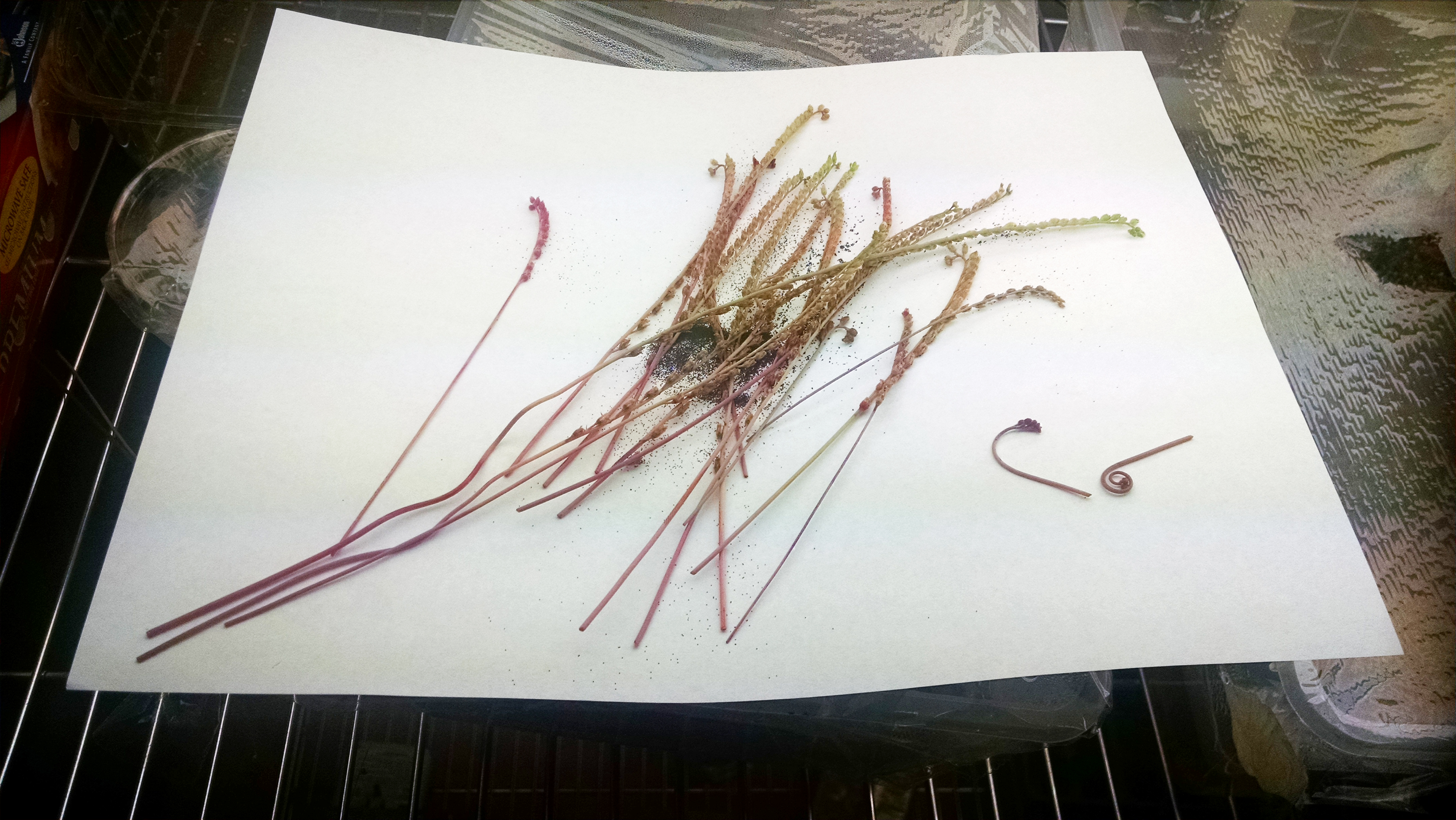
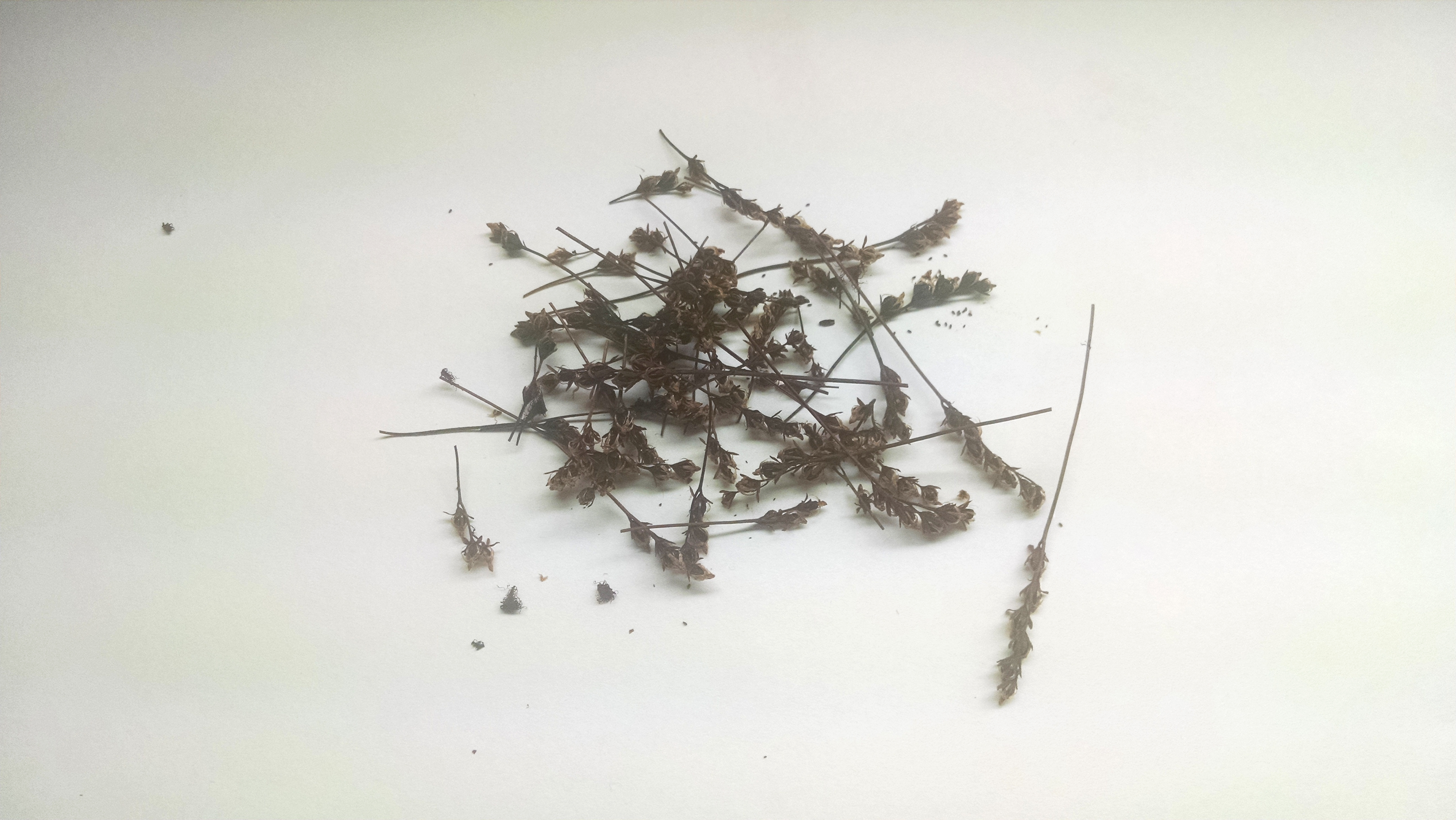
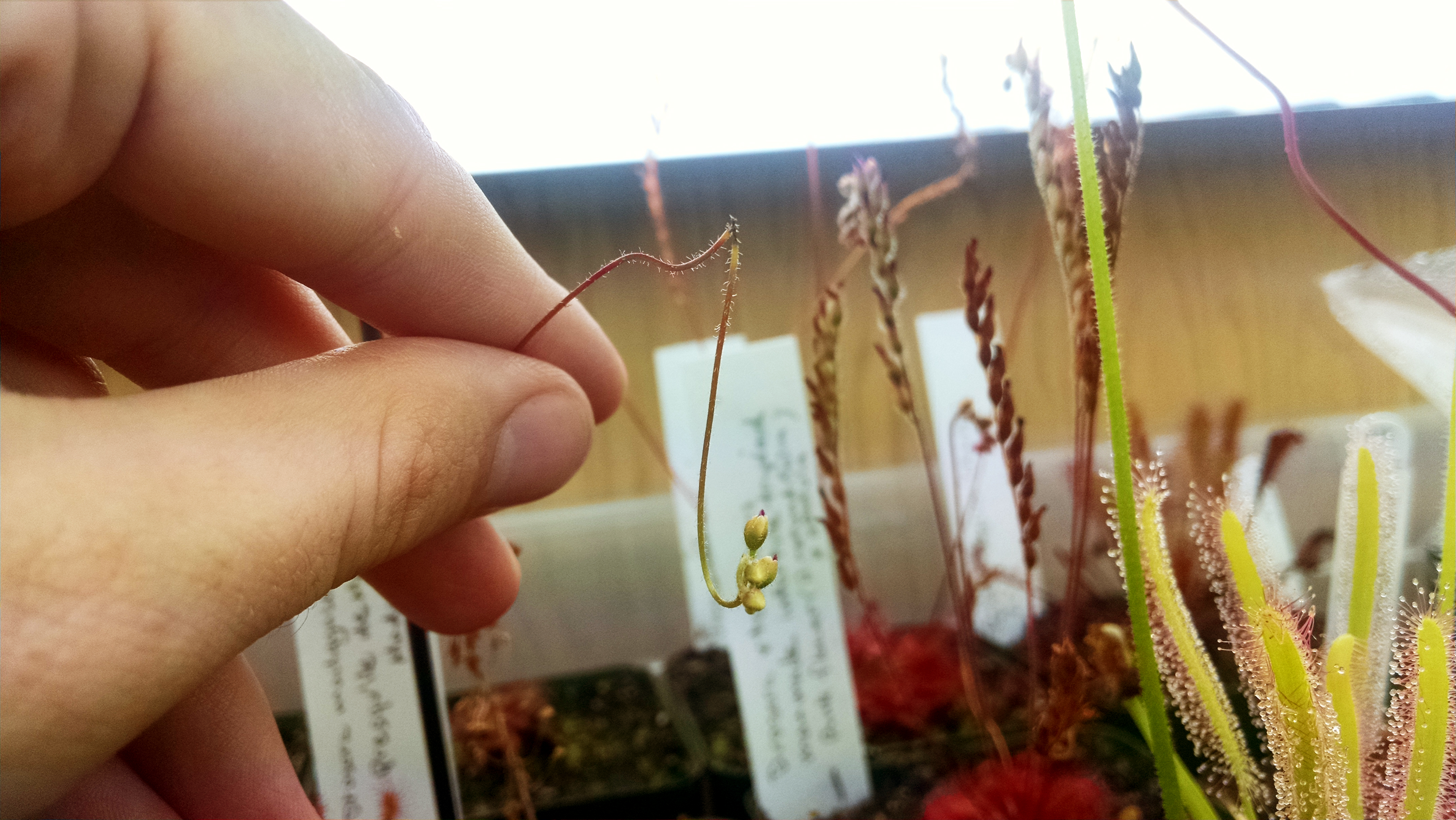
Drosera burmannii flower stalks and seed.
The halcyon days of having infinite Drosera burmannii seed...
There's lots of info on the Seed Bank portion of the ICPS site, such as:
When I was first starting out, these articles helped me figure out how to deal with my own seed (I even made a post about it), so you should read them even if you don't have anything to donate. And if you do, what are you waiting for?

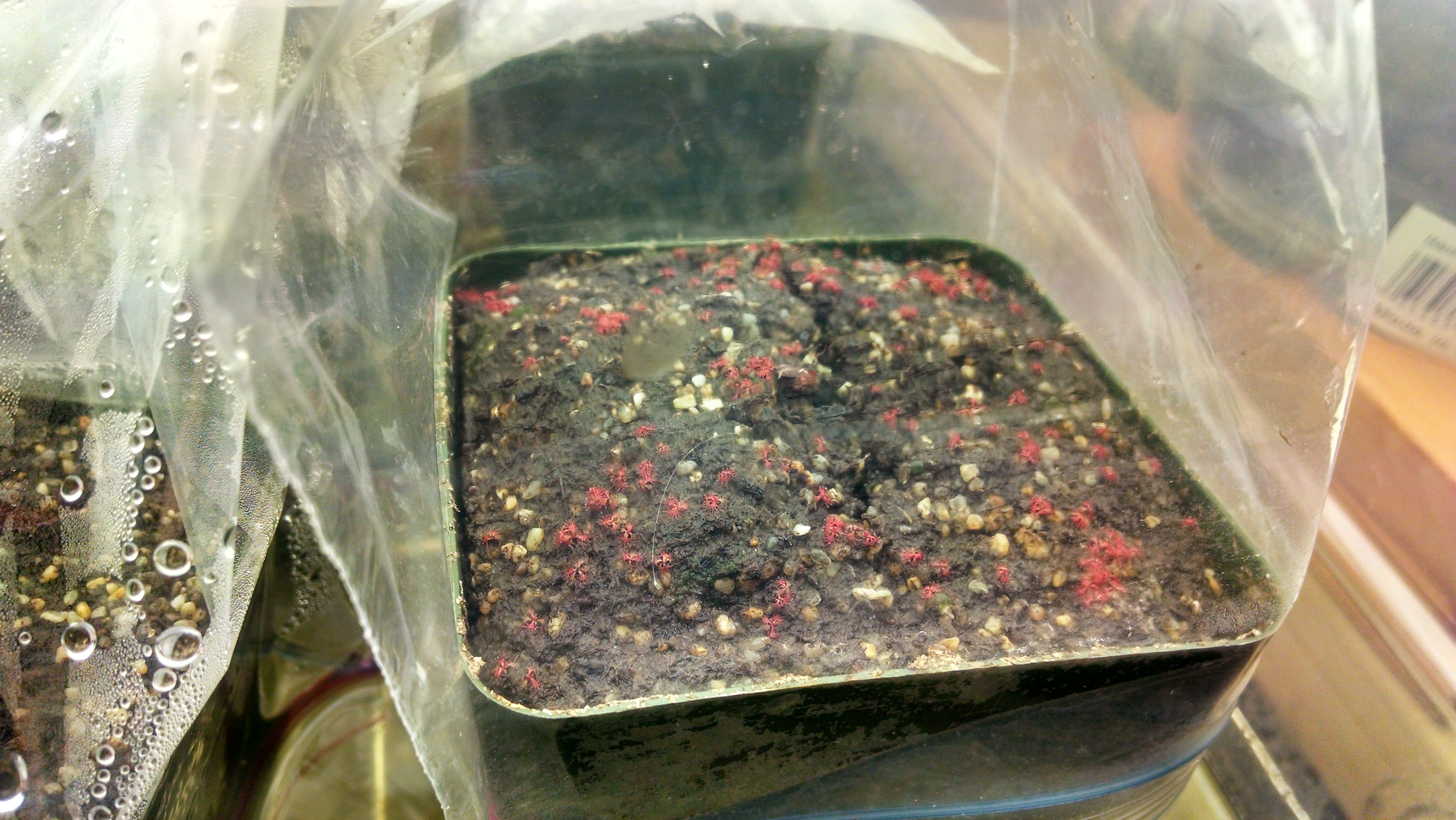
Drosera natalensis seedlings.
I've always enjoyed growing from seed. It's really fun if you've never tried it!
To make it a little easier, here are some supplies that I've come to like using for seed:

Interfolded wax paper sheets

These are much more convenient that your standard wax paper roll, since they don't curl at the edges. Mine are 10" × 10 3/4", so I basically just cut them in half 4 times to get 16 squares for envelopes. The ones I linked are 12" × 10 3/4", but should still be very easy to use.

#1 coin envelopes

I got tired of folding envelopes pretty quickly, and these were not expensive. I bought 250 at Staples for like $10, but if you want to never run out, that listing I linked is 1500 envelopes for $15.


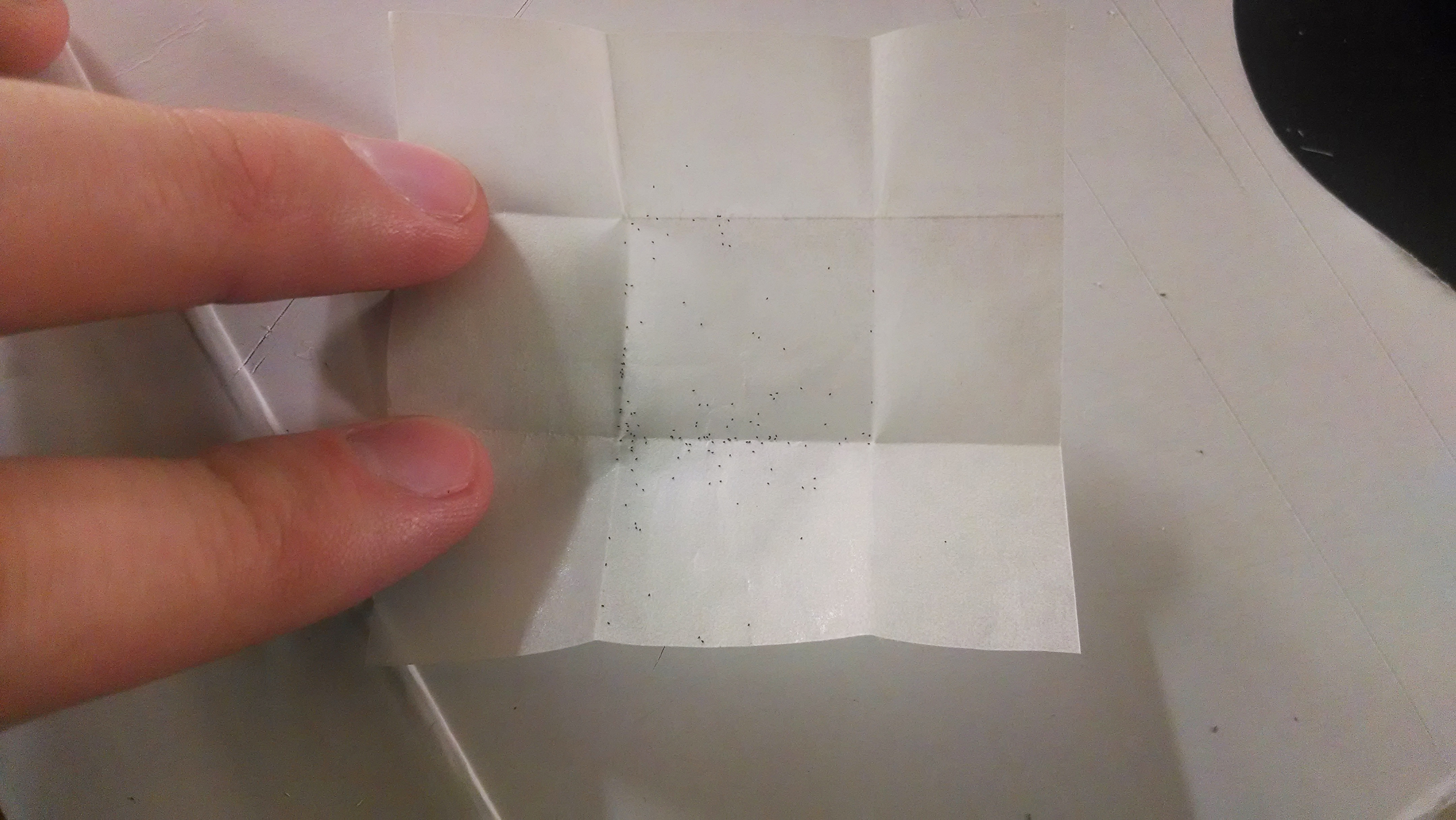
Drosera burmannii seed in a packet.
Don't sneeze around your sundew seed.
What will I be donating? I need to look through my stock of stuff, but definitely Drosera burmannii Humpty Doo, Drosera anglica CA × HI, some Drosera 'Emerald's Envy', and probably some Drosera oblanceolata. What should you donate? Drosera, Sarracenia, Dionaea, Byblis, Drosophyllum, and Cephalotus all have the longest-lasting seed. However, you better believe that if you have Pinguicula, Utricularia, or Nepenthes seed it will get snapped right up and really appreciated by the community! I'm really hoping to see some of the rarer Byblis come out of this drive, as well as maybe some South American sundews.

The address to donate is
International Carnivorous Plant Society
Seed Bank
2121 N. California Blvd., Suite 290
Walnut Creek, CA 94596-7351
If you decided to donate, post on the Facebook event page, or use the hashtag #ICPSHolidaySeedDrive to share pictures of yourself or your piles of seed on Instagram or Twitter or whatever. And if you're not a member, don't forget to join the ICPS! It's a steal at $30/year, gets you access to the seed bank along with quarterly full-color newsletters, and is one of the most important groups in the world for carnivorous plant information and resources. Happy holidays, everyone!

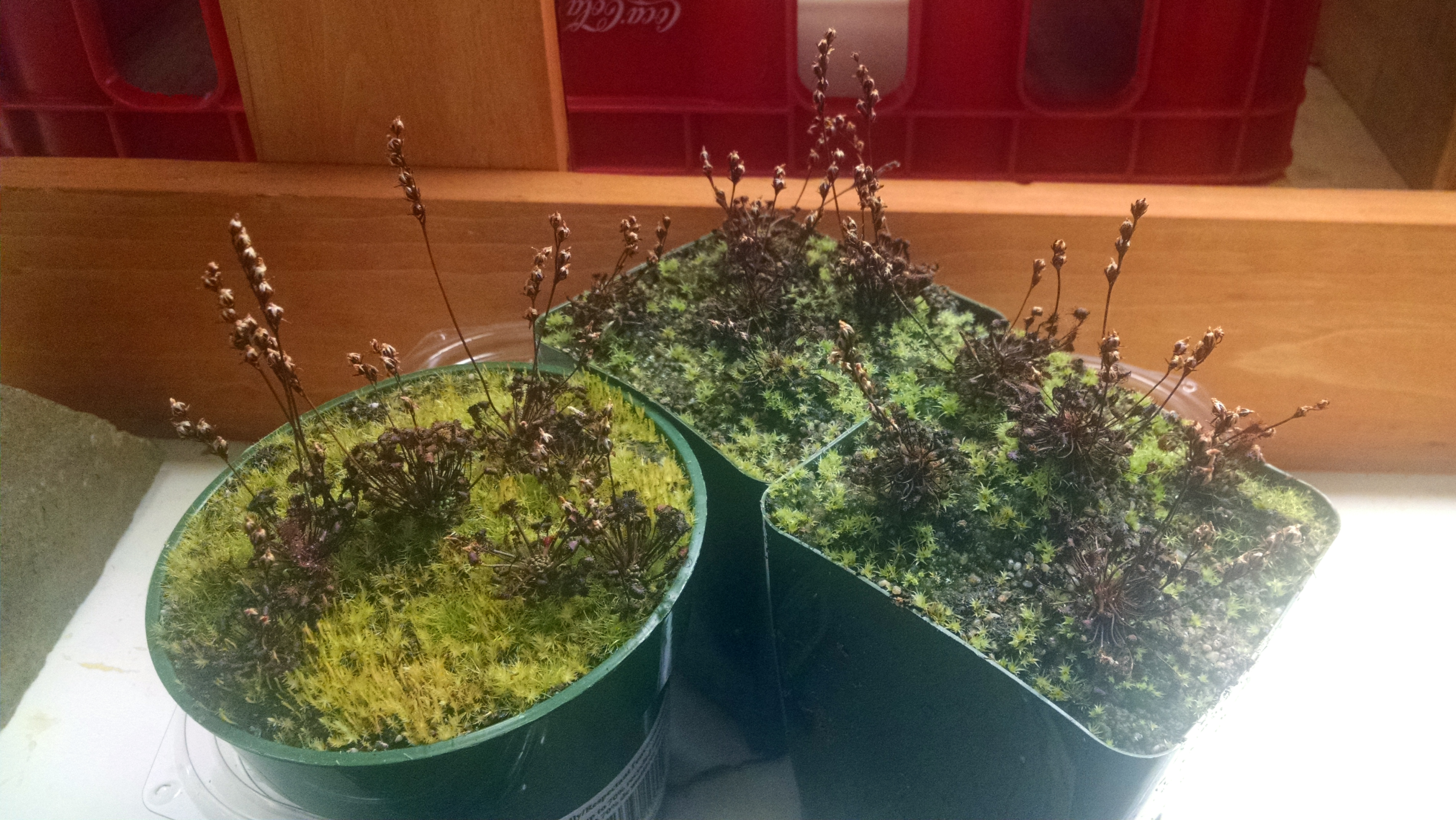
Weird windowbox thing of D. capensis seedlings.
Soon...

Friday, January 16, 2015

Drosera intermedia 'Cuba' gets a haircut

My Drosera intermedia 'Cuba' have been looking a bit messy since they went dormant.

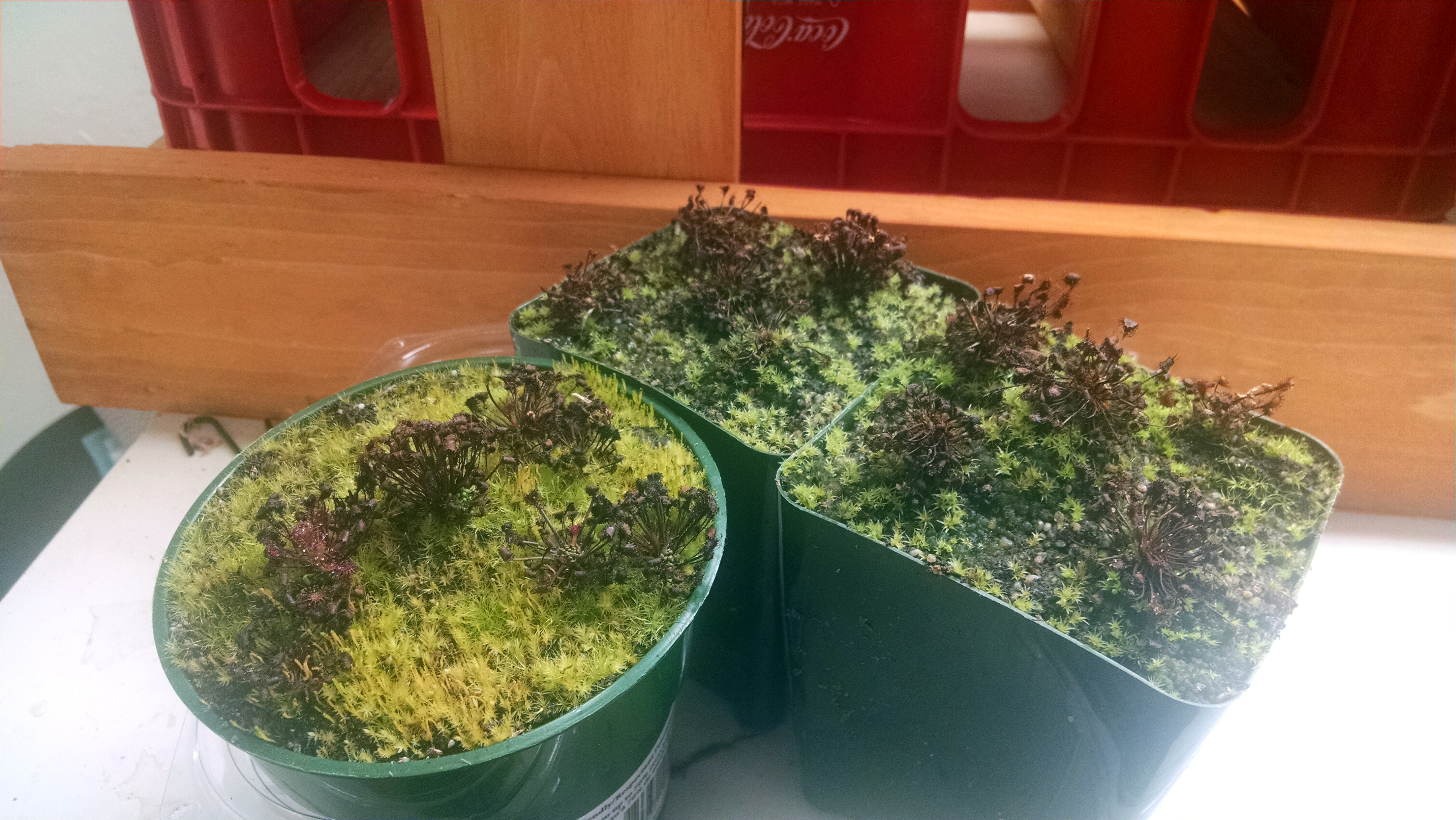
Drosera intermedia 'Cuba' dormant plants
Dormant sundews aren't particularly handsome, especially not covered in dead leaves.
There's also a lot of seed in there waiting to be harvested. I started off trimming the flower stalks.

Dorsera intermedia 'Cuba' flower stalks.
There ended up being a lot of flower stalks.
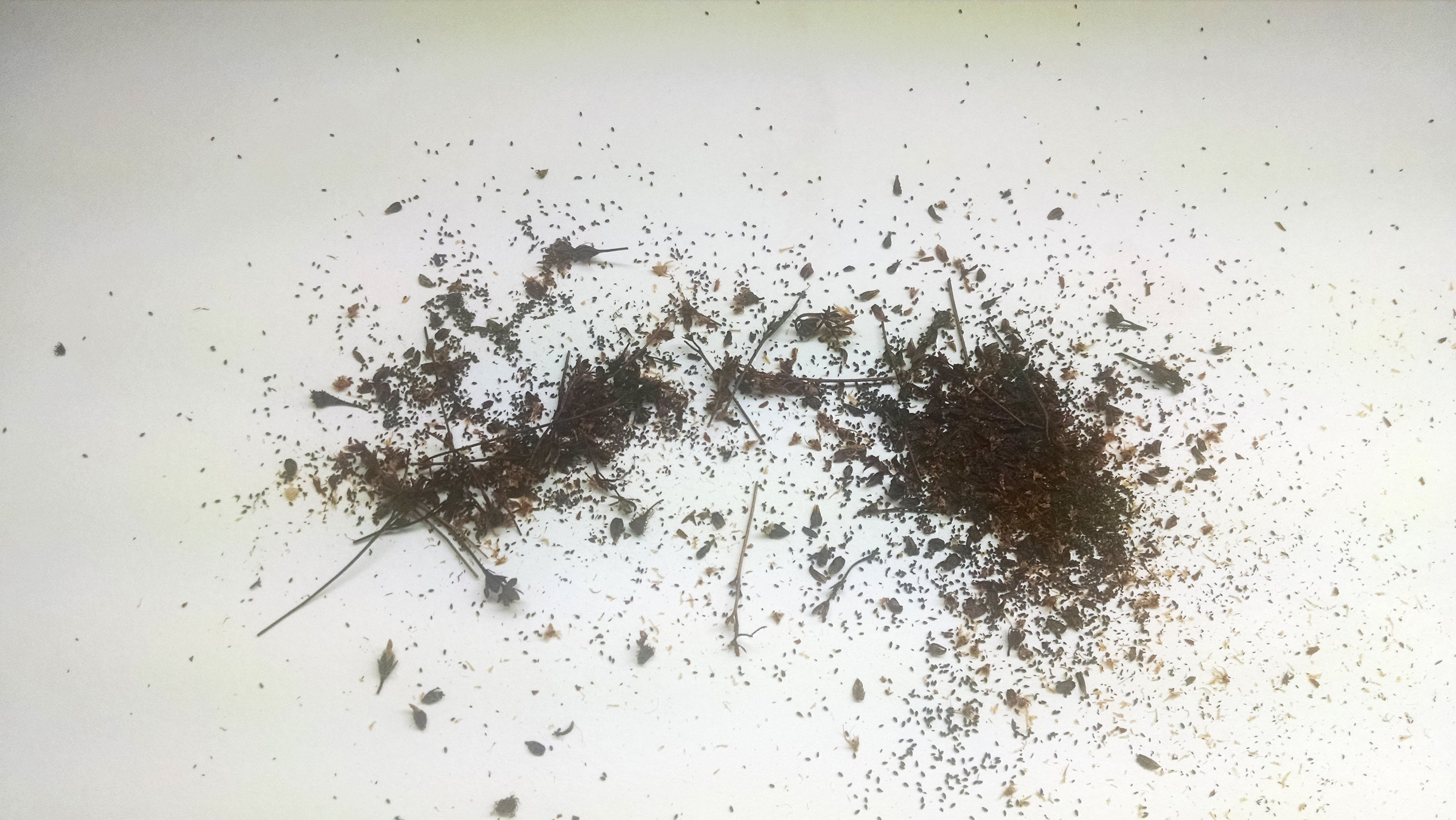
D. intermedia 'Cuba' seed pods hold their seeds fairly securely, so I had to pinch and roll a bit to get the seed out. This left a bit of a mess.

Dorsera intermedia 'Cuba' seed harvesting.
Messy messy.
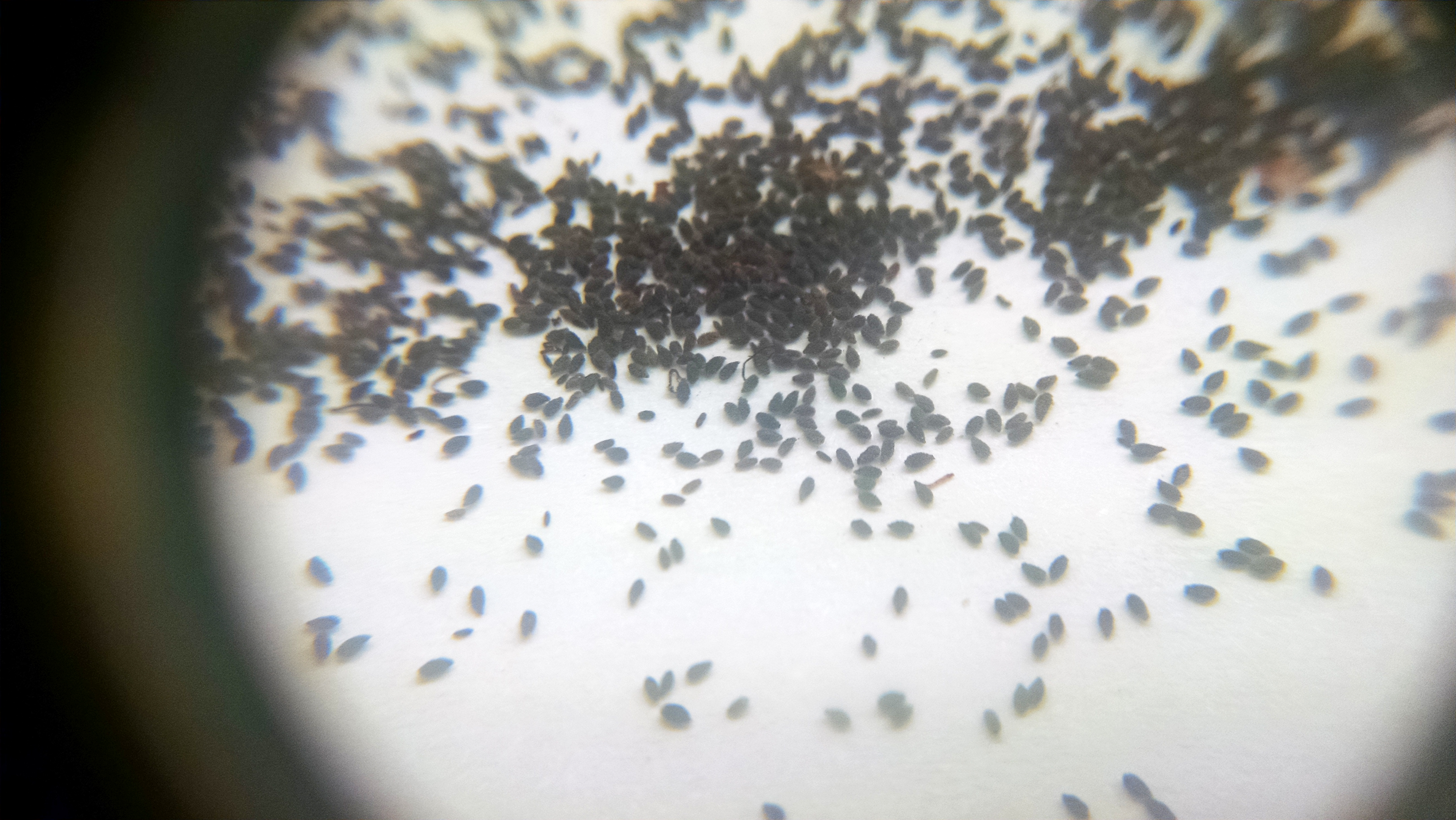
I used a wire mesh strainer to get the big bits out, and then I used the cleaning method I covered in this post to separate the high-quality seeds from the low-quality seeds and other chaff.

Good Dorsera intermedia 'Cuba' seed.
Good, high-quality seeds.
Bad Dorsera intermedia 'Cuba' seed.
Terrible seeds and chaff, same magnification.
Lots of Dorsera intermedia 'Cuba' seed.
A satisfying pile of seed.
Quite a nice bit of seed, that.

The plants were looking a bit better by this point.

Dorsera intermedia 'Cuba' getting trimmed.
Almost there...
But I still wanted to get rid of all of those dead leaves. A bit of (careful) scissor work later, and they look positively military.

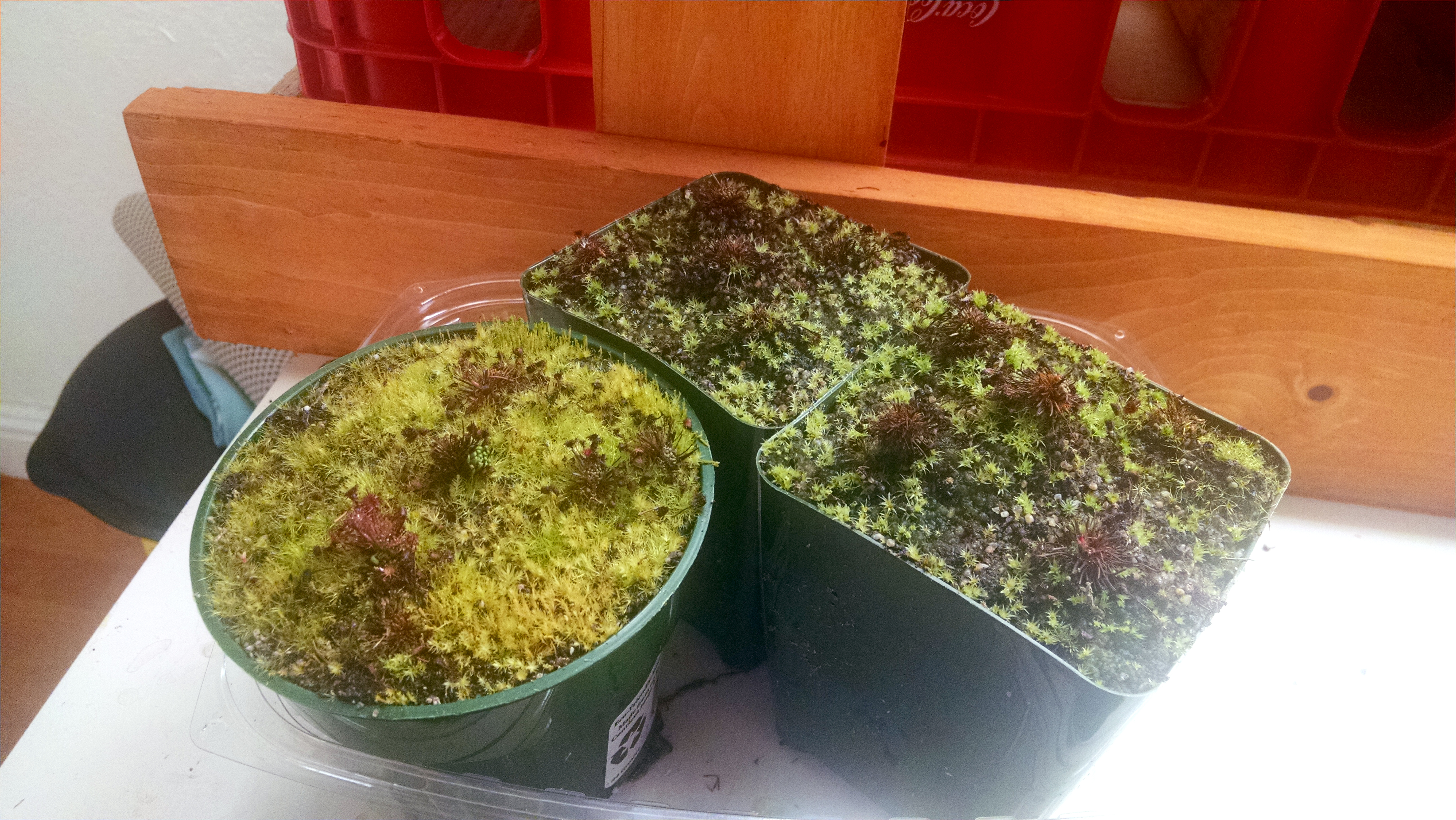
Dorsera intermedia 'Cuba' hibernacula.
Nice and freshly-trimmed.
There's even one waking up on the bottom left of this picture. I'm going to donate at least one pot of these guys to the BACPS raffle, if only to make more room in my collection.

Saturday, August 2, 2014

Burned-up flower stalks

I've been quite busy lately, and haven't had much time to spend with my carnivores. Unfortunately, when you are forced to neglect your plants for a week or two, sometimes things go wrong.

This is the Drosera madagascariensis which started blooming recently. I was really excited, but today I noticed something disappointing.

Droopy Drosera madagascariensis.
D. madagascariensis overestimated its own strength.
It's a bit hard to see in this photo, but the plant is drooping under the weight of the flower stalk, in part because of how long the stem is. The single cocktail straw I was using wasn't enough, and I didn't notice it soon enough to add other support. As a result of the drooping, the flower stalk grew right up into my lights and got burnt.

Burnt up Drosera madagascariensis flower stalk.
Poor little flower stalk.
I use T-8 lights, which operate much cooler than T-5s, but the flower stalk still didn't like being pressed up against the bulbs for who knows how long. I cut off the stalk so it won't keep stressing the plant. Maybe next time I'll be able to manage a D. madagascariensis flower stalk better. Oh well.

I've also had this happen with one of my Drosera burmannii. Remember my competition pot has been blooming like crazy. One of the stalks grew up into the lights and died.

Burnt up Drosera burmannii flower stalk.
It still looks like it wants to grow, but no dice.
This wasn't nearly as big a blow though, since my D. burmannii are so prolific. In fact, I decided to harvest my biggest stalk today, along with 2 others.

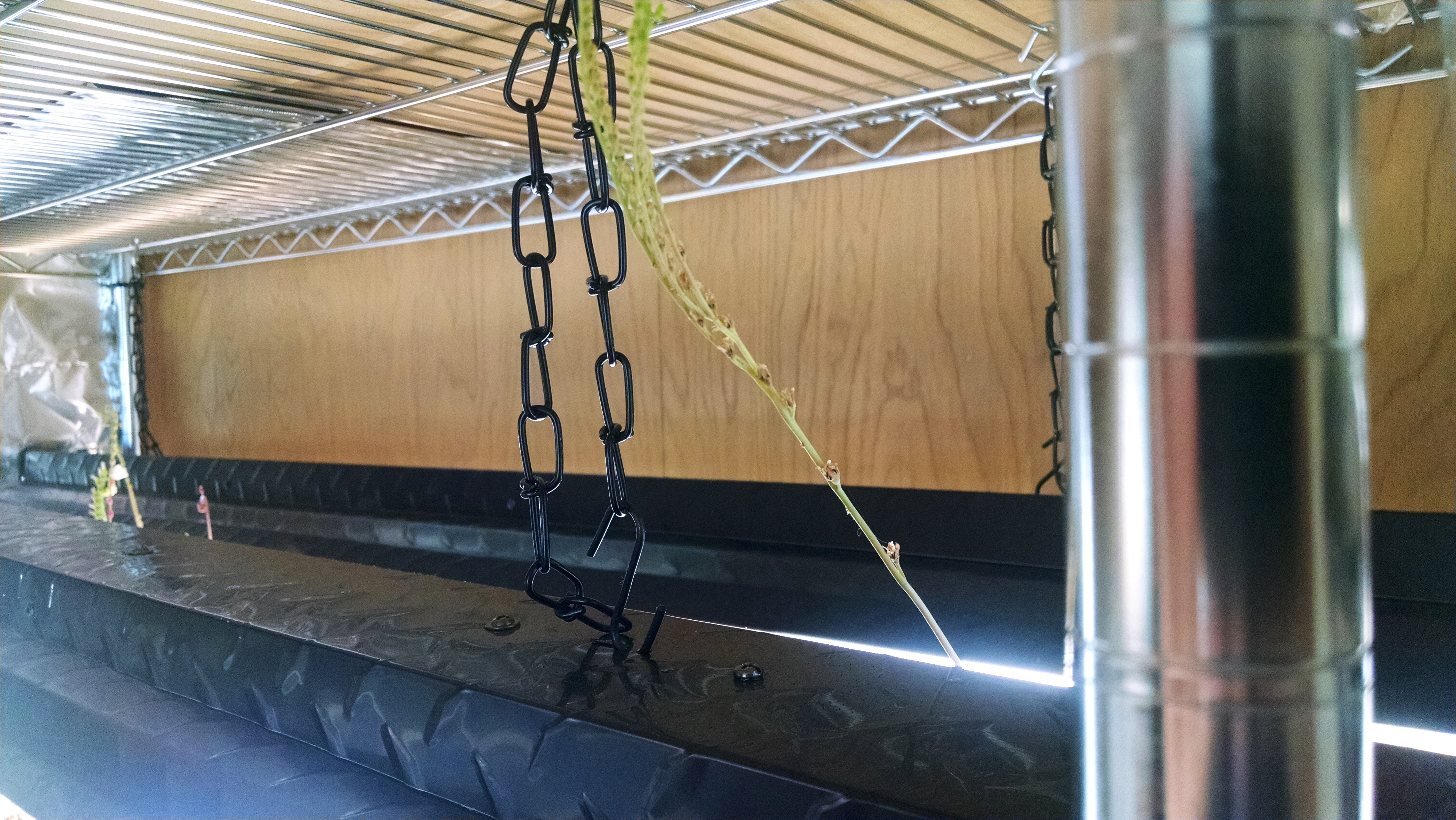
Drosera burmannnii flower stalk leaning over.
This was seriously getting bumped all the time.
As you can see, it had started leaning over my lights, which meant that every time I reached into my trays to do something and knocked the lights a bit of seed spilled out. I hope I didn't get seed everywhere, but it's totally possible I did. I figured I didn't need to wait for everything to be fully ripe to get enough seed. And I was right! I got way, way more seed then I could ever do anything with.

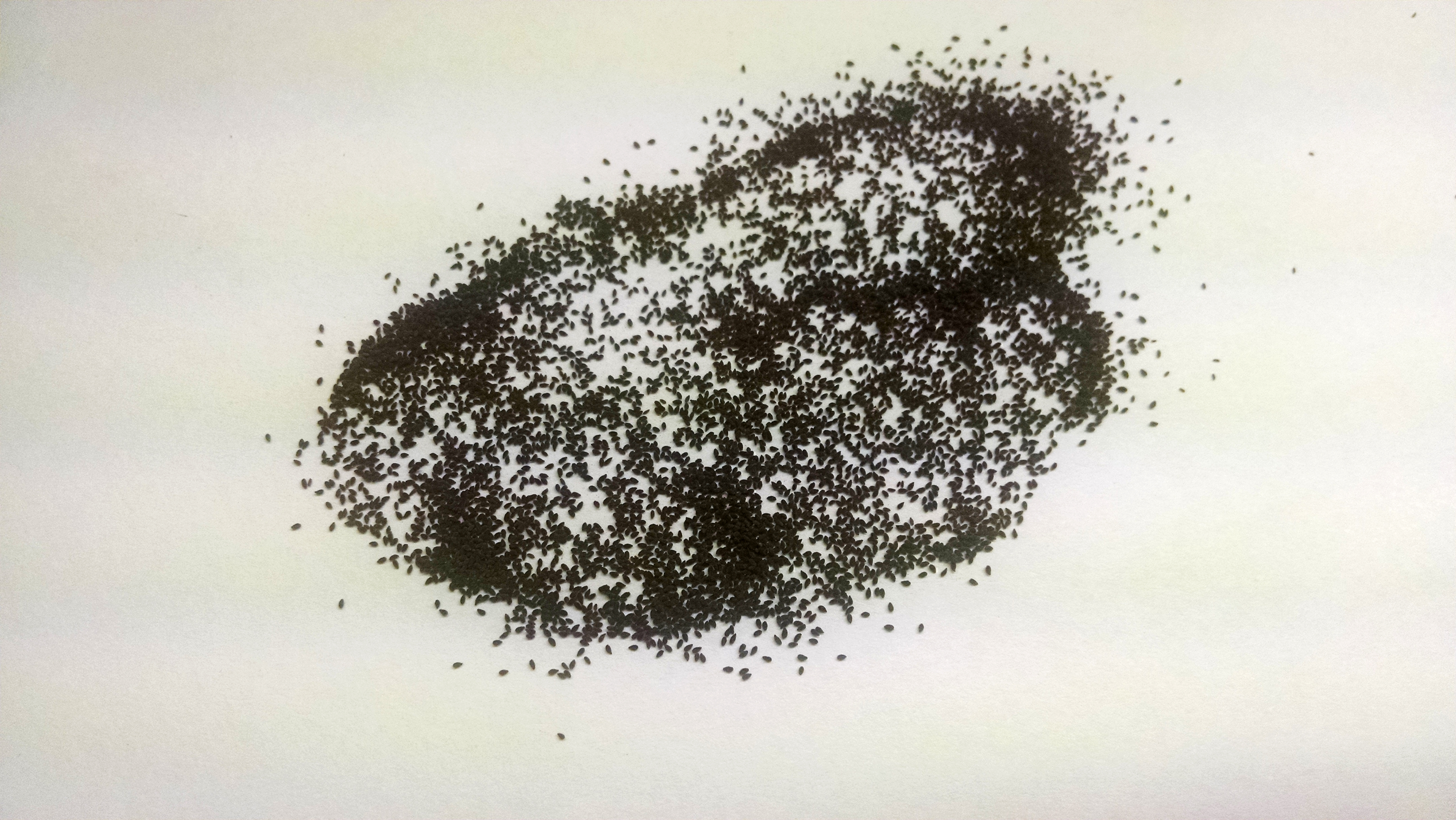
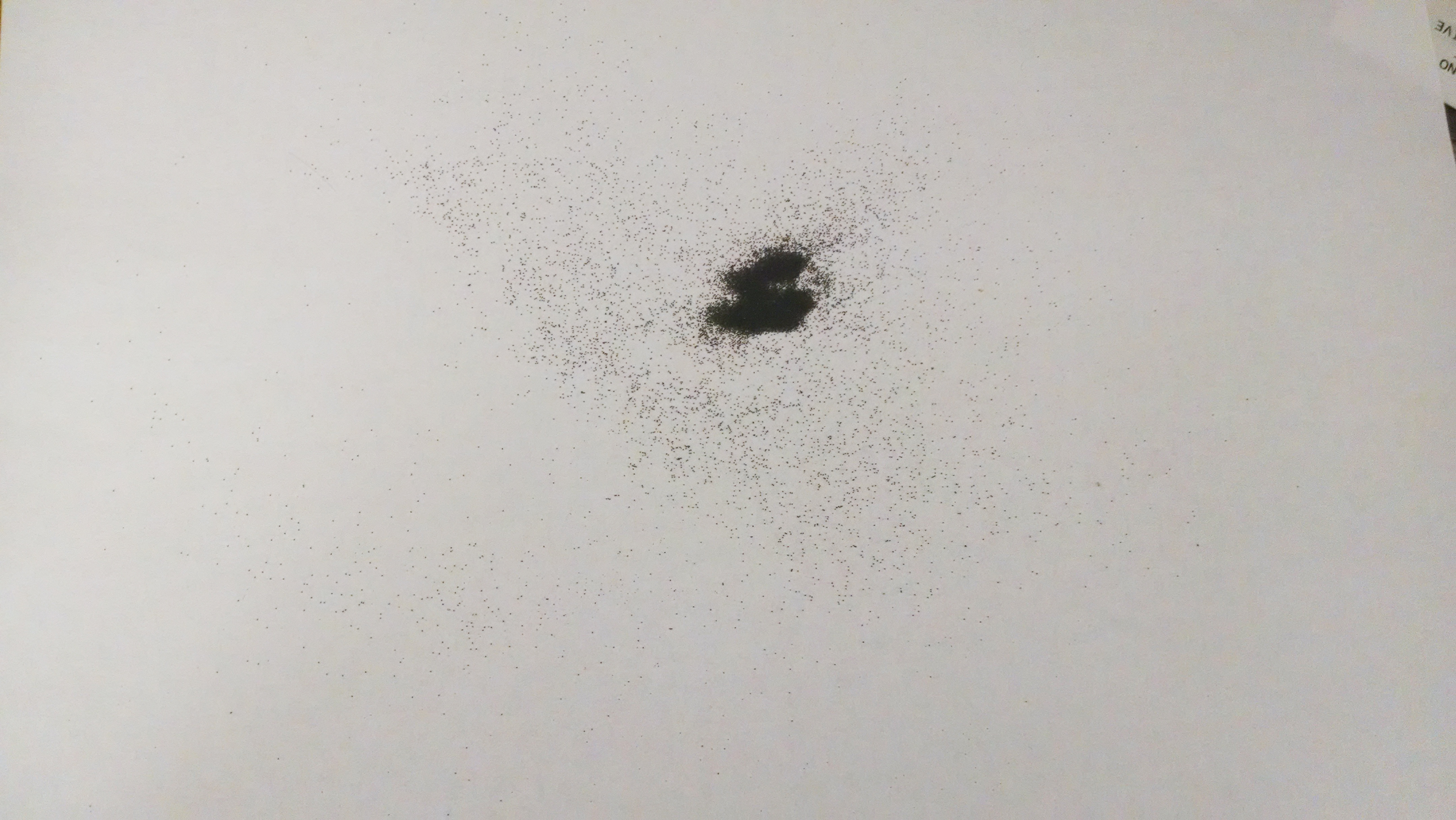
I tapped out the seeds that were fully ripe, and set the stalks aside to dry for later. However, I think I'm gonna keep the fully ripe seeds separate, since I suspect they'll be more viable in the long term. There are so many seeds. This is what a functionally infinite amount of D. burmannii seed looks like.

Piles of Drosera burmannii seed.
I had to be careful not to sneeze.
Probably...10,000 seeds? 100,000? I have no idea. It's a lot.

Tuesday, April 15, 2014

Cultivation Guides: Harvesting Seed

This is part of a series of posts describing various aspects of cultivation, which will hopefully be useful to new growers trying to solve the challenges of growing carnivores, and experienced growers who are always looking to improve their collection. The full series can be read here, or by topic on the Series page.

Today I decided to harvest seed from my Drosera capillaris, which has been blooming for several months. I donated some seed to the NASC auction, and I also want to get it ready to sell and to trade. As you can see, there was plenty of ripe seed to collect.
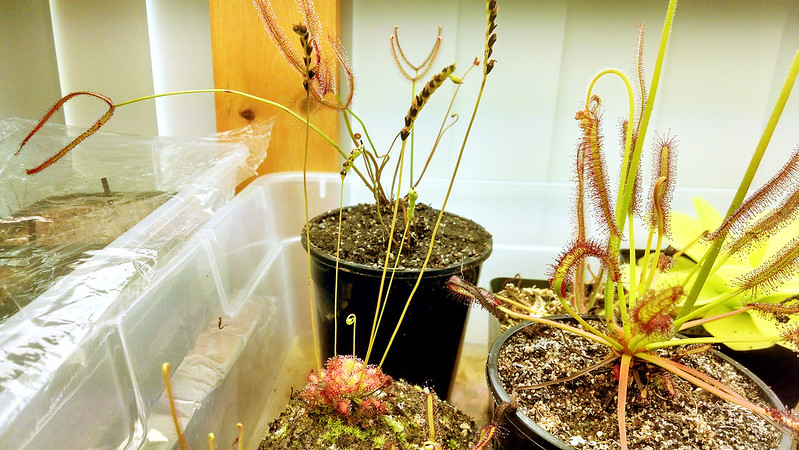
Drosera capillaris with flower stalks.
Drosera capillaris with lots of nice seed.
Of the 6 stalks that you can see, 4 appeared fully bloomed out with ripe seed. I went for the one that I thought I remembered as being the oldest, and went in for the kill.
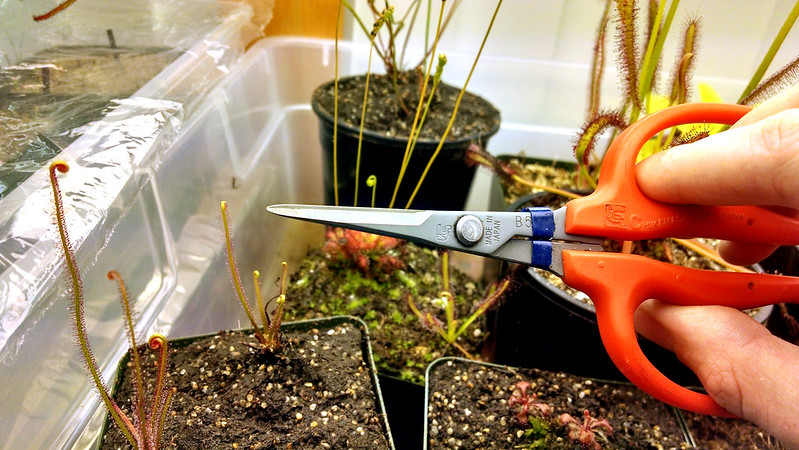
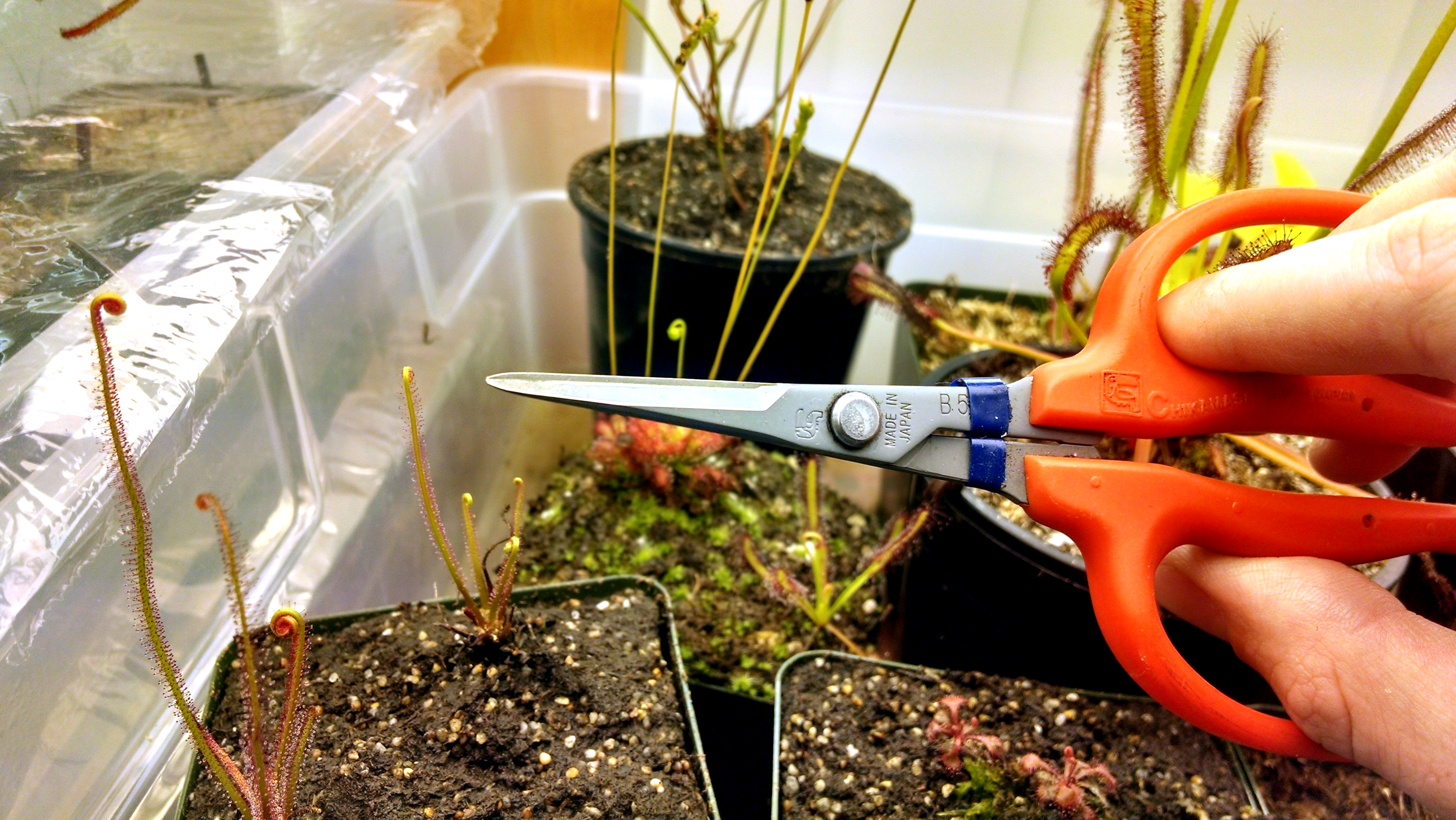
Trimmers.
Fancy trimmers from Japan.
I had prepared a few pieces of printer paper to help me collect the seeds, which are super tiny. This stalk had about 12 seed buds on it.
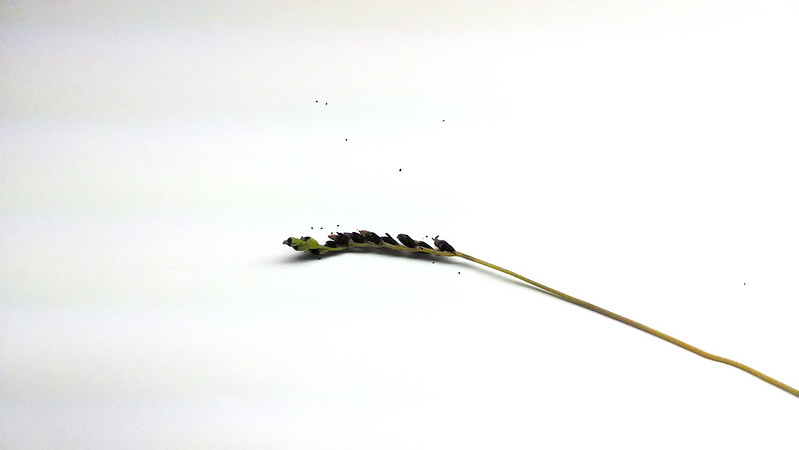
Cut Drosera capillaris flower stalk.
D. capillaris flower stalk. Some seed has already fallen out.
To harvest, I just tapped the top of the flower stalk on the paper and tiny little seeds came sprinkling out. After a while I was feeling like I should be getting some more out of the top buds, so I broke them open with my fingernail. This ended up being a bad move, since the top (i.e. youngest) buds weren't ripe yet, so the seed was still soft and green. You can see a closeup picture below.
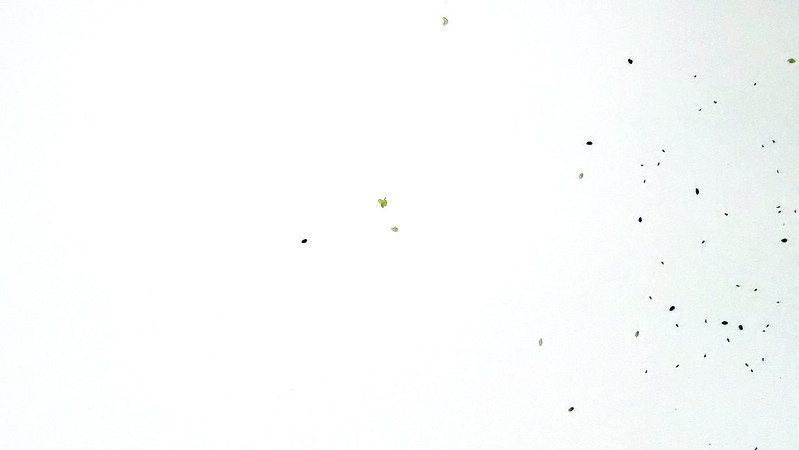
Ripe and unripe Drosera capillaris seed.
The leftmost seed is ripe. The ones immediately to its right are still green and too fresh to harvest.
With the remaining flower stalks I shook out the ripe seed, and then set the leftover stalks aside in a folded piece of paper to dry for another couple weeks. It may be that more seed will have ripened by then and I'll get another few packets worth.

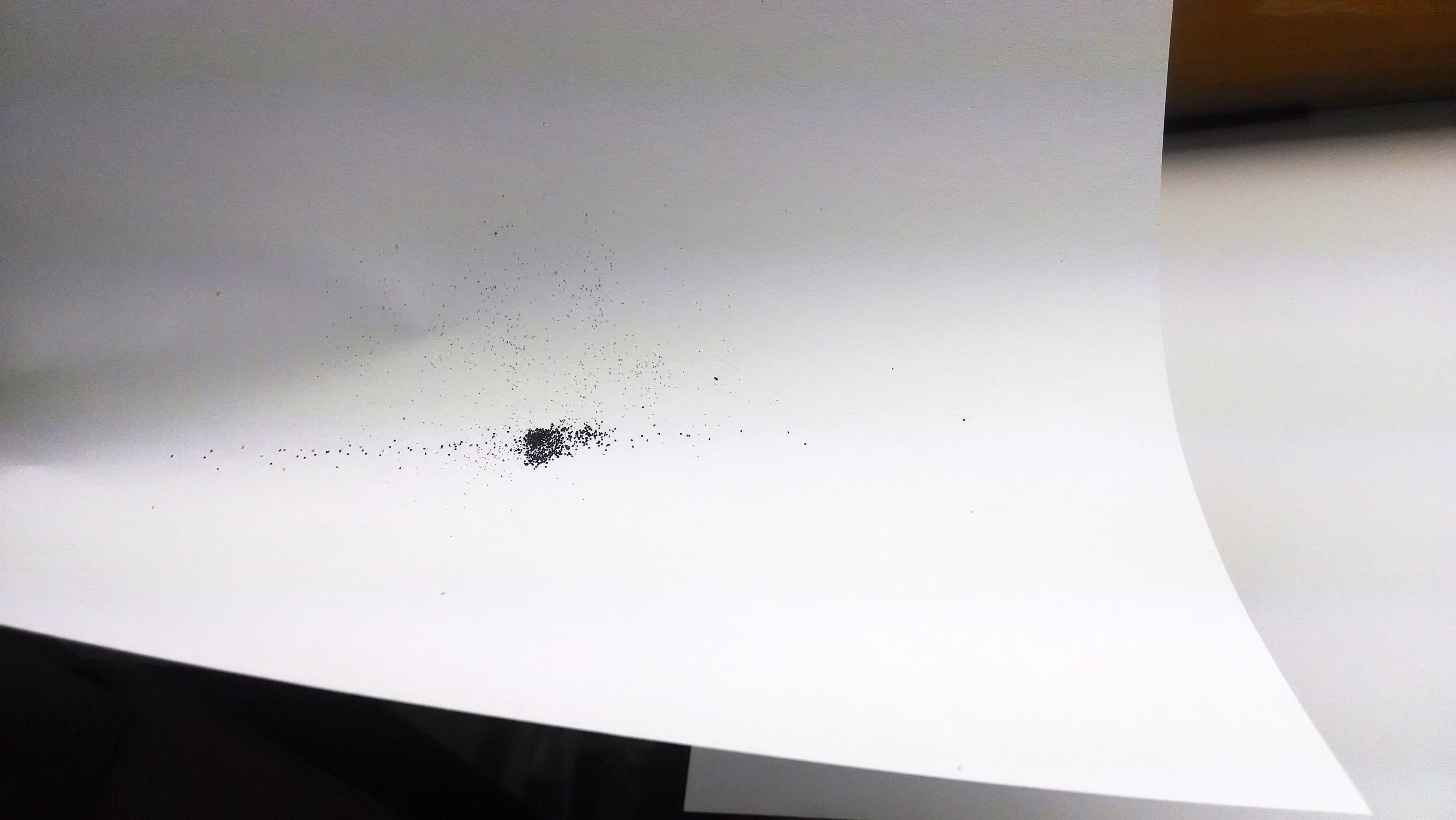
Harvesting the seed also ended up shaking out a decent amount of old pollen and other plant materials onto the paper. I want to ship clean seed, since since it's important to have as few nutrients on your media as possible when starting seedlings, and all of that is just mold and algae food. Luckily, there's a pretty easy way to do this. Ripe seed is fairly hard and smooth and roundish, so it doesn't stick easily to paper. If you sort of bend the page into a U-shape, tilt it at a 30 degree angle or so, and tap it a few times the seed should all roll off and leave the detritus stuck behind.
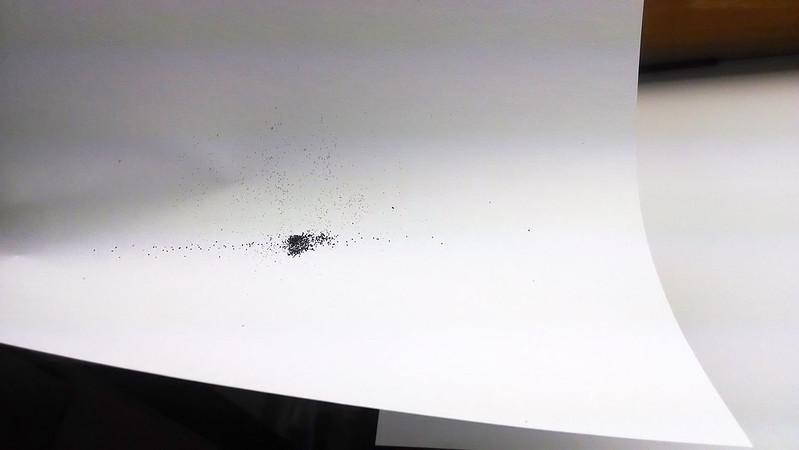
Cleaning the seeds.
I learned this method of cleaning seeds from the ICPS website. Works great!
I did two passes like this, and then individually removed any tenacious junk with a toothpick while looking through my two magnifying glasses. I really need a decent loupe.

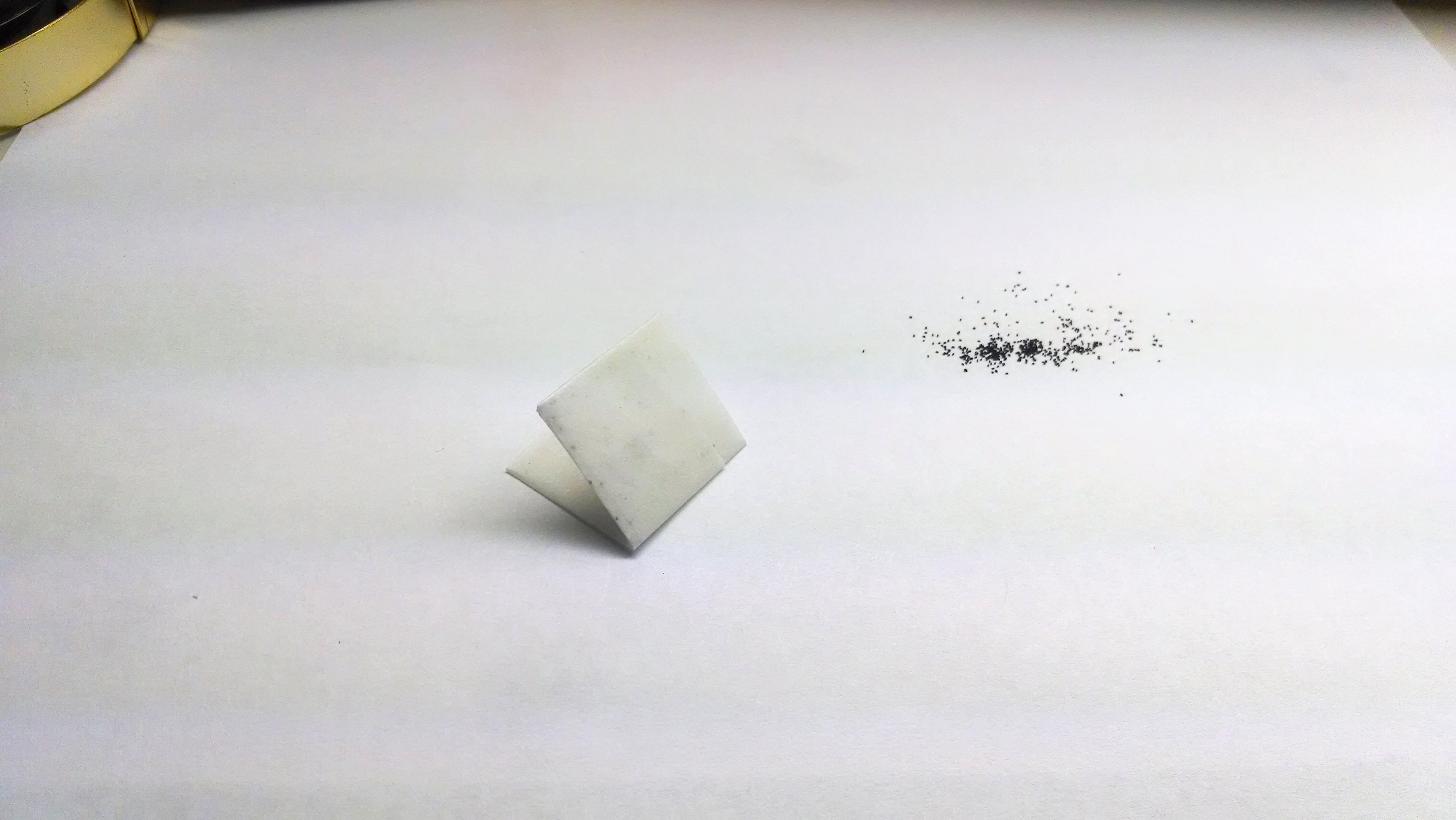
After cleaning, I packetized the seeds in parchment paper. I cut squares about 2 in. by 2 in., and then folded inwards into thirds in one direction. Then I tapped the seed into the packet, counting 50 seeds plus a bit extra into each. I then folded into thirds again the opposite way to (mostly) seal in the seeds. It's important to not use tape or glue with these guys, since they're so tiny and liable to get stuck.
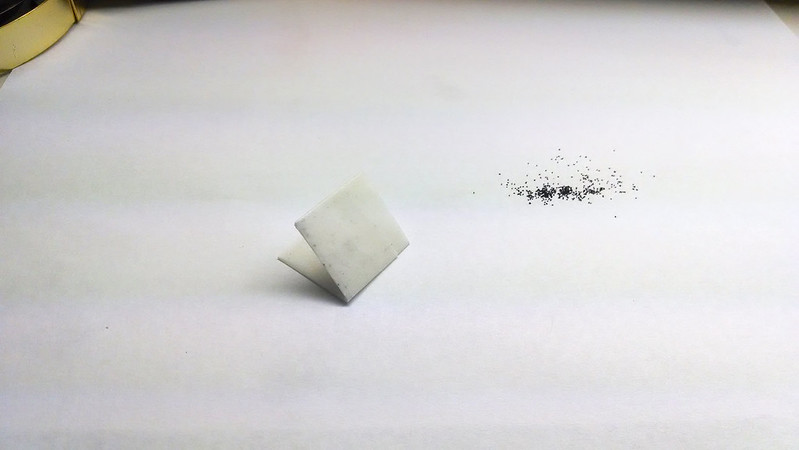
Packet of Drosera capillaris seed.
Seed packet. There are about 50 seeds in here.
In all I collected 13 packets of 50-60 seeds each for sale, plus 3 packets of around 75 for the NASC auction. I also left myself about 100 seeds to sow at home, which I plan to do soon. I don't know if D. capillaris needs cold stratification to germinate, so I think I'm going to split the remaining seed between a few pots and do an experiment.
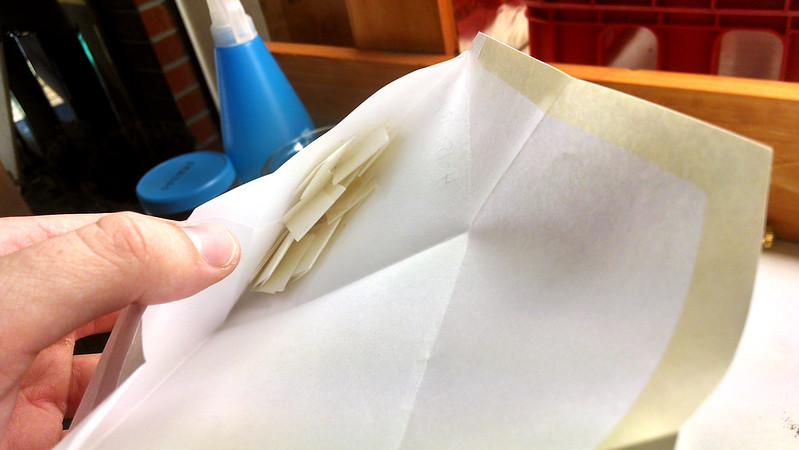
Evelope with 13 packerts of Drosera capillaris seed.
Thirteen D. capillaris seed packs, ready for storage. Lots of potential plants in this envelope.
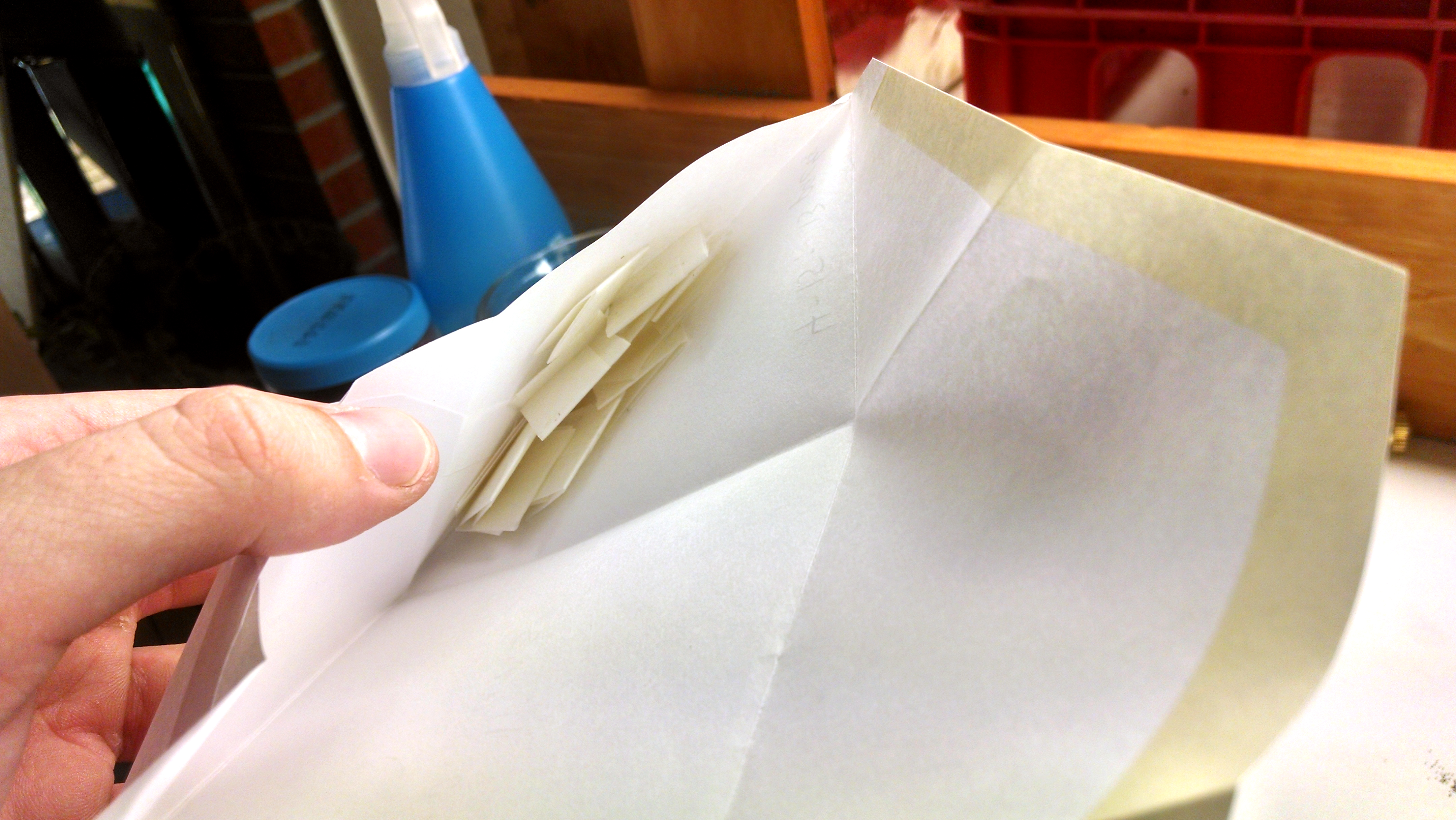
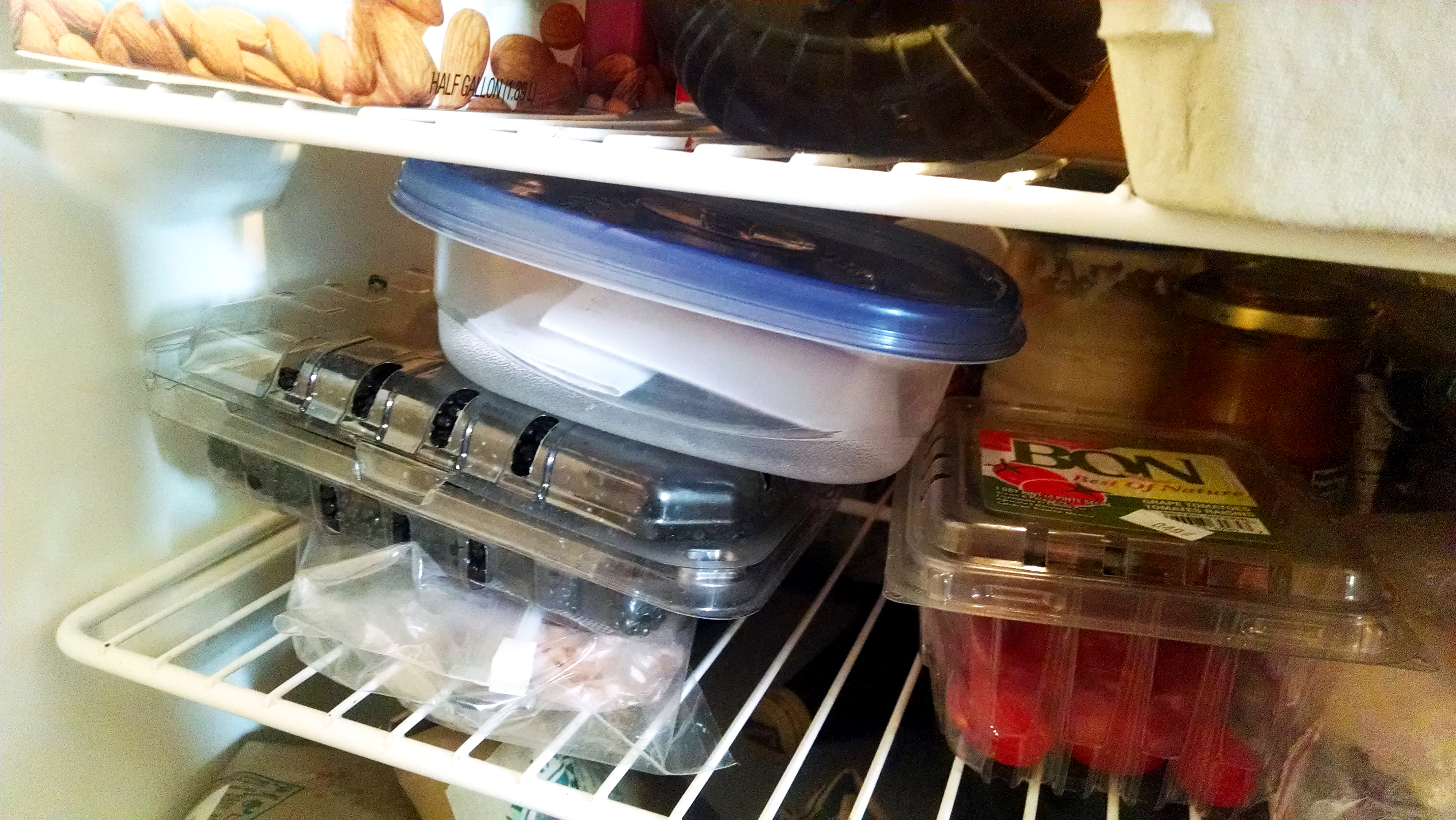
The seeds went into an envelope, which went into a plastic container, which went into the fridge. I recorded the harvest date and number of packets, so I'll be able to keep track easily. If anyone wants Drosera capillaris (Alabama) white flower seeds, now is definitely the time to get it! Check the sale page, I just put up a PayPal button.
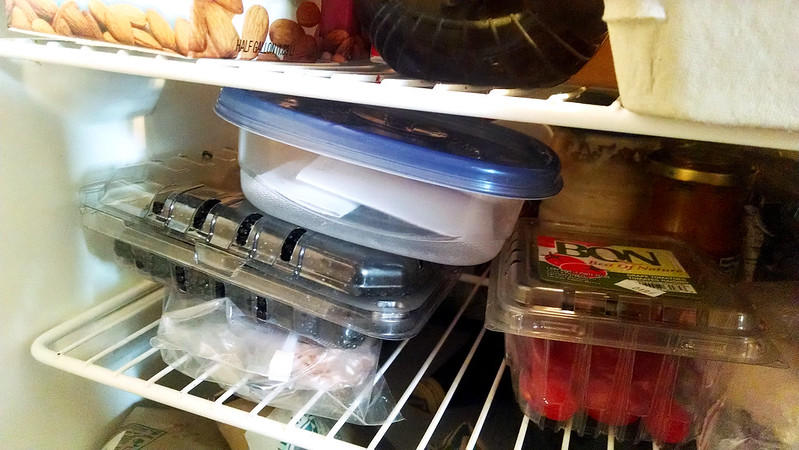
Drosera capillaris seeds in the refrigerator.
These seeds can stay viable for a very long time kept cool and dry in the refrigerator.
In the meantime, my little D. capillaris is sure looking spry with its new haircut.
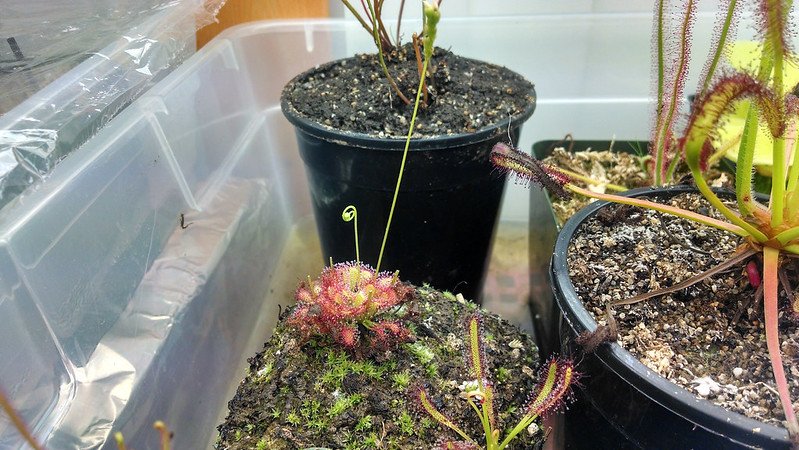
Drosera capillaris minus several flower stalks.
Now the D. capensis hitchhiker is looking even bigger. Got to dig it out soon.
Lookin' sharp little guy!