It's not officially winter yet, but we've gotten the first real chill in California this last week. Let's see what's blooming in spite of the – relative – cold (it's still California, after all).
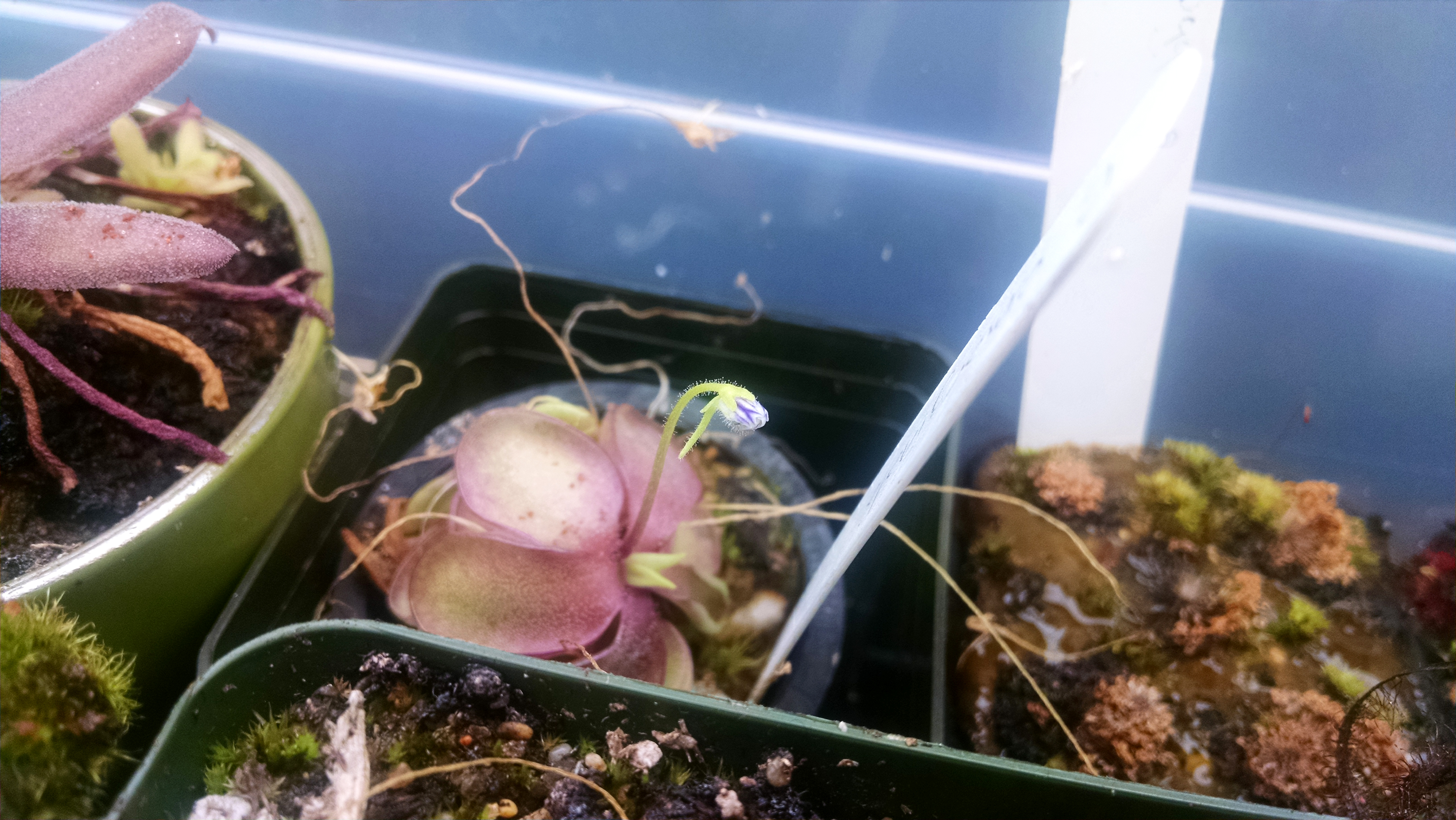
Pinguicula emarginata and
Pinguicula lusitanica are both putting up blooms.
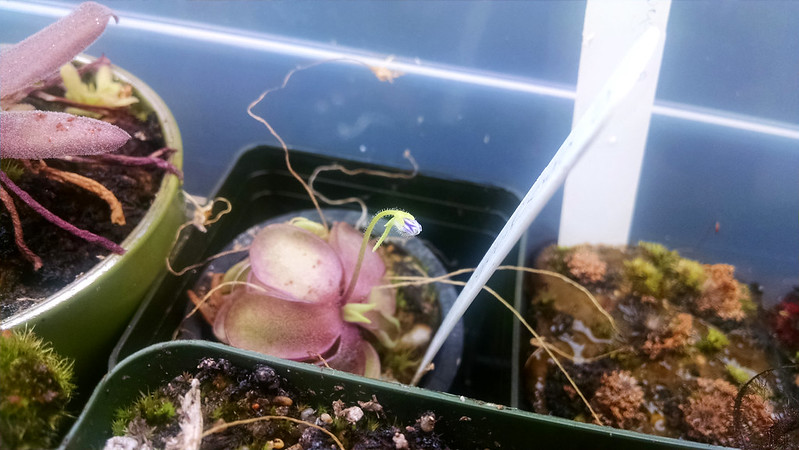 |
| The venation in this flower is even visible before it opens. |
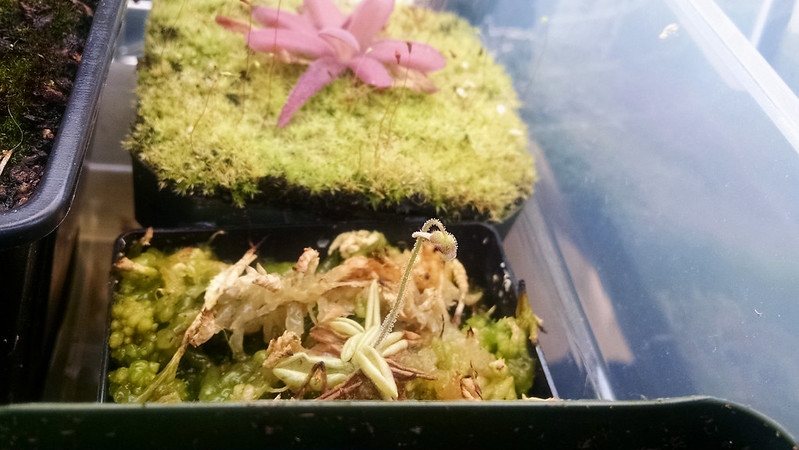 |
| There you go little guy! |
P. emarginata is extremely floriferous, and it's got wonderful flowers. I like having it in my collection! The
P. lusitanica is a very healthy specimen I got from Josh, and I'm hoping it'll set seed with this bloom, rather than just dying like my last one did.
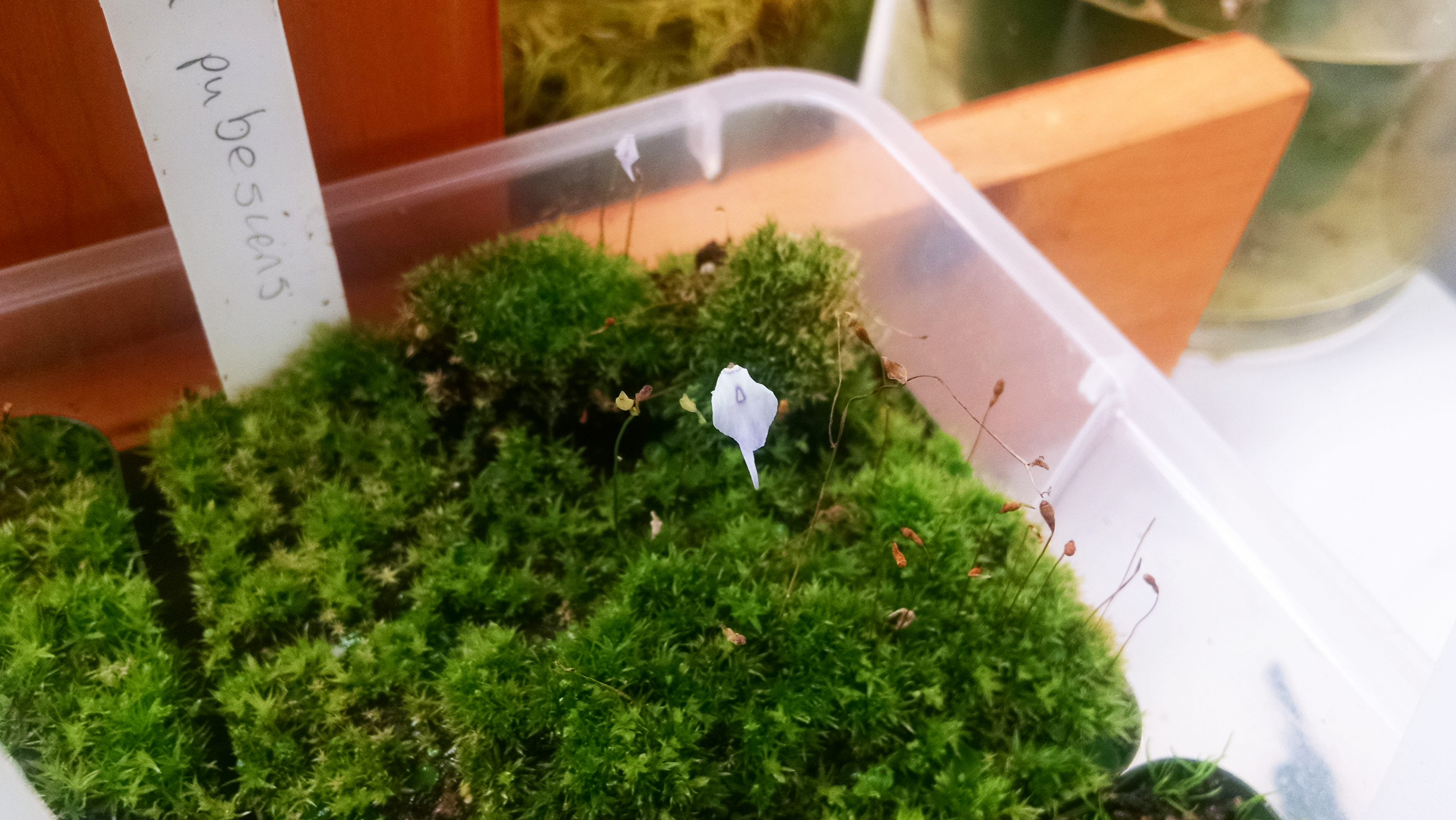
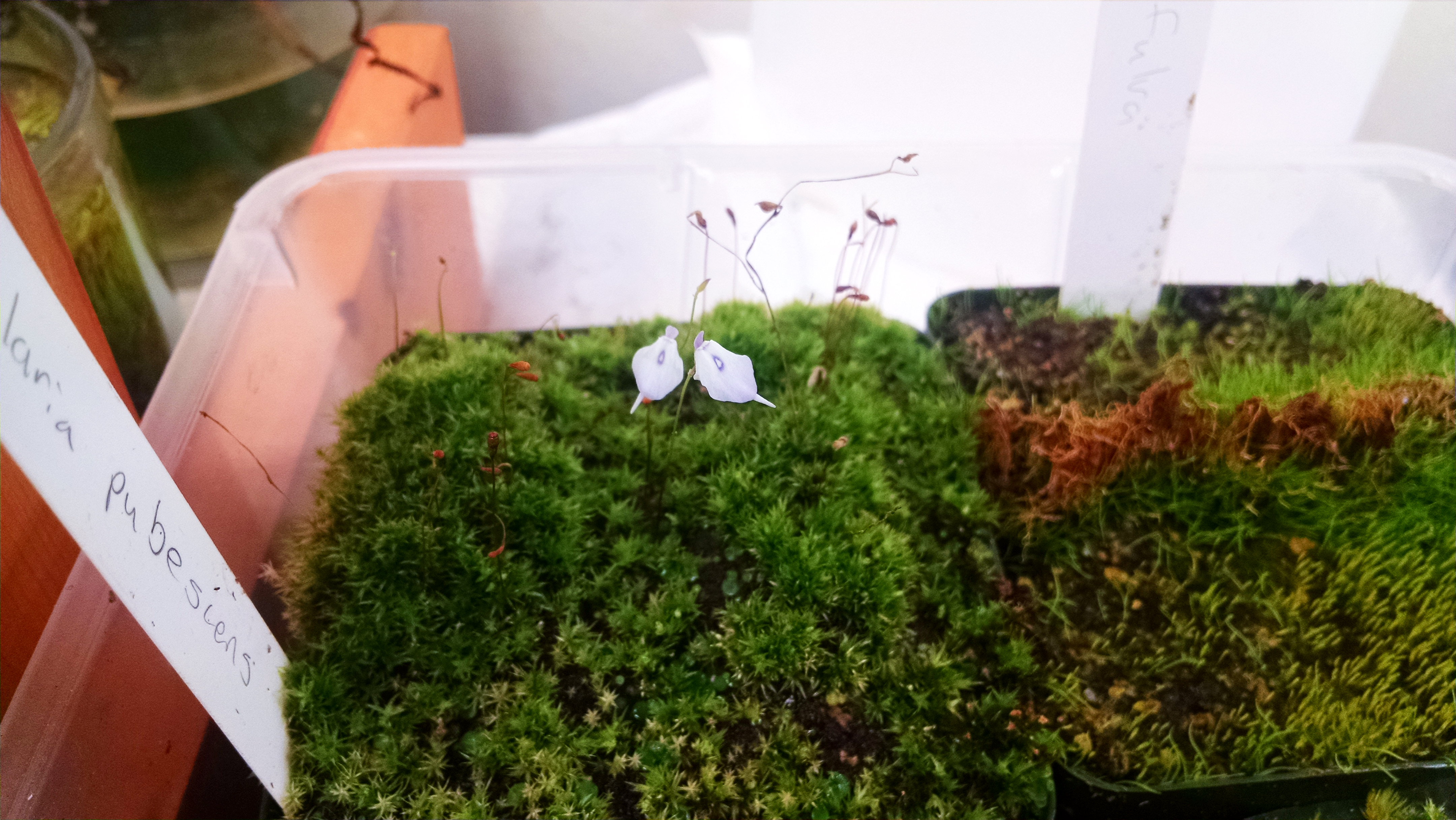
The alien and adorable
Utricularia pubescens has a solitary bloom right now.
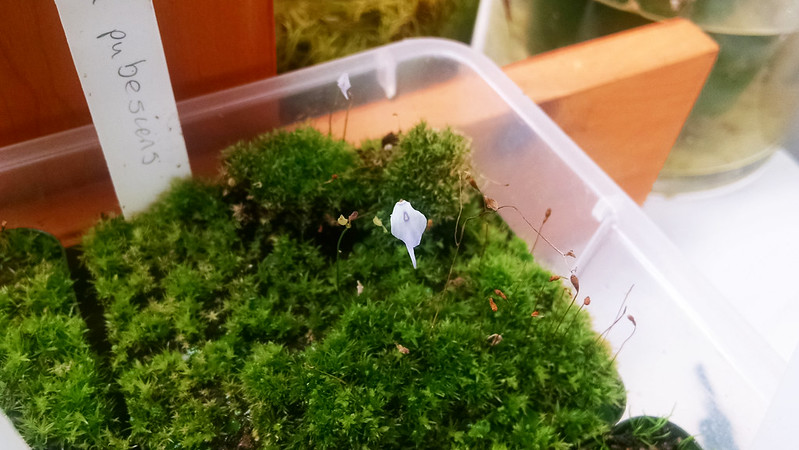 |
| Funny little flower. |
Unfortunately the sporangia outnumber the flower stalks in this pot. Fortunately, the
U. pubescens flowers are cool as heck.
My
Byblis liniflora keeps making new blooms, but I've yet to collect any seed from it.
 |
| B. liniflora is so delicate-looking. |
For whatever reason these guys just aren't making any fruit/seeds. It's still a great plant, but I need to get seed before it dies off. Oh well, I can enjoy it for now at least!
There are a couple other plants blooming right now that I've yet to get seed from:
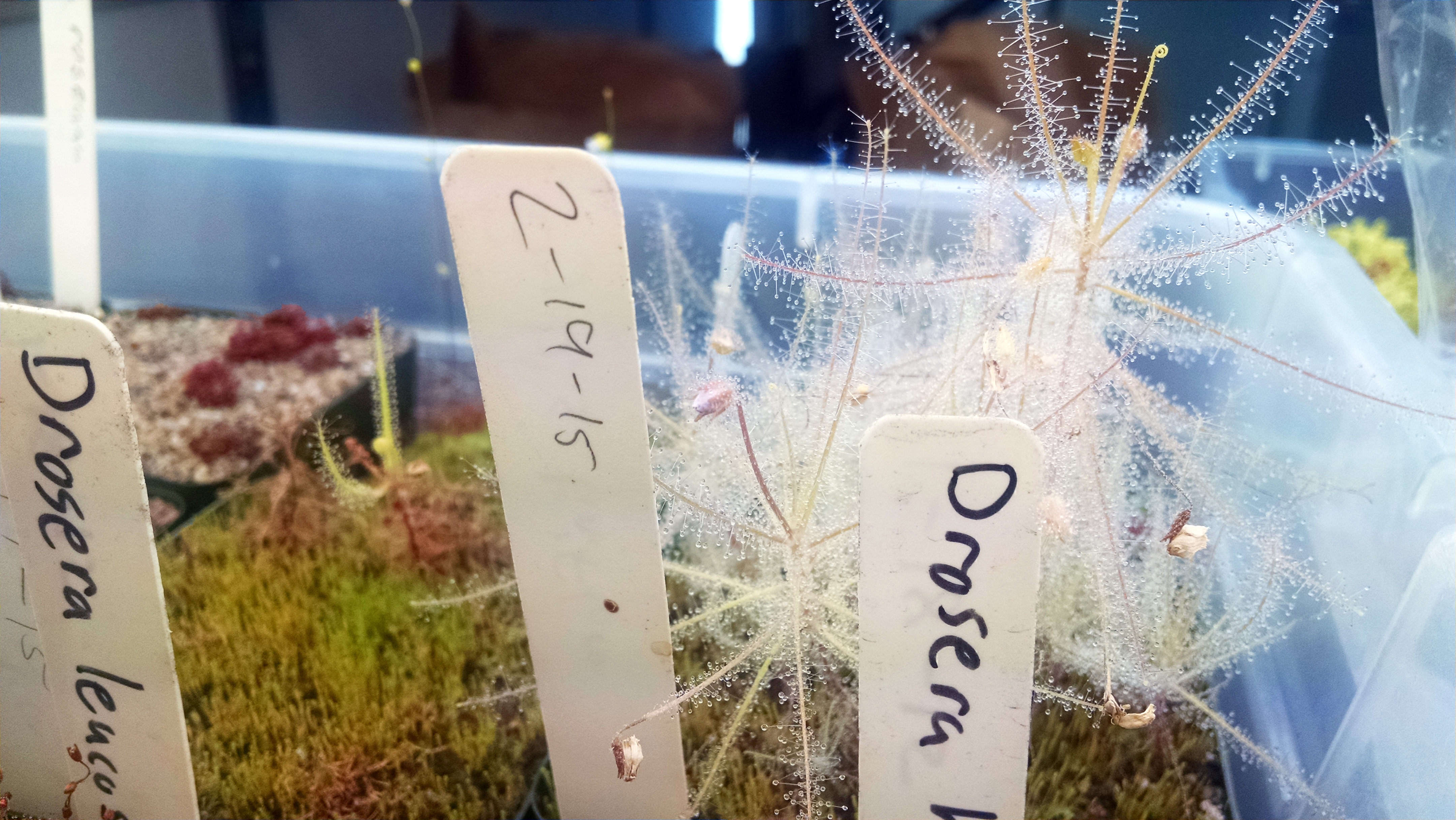
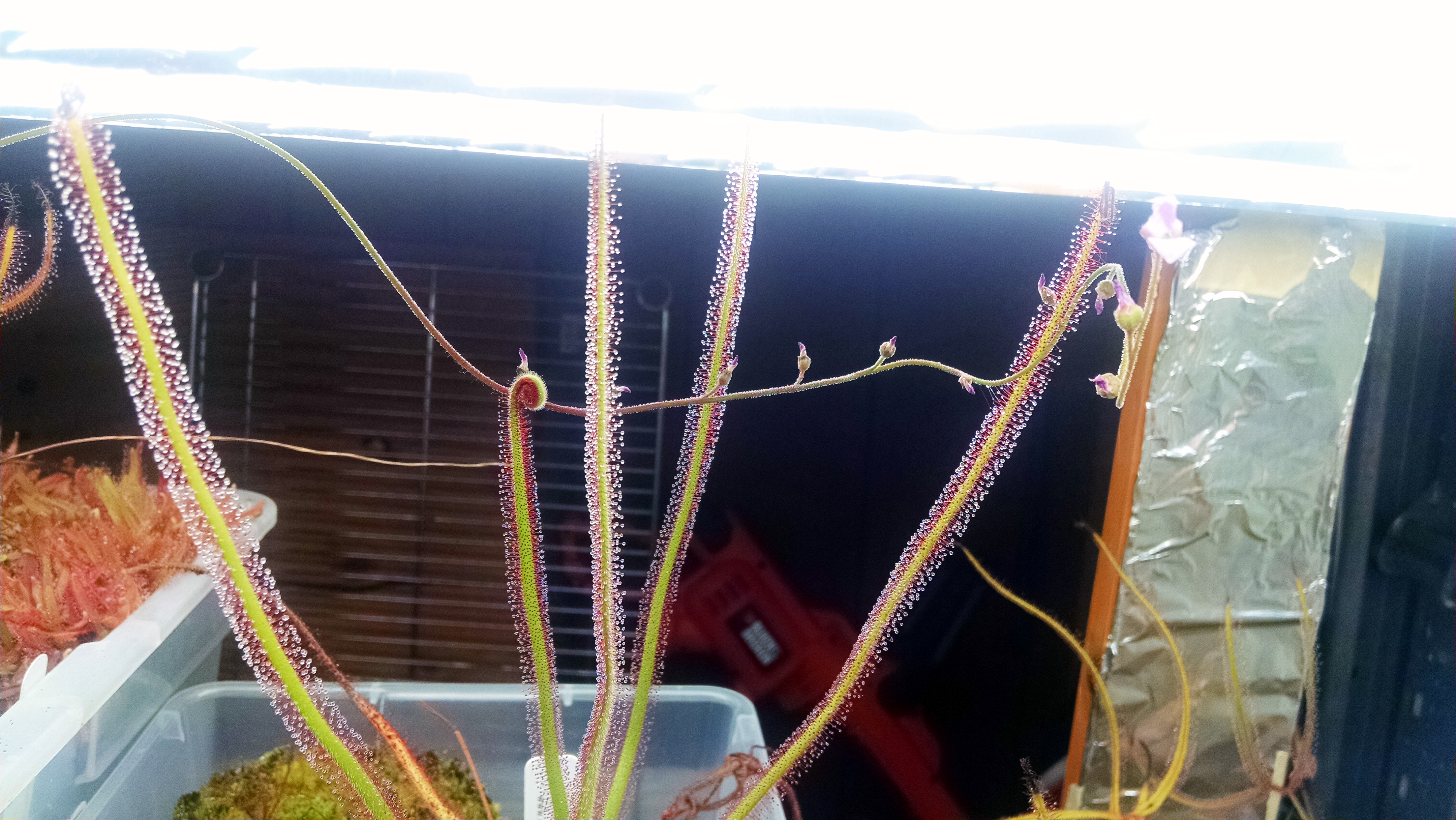
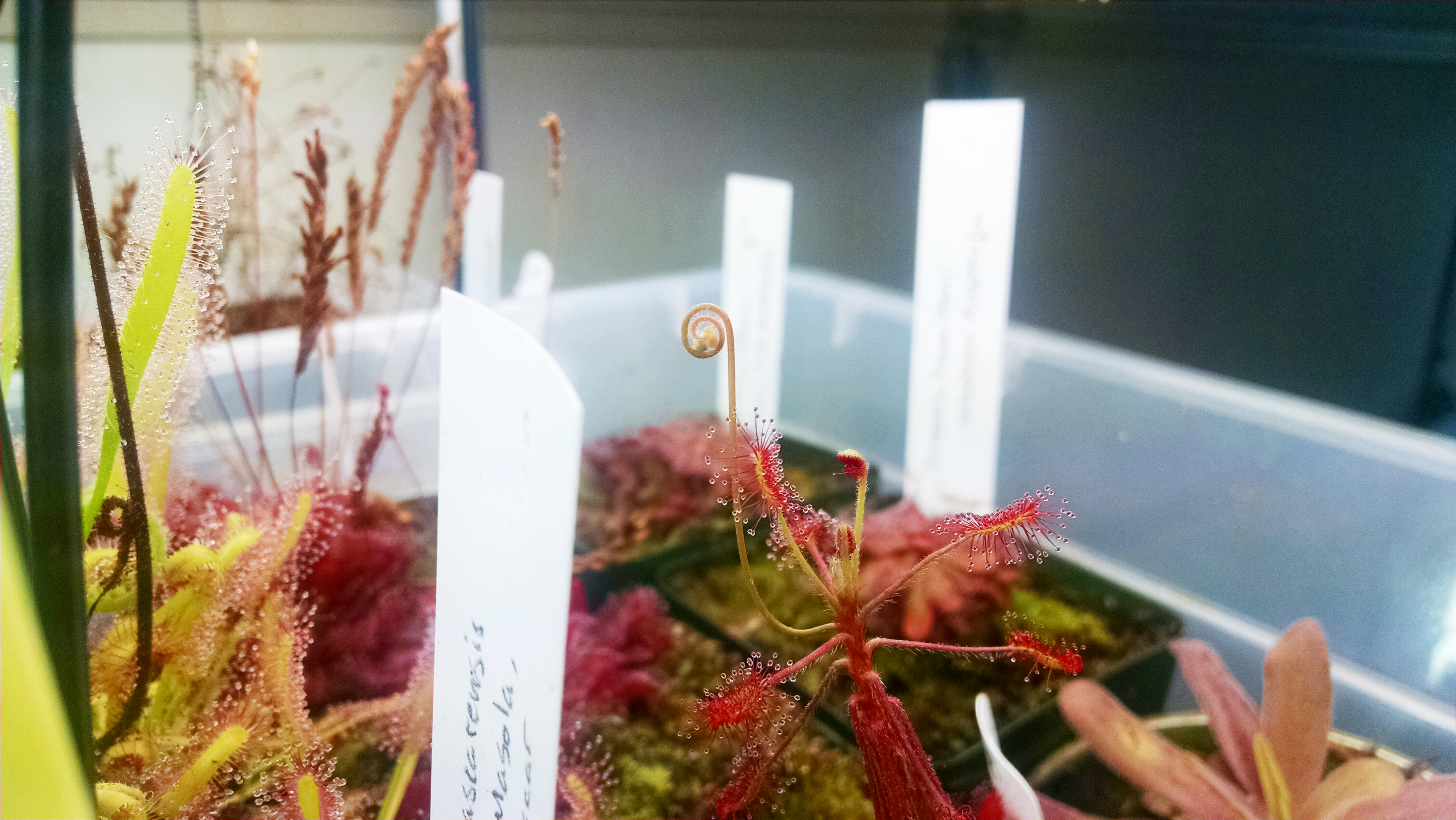
Drosera venusta and
Drosera madagascariensis.
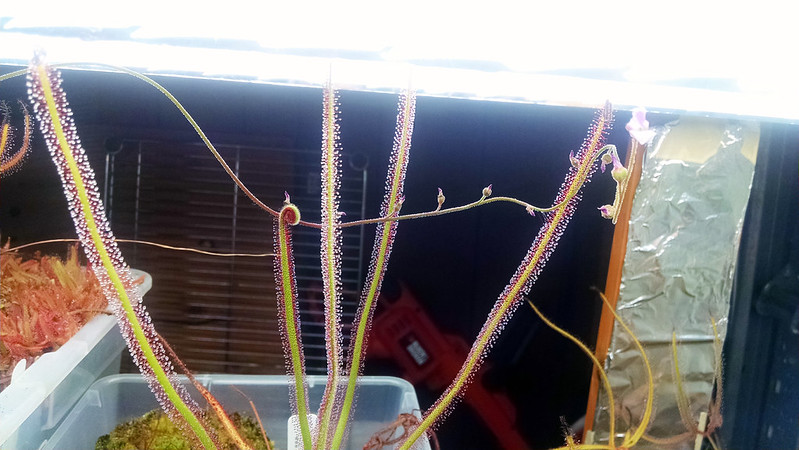 |
| This flower stalk is much too long. |
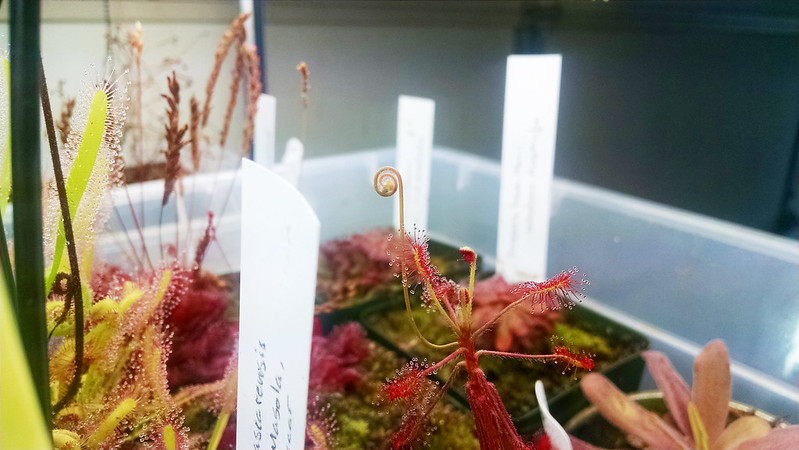 |
| Good luck little guy. |
That
D. venusta stalk is super long and dangly. As you can see, it's insinuated itself among the
Drosera spiralis. There might be some seed setting in the spent buds, but I can't tell. The
D. madagascariensis might have a better shot this time around, since it's in full scramble, and will be able to support itself on the media once the stalk gets too long. We'll see.
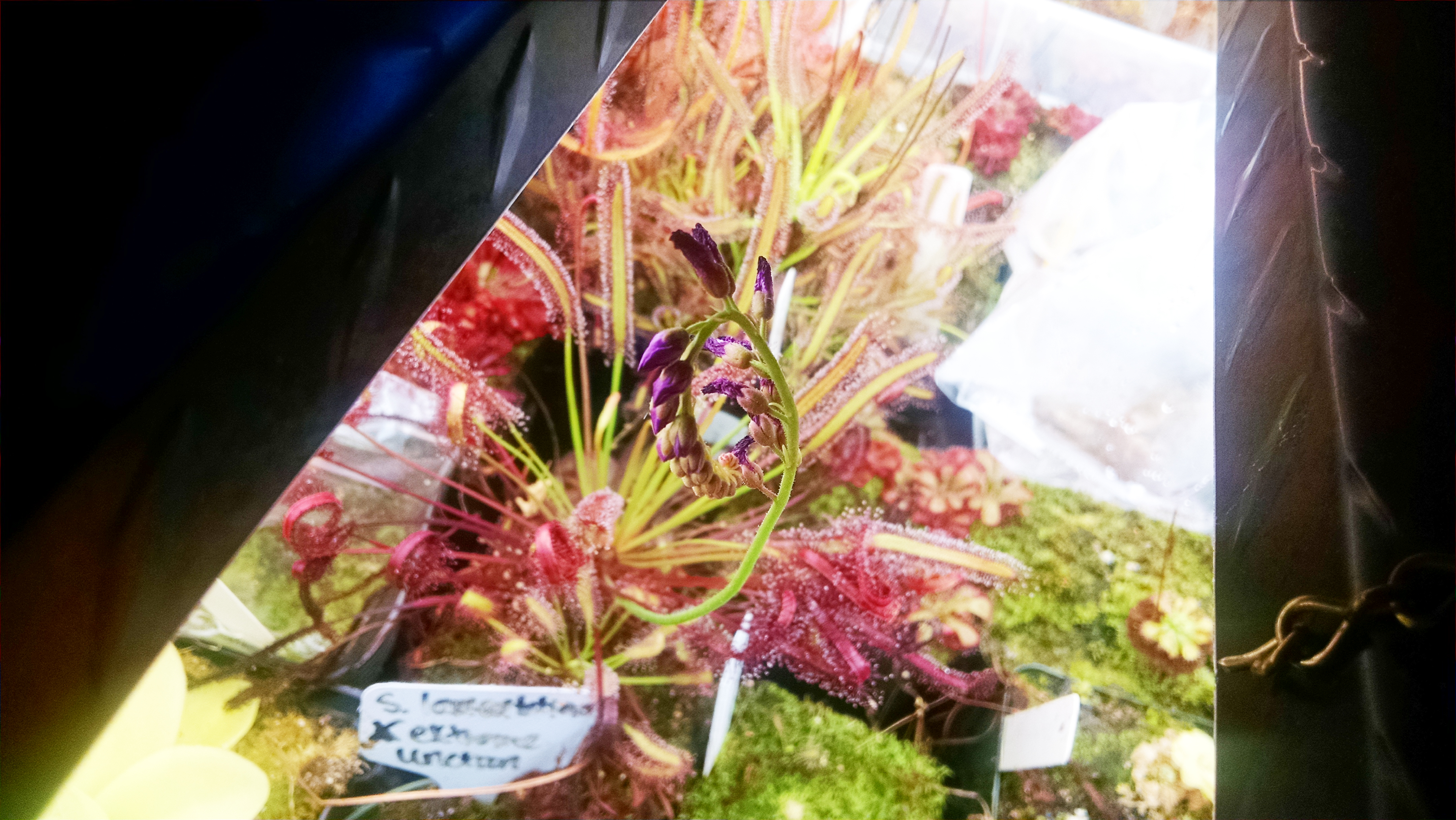
One plant that I'm betting on heavily for seed is this
Drosera capensis red form. It's gotten several significant feedings, and it's rewarding me with a fat crop of buds.
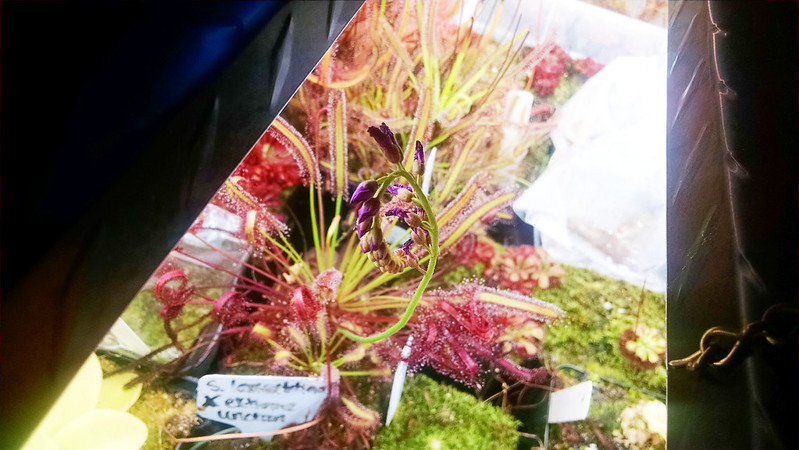 |
| A lot more to come here. |
Josh has said that this form of
D. capensis is the only one that occasionally fails to set seed for him, but I think that this flower stalk at least is chugging away – I'm pretty sure there's some seed swelling in the oldest buds. The tough thing will be to avoid bumping it while it finishes blooming out.
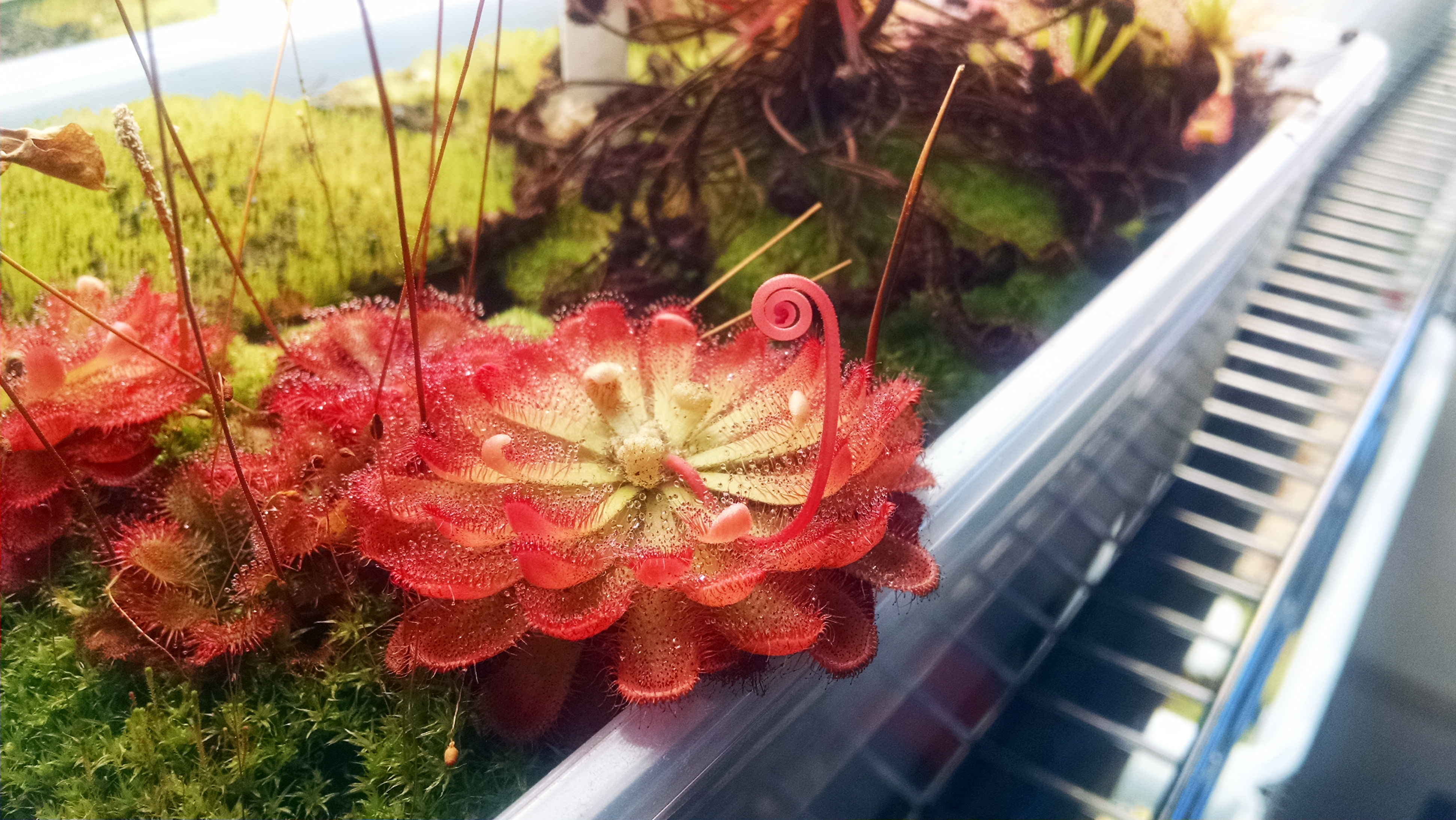
Drosera aliciae and
Drosera anglica CA × HI are both blooming for the first time in a while, and I'm excited to get some seed from them.
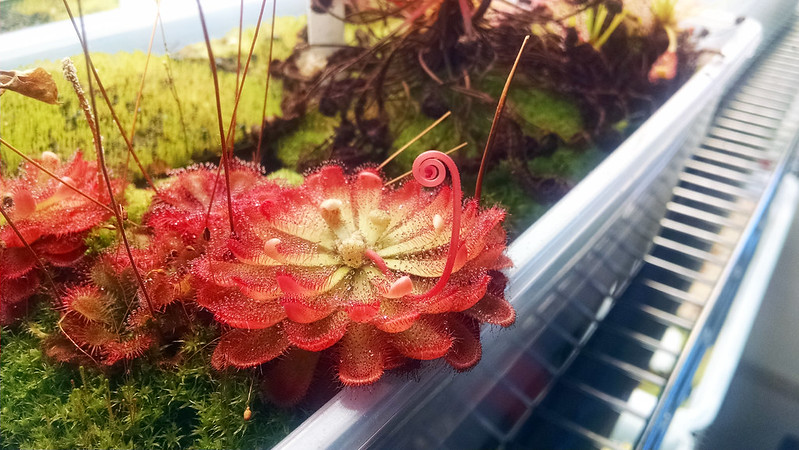 |
| Haven't seen this one in a while! |
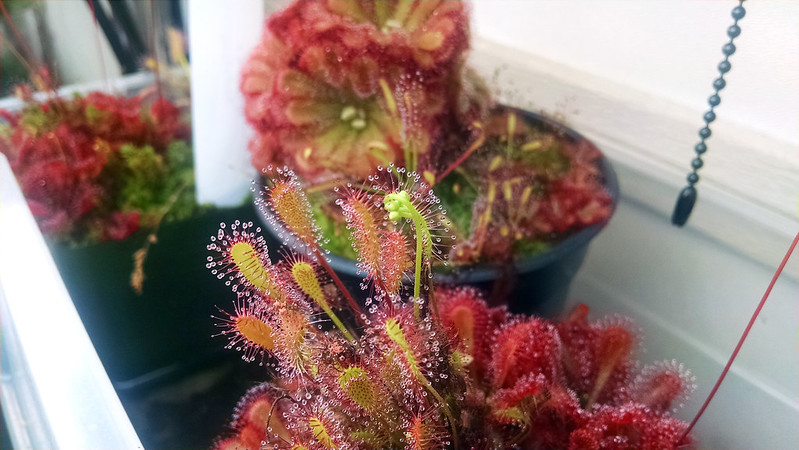 |
| I need to do something about this corner. |
The
D. aliciae that live in the community pot always seem to struggle with humic acid buildup, which makes their growth stall, but I'm not sure what to do about it. Eventually it clears up and growth starts again. I should feed this guy to get a nice crop of seed. The
D. anglica is sitting over in the former quarantine tray, and is bending towards the light (the bulbs should be replaced soon).
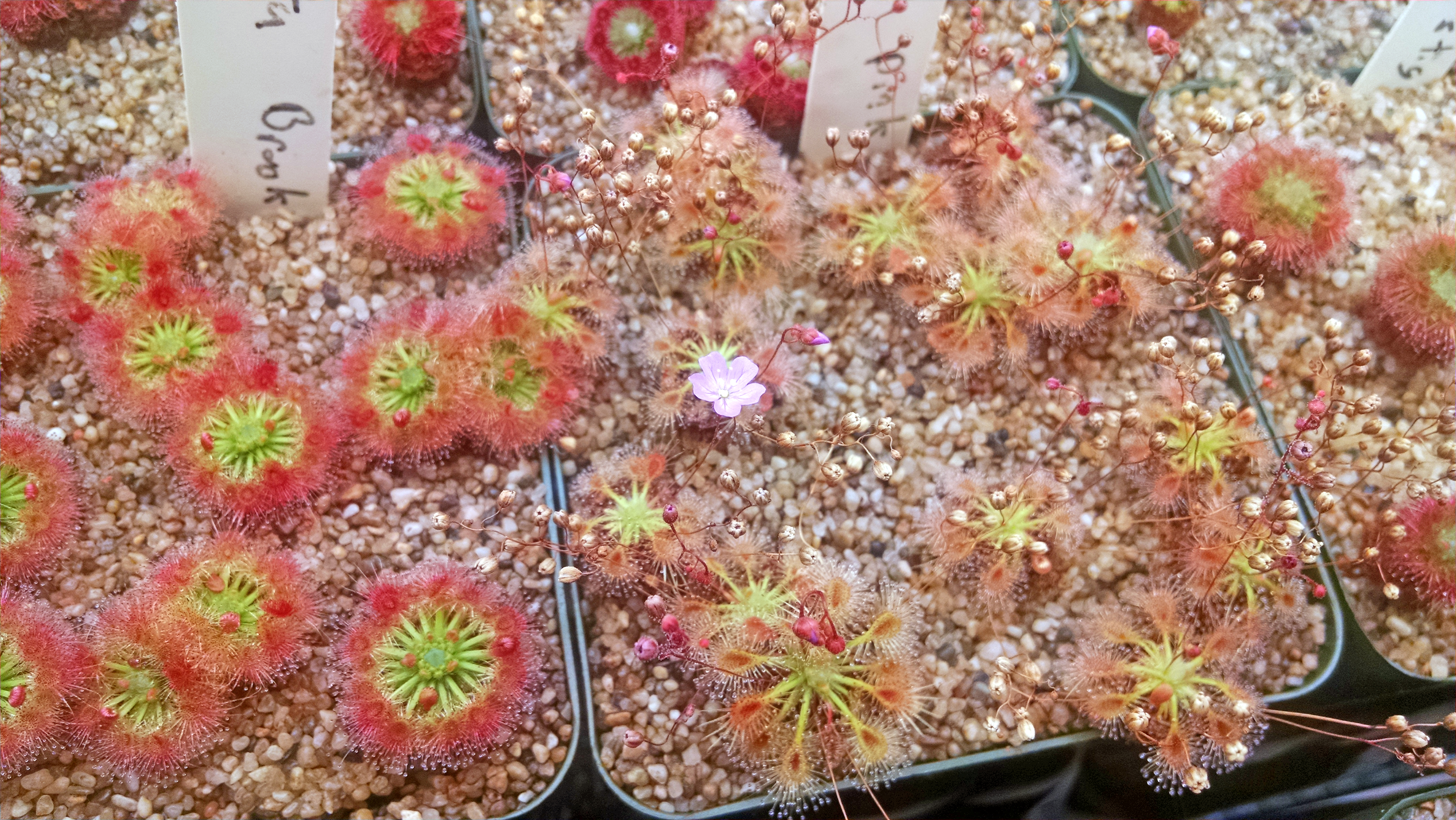
Finally, there's a flower open on some
Drosera omissa.
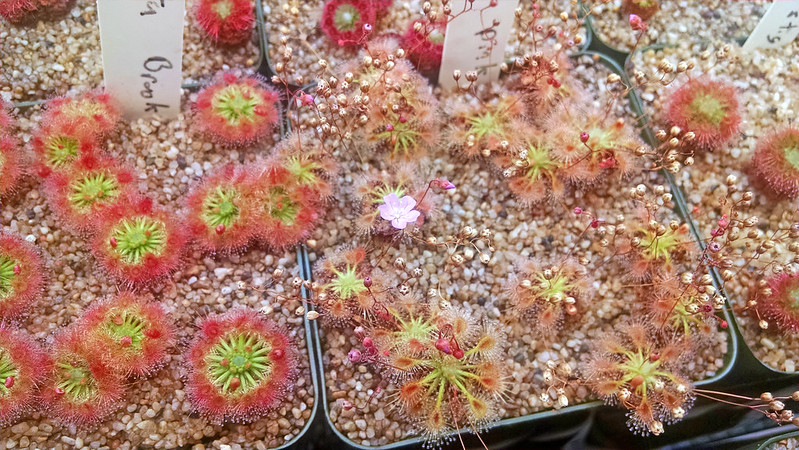 |
| If you're not growing pygmies yet you should start this season. |
As you can see, this species is a very enthusiastic bloomer. It's funny, I've only gotten a few species of pygmies to flower.
D. omissa flowers the most readily, and I've also gotten blooms on
D. leucostigma, D. allantostigma, and
D. helodes. However, I've never flowered
D. scorpioides, or
D. pulchella, or any of the other species that are otherwise doing so well. It's curious.
The gemmae are ripening though :-D